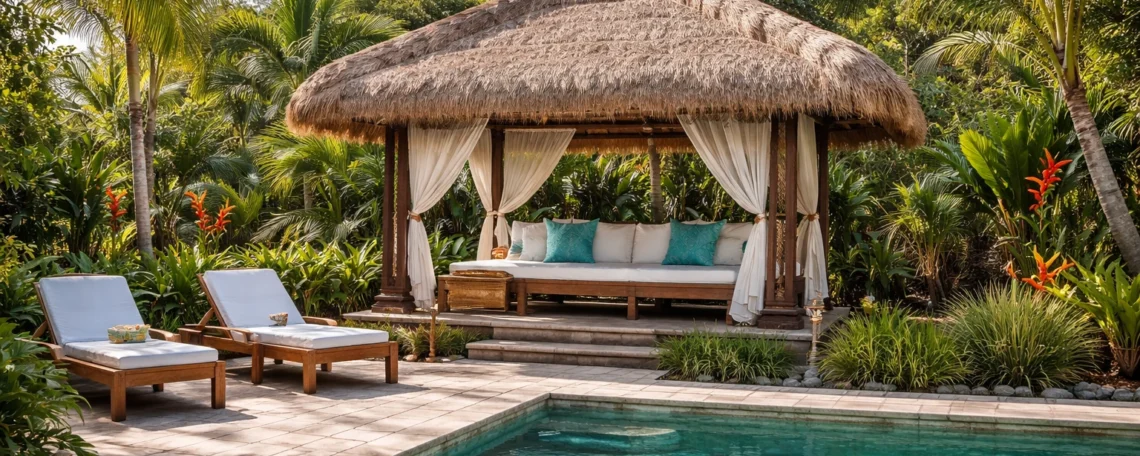
A quality Bali hut starts with treated timber, layered roofing, and rust-proof hardware. These three things determine if your hut stands strong for a decade or falls apart after a couple of seasons. You’ve probably seen plenty of huts around Australia, at resorts, backyards, or beach bars, but not all of them are built to the same standard.
Here’s the thing: cheap builds use thin wood and weak fasteners that can’t handle the weather. That sounds like a waste of money, right? Buying a well-made hut means you get something that looks great and actually holds up over time.
In this guide, we’ll walk you through what separates a quality Bali hut from a regrettable purchase. You’ll also learn about materials, construction, and warranties so you can shop with confidence.
Let’s get into it.
Bali Hut Quality: What Sets the Good Apart from the Great
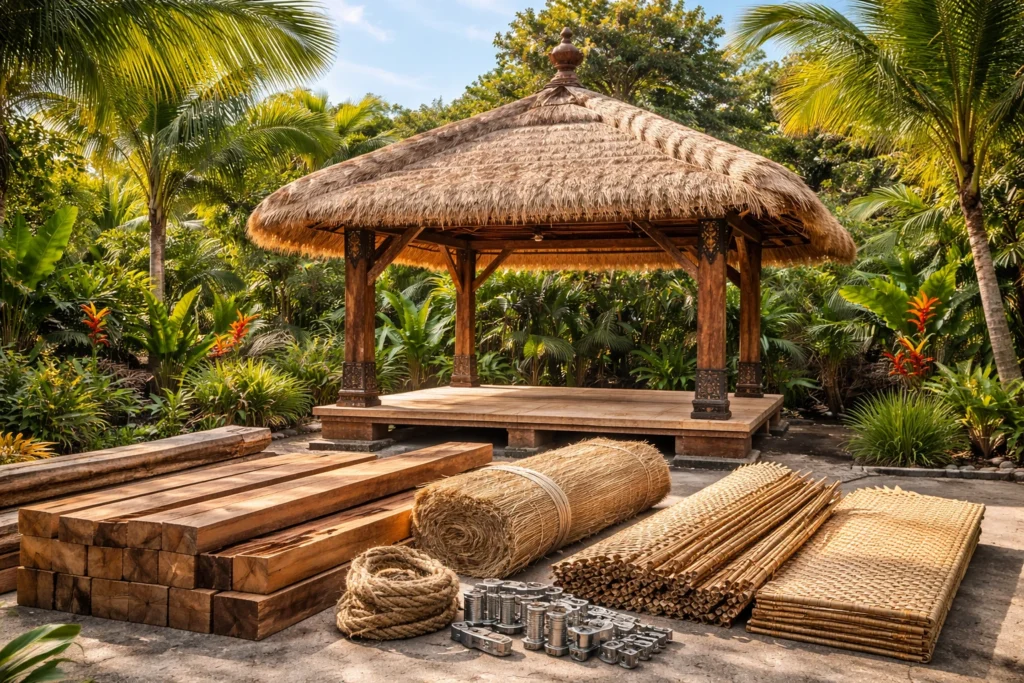
A great Bali hut begins with high-quality timber, proper roofing, and sturdy hardware. Not all huts use the same materials, and that’s where the differences are most noticeable.
Below, we cover each one so you can spot the good from the bad.
The Timber and Posts
The posts are the backbone of your hut, and quality timber means your structure stays standing for decades. From our years of observation, treated pine resists rot, termite damage, and moisture far better than untreated wood.
But treatment alone isn’t enough. Posts should also be thick enough to handle wind loads, especially if your hut is built on open ground. One quick way to check is by tapping the timber. When you knock on it, quality wood feels dense and heavy. If it sounds hollow or feels lightweight, that’s usually a sign of lower-grade material.
Roof Materials and Thatch
The roof is what gives your Bali hut its tropical character, so the material you choose makes a significant impact. You’ve got two main options here: authentic thatching and synthetic thatch. Authentic thatching delivers a natural feel that’s hard to match, while synthetic thatch lasts longer and needs less work to maintain.
Either way, the thatching should be tightly packed and layered so rain doesn’t seep through the gaps. If the layers are too thin or poorly placed, water pools instead of running off. Once that happens, sagging and rot set in fast. Before long, you’re paying for repairs you didn’t expect.
But wait, there’s more to it. UV treatment counts also. This extra protection keeps the thatch from fading and turning brittle after too much sun exposure. So when choosing your roof, always ask if UV treatment is included.
Hardware and Fasteners
Most people overlook fasteners, but these small parts hold your entire hut together. The right choice here is galvanized or stainless steel, since both handle pressure and resist rust year after year. Cheaper options like weak brackets don’t offer the same strength and often bend after a single storm. That’s why heavy-duty hardware is always worth the extra cost.
But strength isn’t the only thing to think about. Hidden fasteners are worth considering, too. They give your hut a cleaner look and keep the metal shielded from the sun and rain. Since the hardware isn’t sitting out in the open, rust develops much more slowly. The result is a structure that holds together longer without needing replacement parts.
How Can You Tell If an Outdoor Structure Is Built to Last?

Three things tell you if an outdoor structure will hold up: joints, roof pitch, and finish. It starts with tight joints that keep the frame steady and prevent wobbling over time. A steep roof pitch then allows water to drain properly, and a good finish seals the wood so moisture stays out. Miss any one of these, and issues start showing up fast.
Here’s what to check before buying.
Frame Construction and Joints
Wobbling is one of the easiest ways to spot weak joints in a frame. When basic screws are the only thing holding parts together, the structure loses stability fast. Mortise and tenon joints or heavy-duty brackets solve this by locking each piece firmly in place.
Before buying, take a closer look at how the frame fits together. Tight connections with no gaps are a good sign, while loose joints usually mean wobbling later (we’ve seen plenty come back for fixing). Dimensions also play a major role than most realize, because wrong cuts create gaps that weaken the frame. Precision-sized parts fit smoothly and keep the assembly easy.
Roof Pitch and Water Runoff
A proper roof pitch keeps your hut dry, while a poor one invites mold and rot. Let’s be honest here, a steep angle around 30 degrees allows rain to slide off quickly without pooling or leaking through. Flat or shallow roofs do the opposite, trapping water on top until problems begin.
When water sits, the thatch starts to sag. Mold builds up next, and the whole structure breaks down faster than it should. Don’t worry, we have an excellent solution for this: a good overhang. It directs rain away from your posts and seating area, so everything underneath stays dry and protected.
Finish Options for Your Outdoor Space
The right finish protects your wood and lets your hut blend perfectly with your outdoor space. When it comes to choices, natural, walnut, and cedar stains all work well to complement existing outdoor furniture and overall backyard aesthetics. But these finishes do something more than look good. They add a protective layer that slows down weathering and keeps the appearance fresh for longer.
That’s why sealing should happen from the very start. The reason is simple: treated wood stands up to sun and rain far better than bare timber does. Still, not every finish is everyone’s cup of tea. You should ask to see samples before you decide, because seeing them firsthand shows you exactly how your hut will look once it’s finished.
Is a Bali Hut a Good Backyard Investment?
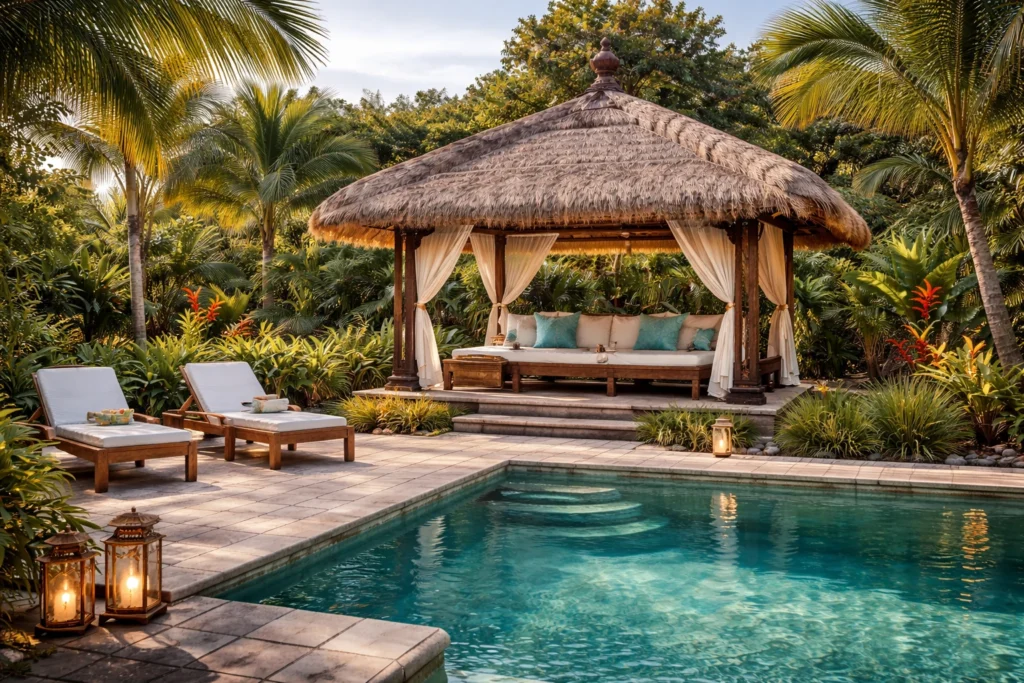
Yes, a Bali hut is a wise backyard investment when you buy quality. A well-built hut adds value to your property and gives you an outdoor space you’ll honestly use. Years later, it still looks great with minimal maintenance.
That’s the kind of return that makes the upfront cost worth it.
Warranty Coverage
A warranty tells you whether the company honestly believes in what they’re selling. Through our practical knowledge, a solid warranty on frames and posts shows the builder stands behind their materials and workmanship. Look for at least 10 to 20 years on structural parts and a few years on labor.
This kind of coverage offers peace of mind along with real value for your money. Just make sure to read the fine print before signing off. You’ll want to know exactly what’s covered and what might void the plan later on. That clarity is what separates a helpful warranty from a confusing one. Without it, doubt creeps in, and buying feels risky.
High Quality Materials
Spending more on quality materials upfront saves you money and headaches for years, so biting the bullet early makes sense. Cheap builds are the opposite, needing yearly fixes or rethatching that stack up in cost over time. Low-maintenance huts don’t demand that kind of attention, which keeps your budget in better shape. With high-quality materials, you avoid seasonal expenses and hold onto more of your money.
A well-built hut keeps its look and function for decades, and it doesn’t ask much from you in return. All it takes is basic seasonal cleaning to keep everything in shape. When a structure lasts that long with so little maintenance, the value speaks for itself.
Weather Resistance
In locations like Queensland or coastal Australia, your hut faces sun, humidity, and storms year-round. A well-built structure handles all of it without warping, fading, or falling apart. How? The answer is waterproof roofing paired with treated timber from day one. Both block moisture before damage starts, which keeps rot from ever becoming an issue.
And that’s where things get interesting. During summer, a quality hut blocks the heat and keeps the area below much cooler than standing out in the open sun. That makes your backyard space far more comfortable when the weather heats up, and your home gets an outdoor retreat you’ll actually use.
Ready to Build Your Backyard Escape?
Finding a quality Bali hut feels overwhelming with so many options out there. Cheap builds and poor materials make it easy to waste money on a hut that won’t last. But that doesn’t have to happen. When you know what to look for, finding the right Bali hut becomes much simpler.
This guide covered the fundamental areas to check before buying: timber, roofing, hardware, frame construction, finishes, warranties, and weather resistance. Each one plays a role in how long your hut lasts and the value it brings to your outdoor space.
Ready to find your dream Bali hut? Reach out to our team for advice, see samples in person, and get a quote that fits your backyard and budget.