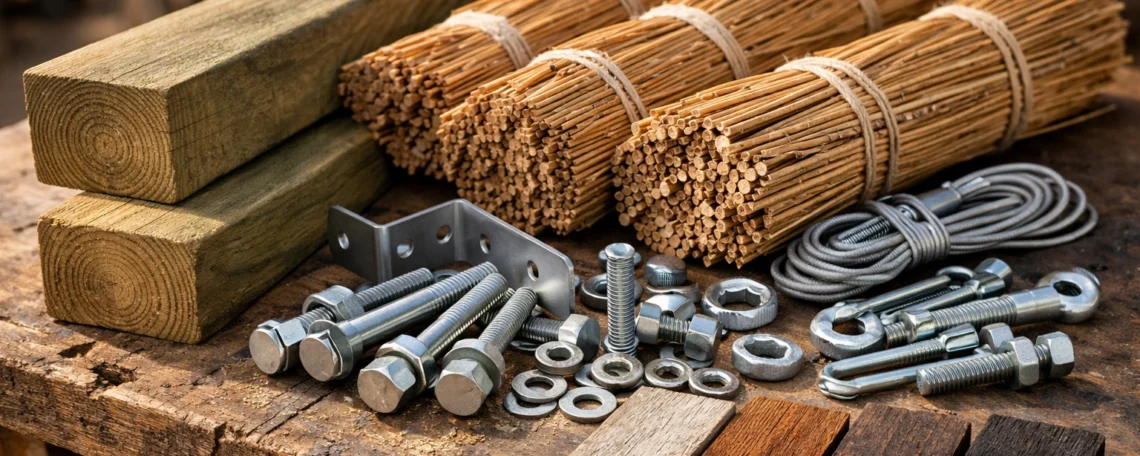
Cheap materials force you into repair cycles every few years, which doubles what you actually spend over a decade. The real cost shows up later, not in the price tag, but in ongoing repairs and early replacements.
The mistake starts at the quote stage. Many homeowners chase the lowest quote without checking treatment depth or timber grade. Those generic kits look identical in photos, but they use thinner posts or skip proper treatment. You might save a few hundred now, only to watch sections rot or warp before the ten-year mark.
It gets simpler once you know what makes outdoor structures hold up in Australian weather. Things like treatment depth, timber density, and thatch grade determine whether you’re fixing things every season or leaving them alone for years.
This guide covers the materials that actually last, and the cheap shortcuts that cost you more in the long run. Let’s get into it.
What Quality Means in Outdoor Structure Materials
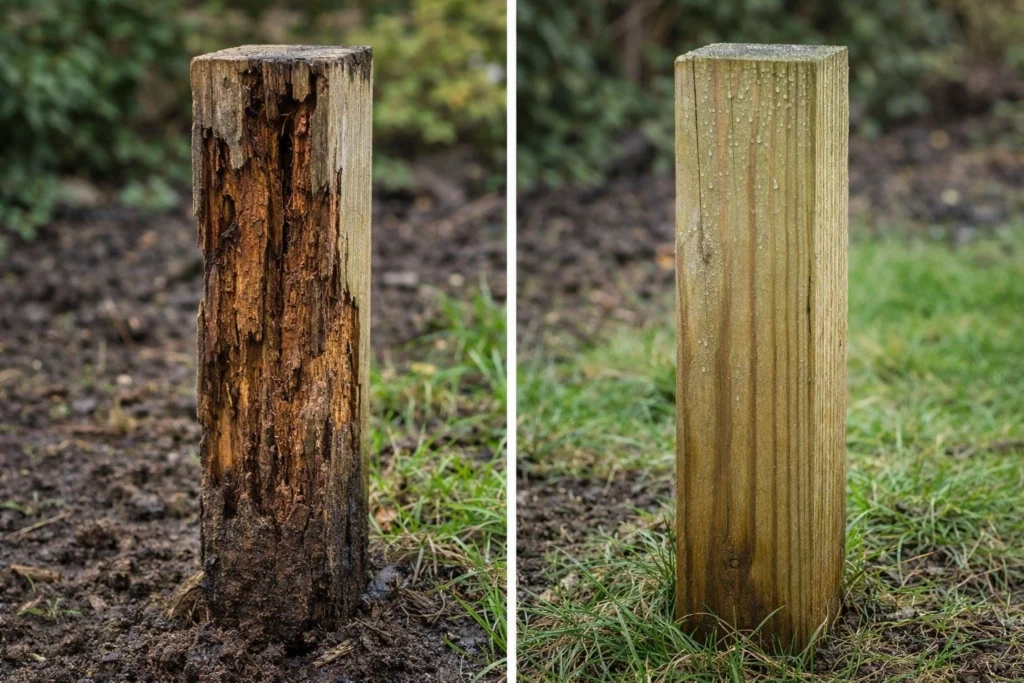
Quality in outdoor structure materials is about how well they fight off moisture, UV damage, and breakdown over the years. Three factors usually decide that: density, treatment depth, and water resistance.
First, density affects how much moisture a material absorbs. That’s why denser timber and thatch take in less water when rain or humidity rises, which helps prevent rot and mould over time. Lower-density timber, on the other hand, tends to show soft spots or surface decay after only a few wet seasons.
Treatment depth is just as important. Surface coatings protect only the outer layer of timber, so they wear off relatively quickly under harsh weather. Deep-penetrating treatments sink into the material itself, which allows them to keep protecting the structure for years. The difference often becomes obvious after several seasons, when lightly treated materials start deteriorating while properly treated timber remains stable.
Moisture isn’t the only thing breaking materials down. Constant sun exposure does the same damage. Natural timber usually needs treatment to handle UV exposure, while many synthetic materials build UV resistance into their structure. In both cases, denser materials with thorough treatment typically last longer.
You pay more upfront for that durability, but it shows up later in fewer repairs and replacements. Budget materials often need attention by year five, but quality materials usually keep doing their job with minimal intervention.
Premium Thatched Roofing: Years You Gain from Better Materials
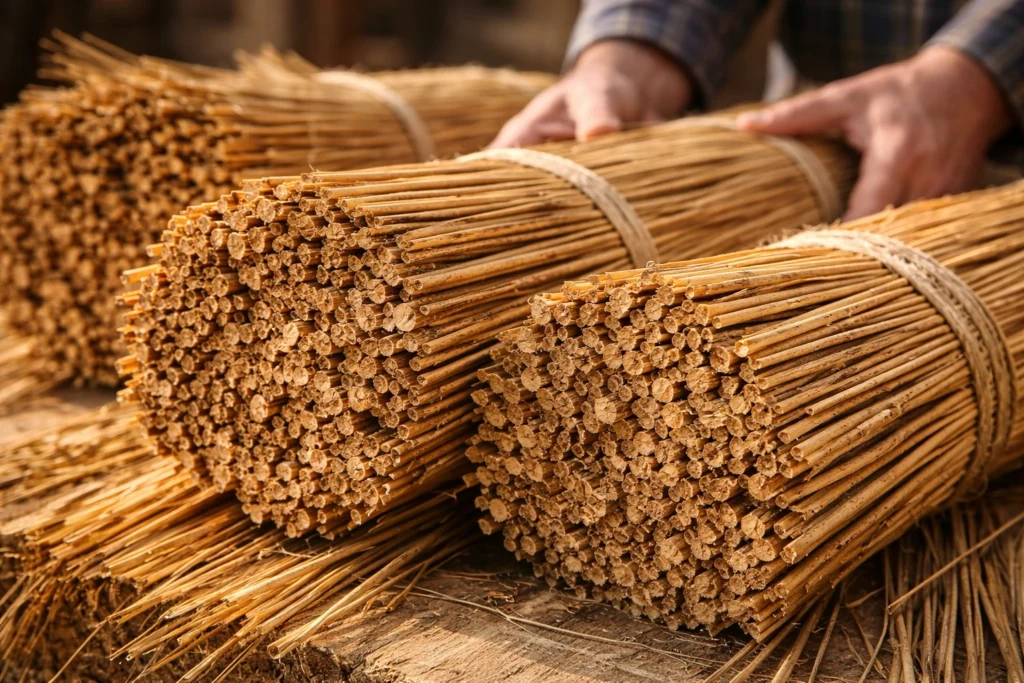
Not all thatch performs the same when weather exposure tests it year after year. According to the Thatch Advice Centre, water reed can last around 25–40 years, but longstraw thatching typically falls closer to the 15–30 year range.
What separates them? Material quality. Premium thatched roofing uses mature, properly processed plants with tighter bundling and higher natural density. That structure sheds water faster and resists organic breakdown, which is why you see those 40-year lifespans instead of 15.
Grading tells you a lot about how the thatch will hold up. Higher-grade Bali thatching, for example, performs better in humid coastal conditions because the fibres are denser and packed more tightly. Lower-grade thatch may look identical at installation, but deterioration often starts after just a few wet seasons.
Roof pitch is also important. Steeper roofs drain water faster, which reduces how long moisture sits in the thatch. But even with perfect pitch, lower-grade material typically needs patching by year five. Premium thatch on the same roof? It keeps going.
Bali Hut Frames and Posts: How Timber Grade Affects Longevity
Better timber grades save you from replacing posts early and dealing with structural repairs that cheaper timber demands. Here’s what separates timber that holds up from timber that breaks down too soon:
- Treated Pine with Deep Chemical Soaking: How deep the treatment penetrates decides how long the timber lasts. When it soaks deeper into the wood, it can resist termites and rot for decades, even when sitting directly in the ground. Shallow treatment may look fine at first, but it often fails once moisture and insects work past that thin protective layer.
- Density and Grain Tightness: Timber that’s denser and has tighter grain doesn’t soak up moisture the way softer, loosely grained wood does. That means posts handle seasonal shifts without warping or developing cracks that let water in.
- Higher Grades Resist Warping: Better timber grades stay straight as they age instead of twisting or splitting, so you’re not replacing posts years before you should.
The timber grade you choose sets the timeline for how long your Bali hut frame stays solid.
Natural Thatch vs Synthetic Options for Your Outdoor Space
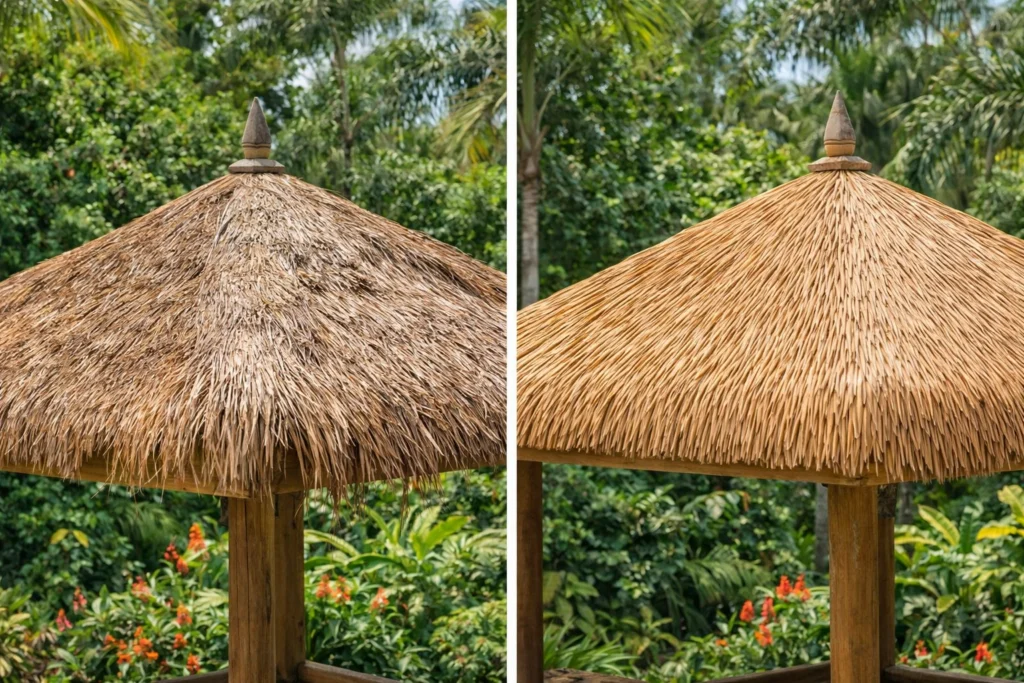
The roofing material you pick for your Bali hut changes how often you’re dealing with repairs. Both natural thatch and synthetic options have trade-offs worth considering:
| Feature | Natural Thatch | Synthetic Thatch |
| Lifespan | 15-30 years | 15-20 years |
| Appearance | Authentic tropical look | Mimics natural look |
| Maintenance | Regular care needed | Minimal upkeep |
| Weather Resistance | Vulnerable to humidity, mould | Resists moisture, UV fading |
Natural thatch delivers that authentic tropical aesthetic but requires consistent maintenance to hit its full lifespan. Synthetic thatch, on the other hand, sacrifices some authenticity for better weather resistance and low maintenance performance. Your choice depends on how important the look is, your local climate, and how much roof maintenance you’re willing to handle.
DIY Bali Hut Kit Quality: Spotting Materials That Last
Quality kits give you materials that hold up without needing repairs or replacements too soon. When you’re comparing DIY Bali hut kit options, watch for these quality markers:
- Pre-Treated Timber with Stamped Levels: Quality kits often come with timber that’s already been treated, and the treatment level should be stamped right on the wood. You also want hardware that’s actually built for outdoor exposure, not just standard bolts and brackets that’ll rust out in a year or two.
- Frame Pieces Without Weak Spots: Check the frame components for big knots, visible cracks, or sections that look thinner than the rest. These weak spots can weaken the whole structure over time, even if everything looks fine during assembly.
- Suppliers Who Back Their Materials: The better DIY Bali hut kit suppliers don’t just ship you a box and disappear. They tell you exactly what materials you’re getting and offer warranty coverage on the frame and structural components.
These markers help you spot whether you’re getting a kit that’ll hold up or one that’ll have you ordering replacement parts too soon.
Maintenance You Skip When Outdoor Structures Use Quality Materials
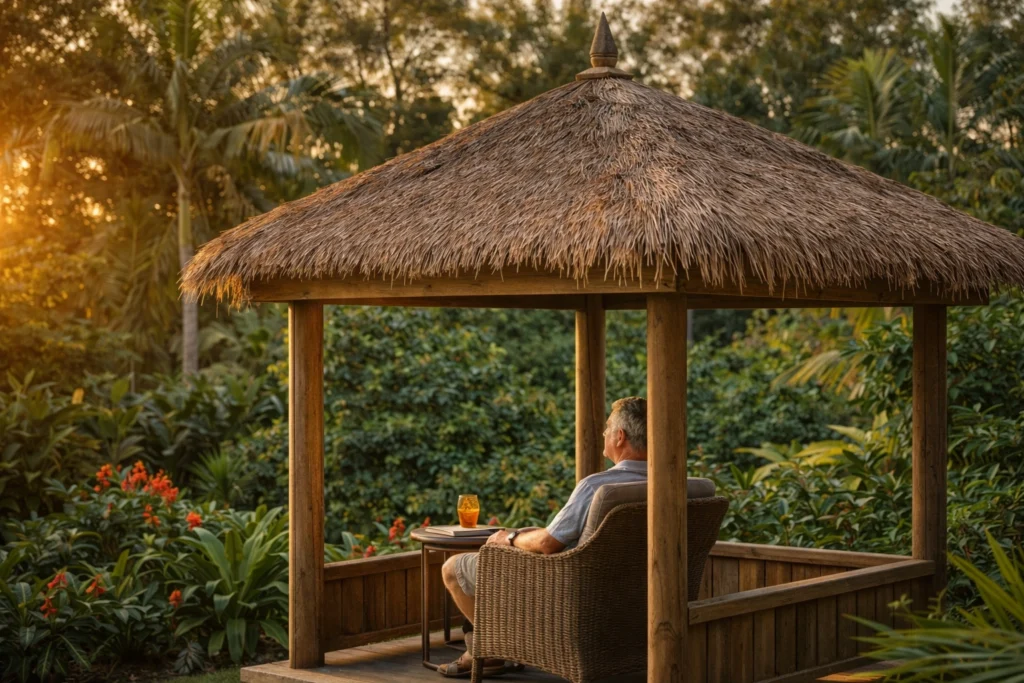
Picture two Bali huts built in the same year. One needs resealing every season, while the other just gets hosed off occasionally. Better materials don’t break down as fast, so you skip the yearly sanding, sealing, or repainting that cheap stuff demands.
Spending more upfront means less time and money on maintenance later. Take premium timber, for example. It doesn’t crack or split as quickly, so posts stay solid without needing replacement.
High-grade thatch works the same way. It resists mould and breakdown better, which cuts down on roof repairs. Even the hardware affects how often you’re doing fixes. When it’s built for outdoor use, it doesn’t rust, so you’re not swapping out bolts every few seasons.
Budget materials demand attention by year three or four. But with quality materials, you might not touch them until year ten. That’s the difference between constant weekend projects and just enjoying your backyard space.
Invest in Quality Now, Skip Repairs Later
The materials you choose during construction decide how much work your structure demands in the years ahead. Higher-quality components cost more upfront, but they trade short-term savings for long-term reliability.
That difference shows up in fewer repairs, fewer replacements, and more years actually enjoying your space. A well-built structure doesn’t just last longer. It stays usable without becoming a maintenance project.
If you’re planning a build, reach out to Georgia Wiseman about materials that balance budget with durability in Australian conditions. Choosing well now protects your structure for the long run.