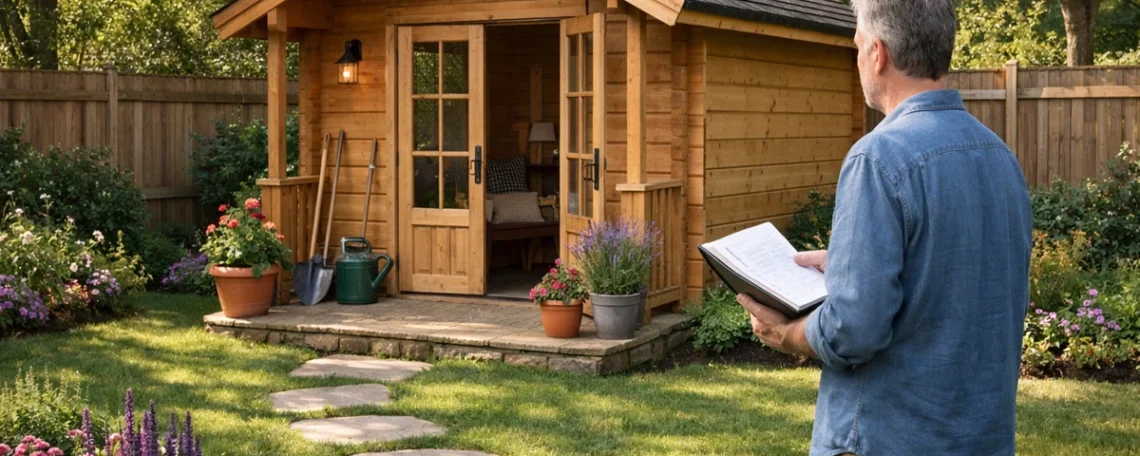
Choosing the right outdoor hut comes down to the size of your space, your climate, and how you actually plan to use it. A lot of Aussie homeowners jump straight into browsing styles online before they’ve even measured their garden, which is a big mistake.
Your backyard is beyond just a leftover space behind the house. It’s an outdoor area with real potential, which is why the hut you pick should work with it.
So in this guide, you’ll find everything from sizing and materials to installation tips and a handy shed comparison. By the end, you’ll know exactly what suits your property.
Read on and let’s find the right fit.
Outdoor Hut Guide: What Your Garden Space Actually Needs
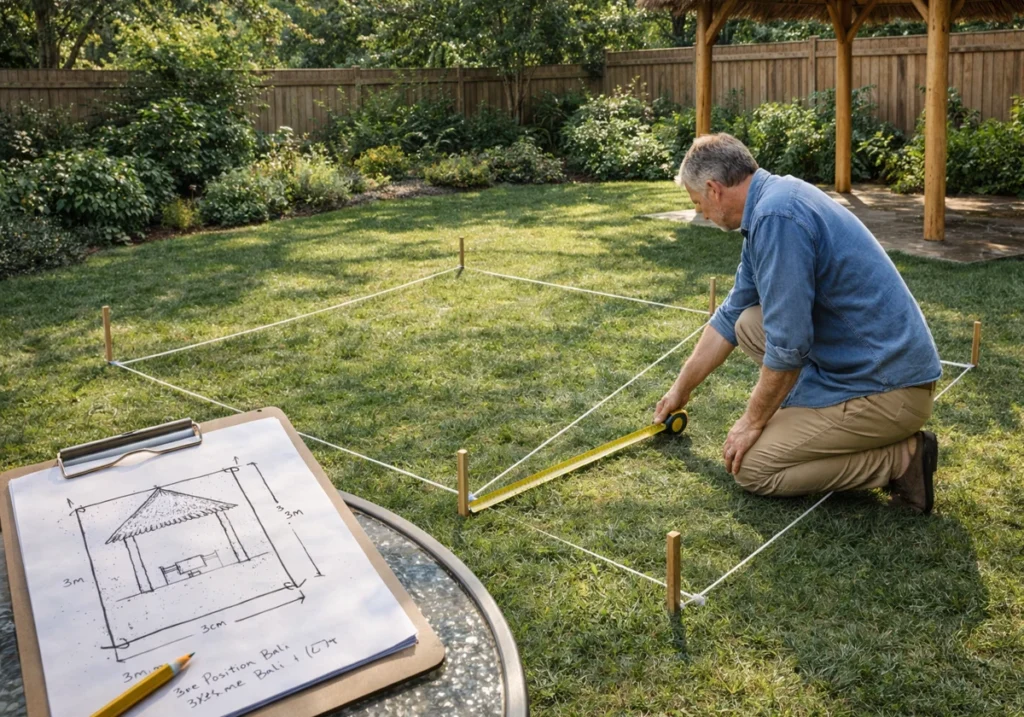
The right hut design starts with understanding your garden, instead of just browsing styles online. Your outdoor area, the way sunlight hits it, and the space you actually have are the factors that determine what will work in your garden.
However, two things tend to trip people up early in the planning process. So, always start your planning with these:
Size and Layout: Matching the Hut to Your Yard
Drawing from our experience, smaller yards suit compact Bali huts with a 3×3 m or 4×4 m footprint. This leaves enough room to move around comfortably without the hut swallowing up your whole garden.
The roof pitch, post height, and natural light all count here (trust us, we learned the hard way). Sometimes, even a low ceiling clearance can make even a well-built hut feel closed in, so factor that in before you build.
A good rule of thumb is to sketch your space out on paper first, including flooring options and where you want doors to face. Because an awkward location can make the whole setup feel cramped, and that’s a headache worth avoiding before installation day.
Outdoor Sheds vs. Bali Huts: Picking the Right Fit
Frankly, this is where the majority of the buyers get confused.
Outdoor sheds are fully enclosed structures built for storage andextra storage space, while Bali huts are open-air shade structures designed for living andentertaining. Although garages and garden sheds serve a purpose here, they’re a completely different thing from a Bali hut.
Bali huts use natural materials like thatch roofing and timber posts. That tropical, resort-style look and aesthetic appeal is something outdoor sheds and standard garden sheds simply can’t match.
So, if you want a space to relax, host guests, or properly enjoy your garden, a Bali hut wins hands down.
Materials, Build Quality, and What Lasts
The good thing about investing in quality materials is that you won’t be replacing or repairing anything for years. Believe it or not, the difference between a hut that holds up and one that doesn’t often lies in what it’s made from rather than just how it looks.
From what we’ve seen on the ground, timber frames made from treated pine resist rot and moisture far better than untreated alternatives (skip this, and you’ll regret it). Besides, this counts a lot in humid Australian climates where damp conditions and wet weather put constant pressure on outdoor construction.
Steel fixings and quality hardware also count just as much as the timber itself. Typically, windows, doors, and roof joints are the spots where weather gets in first. That’s why those need proper sealing and waterproof finishes to hold up through winter and summer alike.
Beyond these, colour and paint choices affect far more than style. In Australia specifically, lighter colours reflect heat better during summer, while darker tones absorb it. That means your colour choice has a real impact on how comfortable the space feels.
Most importantly, thatch roofing, made from dried palm or grass, adds natural insulation and can drop the temperature underneath the hut by several degrees on a hot day. On top of that, quality thatch has solid durability and handles the Australian climate better than any synthetic material.
Good construction also means checking the flooring and making sure materials suit your specific outdoor conditions. This way, choosing the right materials from the start significantly reduces maintenance down the track.
Safety Gear, Weather, and Structural Considerations
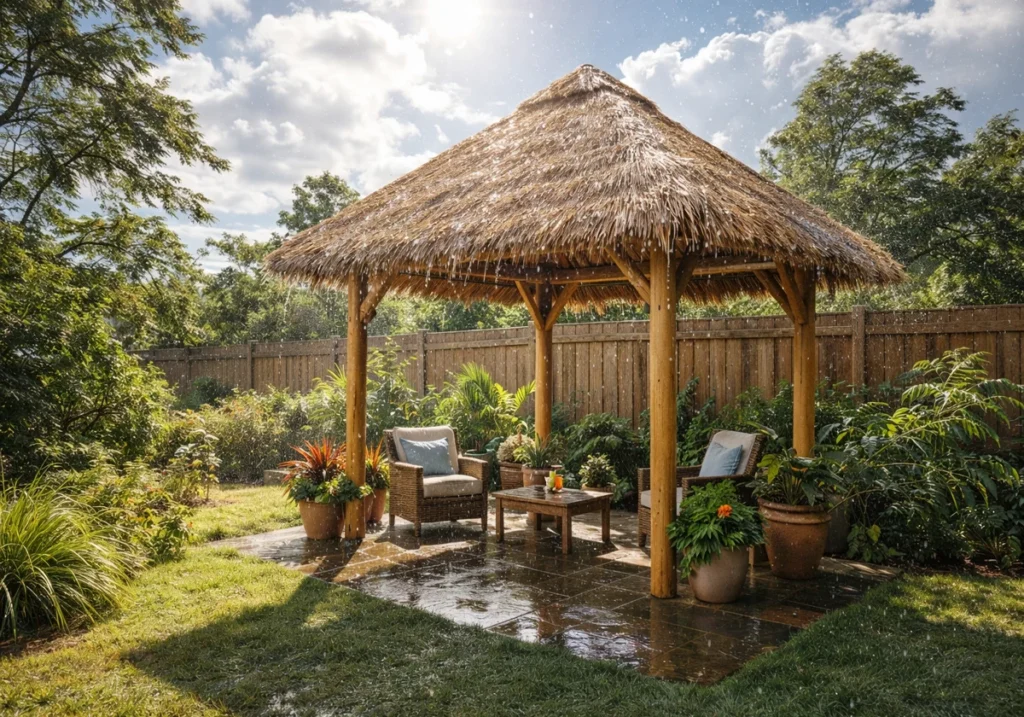
We’ve seen most people focus on looks and forget that a poorly anchored hut is a safety risk waiting to happen. But your property deserves a structure built to handle real Australian weather conditions.
There are two key parts to getting this right. Let’s break down what you should consider for each one:
Safety Gear and Anchoring: What You Shouldn’t Skip
Post anchors, bracket connectors, and concrete footings are the three main components that keep a hut stable in high wind conditions (this one also catches people off guard). If you skip any of these during installation, things can go wrong quickly
Your tools and equipment are important here, too. Basic safety gear like gloves, eye protection, and a spirit level isn’t optional when you’re handling heavy timber frames. They’re what keep the install safe and accurate.
In fact, a hut without proper anchoring can shift or collapse under pressure. Beyond the risk to your garden furniture and outdoor space, it puts your family and guests at real risk, too.
Wind, Rain, and Sun: Building for the Australian Climate
Australia’s climate varies wildly from coastal humidity in Queensland to the cold, dry winters in parts of Western Australia. As a result, material choice needs to match your region and the specific conditions your hut will face.
Besides, thatch roofing sheds water naturally on a 30-degree pitch, which makes it a practical choice for wet and rainy areas. In heavier rain-prone locations, you can also add a waterproof underlayer beneath the thatch, which gives you an extra layer of security through winter.
While snow may not be a concern for most of Australia, wind and summer heat are. In summer, UV exposure chews through cheaper materials fast. That’s why treated timber and quality thatch pay for themselves over time in any sunny Aussie backyard.
Now that you’ve covered structure and weather considerations, step back and compare your two main options side by side before you purchase.
Garden Shed or Bali Hut? A Simple Side-by-Side Comparison
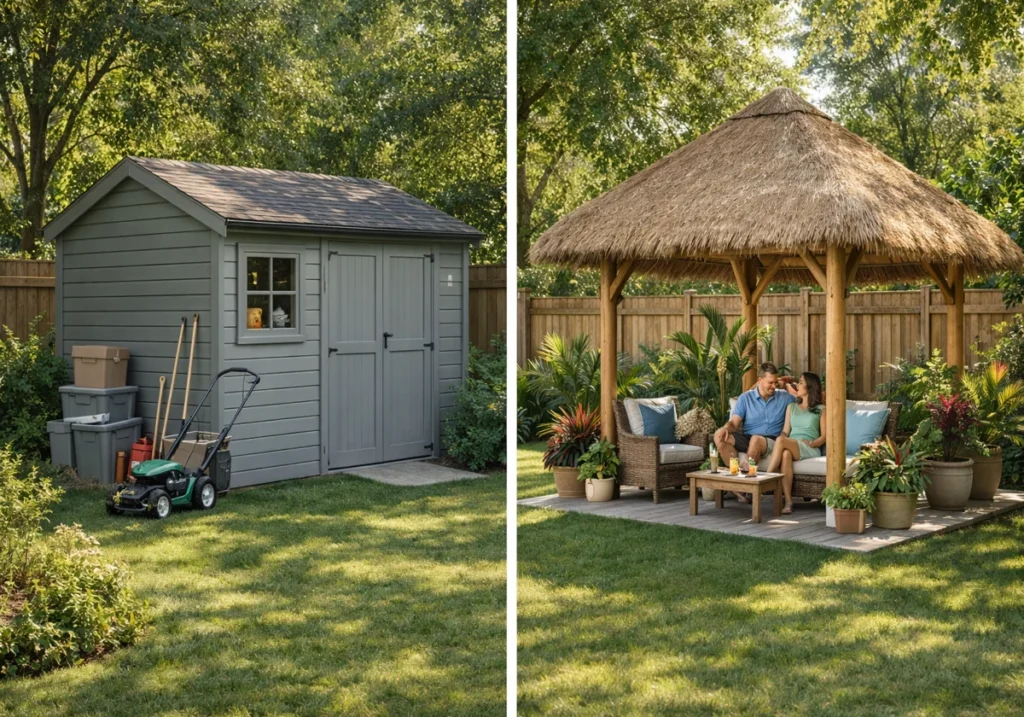
A quick side-by-side comparison between a garden shed and a Bali Hut saves you from buying the wrong structure for your backyard. Homeowners often mix the two up because both sit in the garden, but their purpose and feel couldn’t be more different (a small detail with a big impact).
Here’s a clear breakdown across the most important factors:
| Factor | Garden Shed | Bali Hut |
| Purpose | Storage, tools, equipment | Entertaining, relaxing |
| Materials | Steel, timber, plastic | Treated pine, thatch roofing |
| Style | Enclosed, practical | Open-air, tropical |
| Doors | Standard hinged or sliding | Open or partially open |
| Windows | Small, limited natural light | Fully open, bright |
| Colour & Paint | Wide range of colour options | Natural tones, timber finish |
| Accessories | Shelving, hooks, organisers | Outdoor furniture, lighting |
| Cost & Price | Budget to mid-range | Mid to premium range |
| Garages | Often used as an alternative | Not applicable |
| Security | Lockable, solid construction | Open by design |
| Aesthetic Appeal | Functional, plain | Resort-style, tropical |
Bottom line: Garden sheds and outdoor sheds are a no-brainer if the extra storage space is your main goal. They’re practical, secure, and come in a wide range across Australia to suit different property sizes and budgets.
But if you’re looking to create a proper outdoor living space, store nothing and enjoy everything, a Bali hut is in a completely different league. The quality, style, and complete outdoor experience altogether make it a better purchase for most Aussie backyards.
Your Garden, Your Call
Picking the right outdoor hut doesn’t have to be overwhelming. Once you’re clear on your space, your budget, and how you intend to use it, the right choice starts to stand out pretty quickly.
Here’s a quick recap before you go:
- Match your hut size to your backyard and available space
- Choose materials built for your region’s weather conditions
- Think about whether you need storage or an outdoor living area
- Factor in installation, maintenance, and long-term cost
Remember, your outdoor area has real potential, and the right hut can enhance it in ways a standard shed simply can’t. Whether you’re after a relaxed patio vibe or a full tropical setup, there’s a quality option in the range that suits your property.
At Georgia Wiseman, we build and supply premium Bali huts across Australia, designed to last and built to impress. If you’re ready to explore your options or just want some honest advice, get in touch with our team today and let’s make your backyard something worth sitting in.