Your poolside Bali hut should sit at least one metre back from the pool’s edge. That metre keeps splashed water off the timber posts, and it leaves you dry ground to walk on between swims.
Despite that, most owners pick a spot by eye. Then they notice the poles darkening after one hot summer. Georgia Wiseman fields that call often, usually once the timber has started to lift and stain around the base.
Here’s the thing. Placement costs nothing to get right and plenty to get wrong. This guide covers splash distance, council setbacks across Australia, and the questions buyers ask before they order.
Splash Zone Distance Affects Your Poolside Bali Hut’s Lifespan
Plenty of Australian homeowners set their hut by eye and only think about splash once the timber starts to rot. Water travels further than a quick look suggests. Kids bombing into the deep end every afternoon in January will prove it.
For context, the Bali hut design came from Bali, Indonesia, where thatched pavilions shade tropical gardens and open onto lush greenery. Your hut, however, has to survive beside a chlorinated backyard pool.
When a Bali hut sits too close, three things suffer: the timber, the paving, and your repair bill.
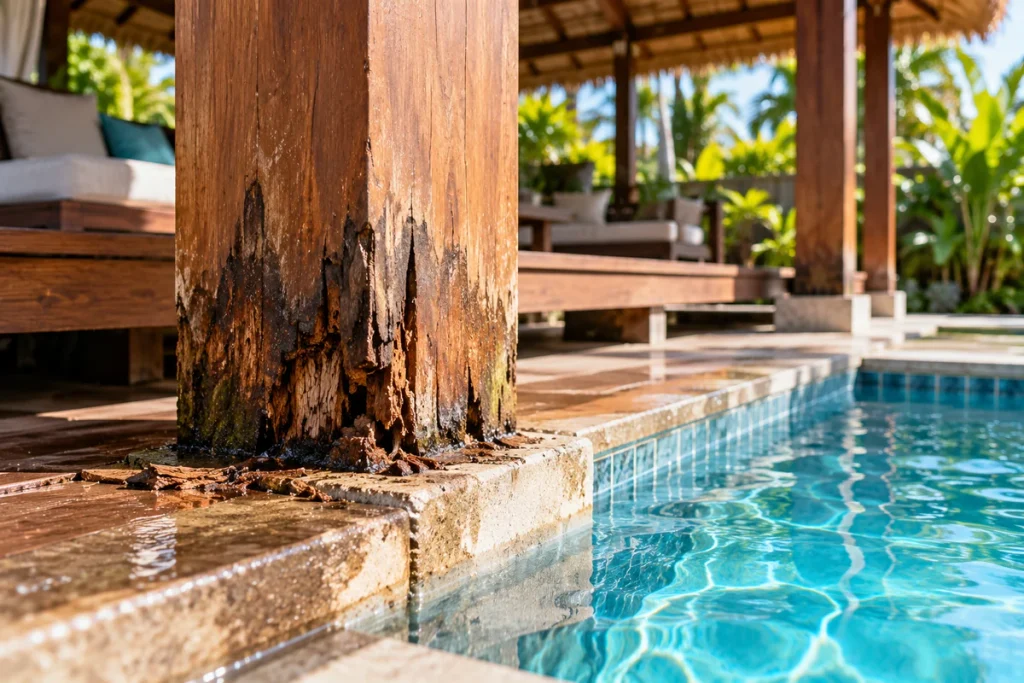
Water Damage and Timber Decay Near the Pool
Chlorinated water soaks into the base of each post and can stay there. The grain softens, and rot can set in within two or three seasons. We’ve pulled apart huts where the bottom 100 mm of every post had gone spongy while the timber above it stayed sound.
The same spray also keeps the fixings damp. Over time, cheap bolts can rust and leave streaks running down the timber (galvanised hardware handles this far better).
In this case, keeping one metre of dry ground protects your hut better than any sealer you brush on after the damage has started.
Why Do Wet Pool Edges Become a Slip Hazard?
Wet pool edges turn slippery because splashed water sits on smooth pavers, mixes with sunscreen, and carries off swimmers’ feet. Under the hut’s shade, that wet surface can also take longer to dry while people continue walking across it barefoot.
Placement can make that problem worse. If you set the hut tight against the water, swimmers will have to cross the wettest strip of paving whenever they move between the pool and the hut. Put your chairs and daybed there too, and people will have to repeatedly walk across that slippery area to sit down or get back into the pool.
Just a little distance changes that walking path. Move the hut back, and swimmers can cross the splash zone before they reach the seating area. It gives water more room to stay away from the space where people gather. Plus, the chairs and daybeds are now off the wettest part of the paving.
How Long a Well-Placed Bali Hut Will Stay in Good Condition
A well-placed Bali hut can last 15 to 20 years in an Australian backyard. Plan on refreshing the thatched roof somewhere around the 8 to 10 year mark, though.
Huts left in the splash line tell a different story. Expect post repairs by year five, and that labour costs more than repositioning ever would. Plenty of owners learn it the hard way.
Bottom line: The metre of lawn you give up now buys close to a decade of extra service (the cheapest upgrade you will ever make).
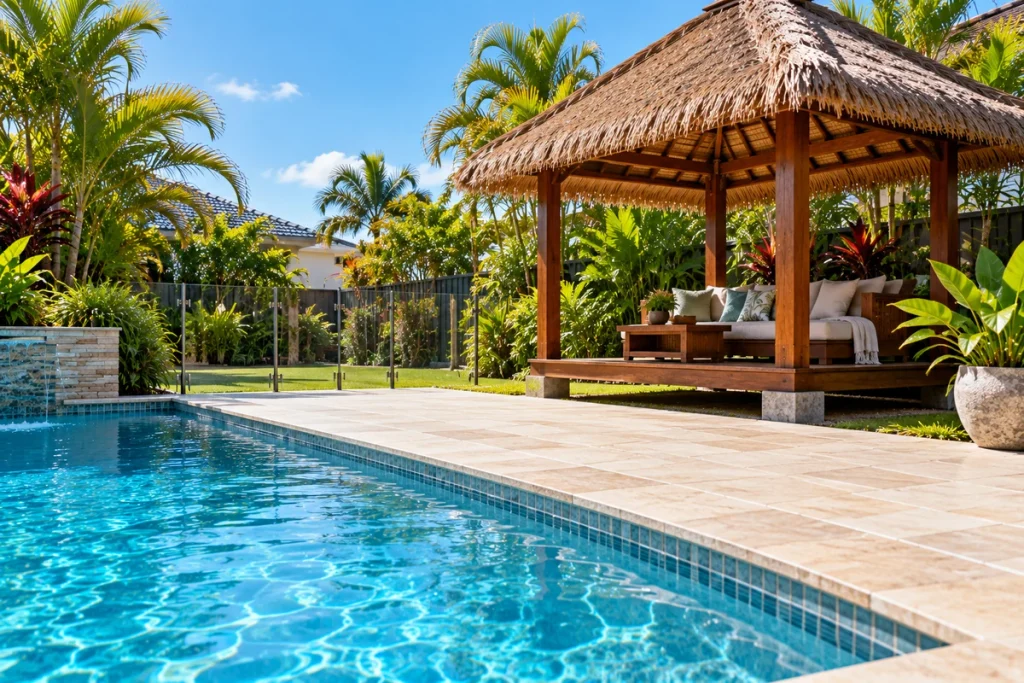
How Far Should a Bali Hut Sit From the Pool Edge?
As we were discussing, a Bali hut should sit at least one metre from the pool’s edge, with two metres ideal for splash-heavy pools. That first metre handles ordinary swimming. The second gives you extra distance from spray caused by diving, slides, and anyone doing laps with a heavy kick.
Every Bali hut by pool needs a second clearance too, and that’s the roof overhang. Thatch usually runs 300 to 500 mm past the posts on most designs. Measure from the outer edge of the thatch, or the finished roof could sit closer to the pool than the post position suggests.
Water features change the sums again. Spillways and fountains can carry mist further once an afternoon breeze picks up. One client shifted a three metre round hut back another 600 mm for that reason, and the staining stopped within a season.
Ground fall counts as well. Runoff heads for the lowest point, so a hut sitting downhill from the pool can collect water running across the paving. We suggest watching where puddles form after a storm, then set your posts on the higher side of that line.
Check the shade line last. The sun sits lower later in the afternoon, and moving the hut further from the pool changes where its shade falls. On a small private pool, a two metre setback can still leave a clear walkway on three sides (measure it with a tape, not your eye).
Council Setbacks for a Pool Shade Structure: What Australian Homes Require
The number of home pools in this country is about 1.2 million, so plenty of backyards have structures sitting close to water. However, you need to check with your council before you order anything.
Requirements vary by state and council, and factors such as floor area, roof type, height, and location can affect whether approval is needed. Honestly, ten minutes on the phone can save you from changing the structure or its position later.
Here’s a brief on the rules set by the councils of each state.
| State | Minimum setback from the pool barrier | Permit requirement |
|---|---|---|
| NSW | 1 m clear of the fence | Exempt under 25 m², otherwise a development application |
| VIC | 1 m clear of the fence | Building permit once you pass 10 m² |
| QLD | 900 mm clear of the fence | Building approval once you pass 10 m² |
| Western Australia | 1 m clear of the fence | Building permit for structures over 10 m² |
Confirm the details locally before fixing the hut’s position, because the requirements can change with your property and proposed structure. You can also send your council or certifier’s requirements to our delivery and installation crews, and we can set the footprint to suit.
Answering Frequently Asked Questions About Poolside Bali Huts
These are the questions Australian buyers ask most. Nearly all of them come up at the quoting stage.
Distance From a Private Pool: Allow at least one metre for a standard swim area, and more room anywhere the splashing runs heavy.
Council Approval: Approval requirements depend on the structure’s size, design, location and the rules that apply to your property.
Small Backyard Options: Round designs suit tight surrounds, and a 2.4 metre hut can fit a courtyard while leaving room around the paving.
Staying Cool in Summer: Thatch blocks harsh sun and holds very little heat, which is why it is widely used for shaded outdoor areas in places such as Nusa Dua.
Delivery Timeframes: Most huts arrive and go up within one to two weeks, depending on weather, site access, and any required approvals.
In short, give the water enough room, check the rules that apply to your property, and pick a size that fits the space you have. That way, you reduce the risk of placement problems, approval delays, and changes during installation.
Plan Your Bali Hut Placement Before You Build
Placement affects how long your hut lasts, and one metre of clearance can protect more than the timber alone. Get that distance right, and you can keep the posts drier, reduce slippery paving, and give swimmers more room to move.
So measure your pool surround this weekend. Mark the roof line with string and check the council rules before you commit. An hour spent measuring now can save you from moving or rebuilding the hut later.
Ready to shade your pool? Georgia Wiseman builds and installs Bali huts for homes right across the country. Contact us for sizing advice and a delivery date that suits your build.
