Bali hut termite risk starts where timber meets the ground, because that single contact point gives subterranean termites a direct path straight into your posts. They travel up through the soil, reach the timber, and start feeding well before the outside of the post shows a mark.
Most owners only think about this after the thatch sags or a post shifts under a gentle push from one hand. That timing hurts, since an early fix costs a fraction of replacing the frame and re-thatching the whole roof.
This guide covers the warning signs, the protection options, and the maintenance habits that keep your Bali hut standing for decades. Let’s get into it.
Why Are Bali Huts So Attractive to Termites?

Bali hut termites get their start where timber meets the ground. That one contact point gives subterranean termites a straight path into your posts, and they feed for months before the outside of a post shows a mark.
Most owners only look closely after the thatch sags or a post shifts under one hand. Honestly, that timing hurts. An early fix costs a fraction of replacing the frame and re-thatching the roof.
Timber and thatch sitting in soil hand a colony shelter, moisture and food in one spot. Termites are social insects, so a single nest can send thousands of workers at that free meal. Three weak points explain most of the damage.
Subterranean Termites Love Ground Contact
Subterranean termites nest below ground and travel through soil to find food. A post buried in dirt gives termites a free entry point.
Termites target wood for the cellulose it contains, and damp softwood is the easiest meal around. For this reason, footings deserve more attention than the roof above them, since a post set directly into the ground stays wet for days after rain.
Across the huts we have repaired around Brisbane, the posts sunk into soil always fail first (the roof usually outlasts them by years).
Does Bali Hut Thatch Attract Termites Too?
Natural Bali hut thatch rarely draws termites on its own, since alang alang and cape reed are grasses rather than wood. However, the timber frame underneath is what attracts them.
Worn thatch causes the problem indirectly, because a leaking roof soaks the timber frame and keeps it damp for weeks at a time.
Most thatch that Bali hut owners buy today is either natural grass or a synthetic Bali panel. Both types shed water reliably when the installer laps each panel correctly, so the joints are the first place to check when a leak appears.
The Weak Links: Posts, Footings and Hidden Timber
Posts, footings and hidden timber cause most failures, and each one hides the trouble until the structure starts to move.
Stirrups lift every post off the slab so the timber never touches soil, and stainless steel fittings stop rust from opening gaps. Many Bali hut kits ship with untreated frames, and soft coconut pine gives a colony an easy meal.
Check the hidden pieces too. Bearers, handrails, and roof structures all sit where you would never think to look.
Early Warning Signs: How Bali Hut Termites Show Up in Outdoor Timber Structures
Design aside, most owners notice trouble months after the colony has already moved in. Passing your hut every day for five years means you stop noticing it. The surface still looks like solid timber, but the core has quietly turned to paper.
Here is the thing. State Forestry independent data shows that one in every five Australian homes will be attacked by termites at some point in its life. Outdoor timber structures are even more exposed than most homes, sitting much closer to the soil.
Five signs give the game away early, and none of them needs a ladder.
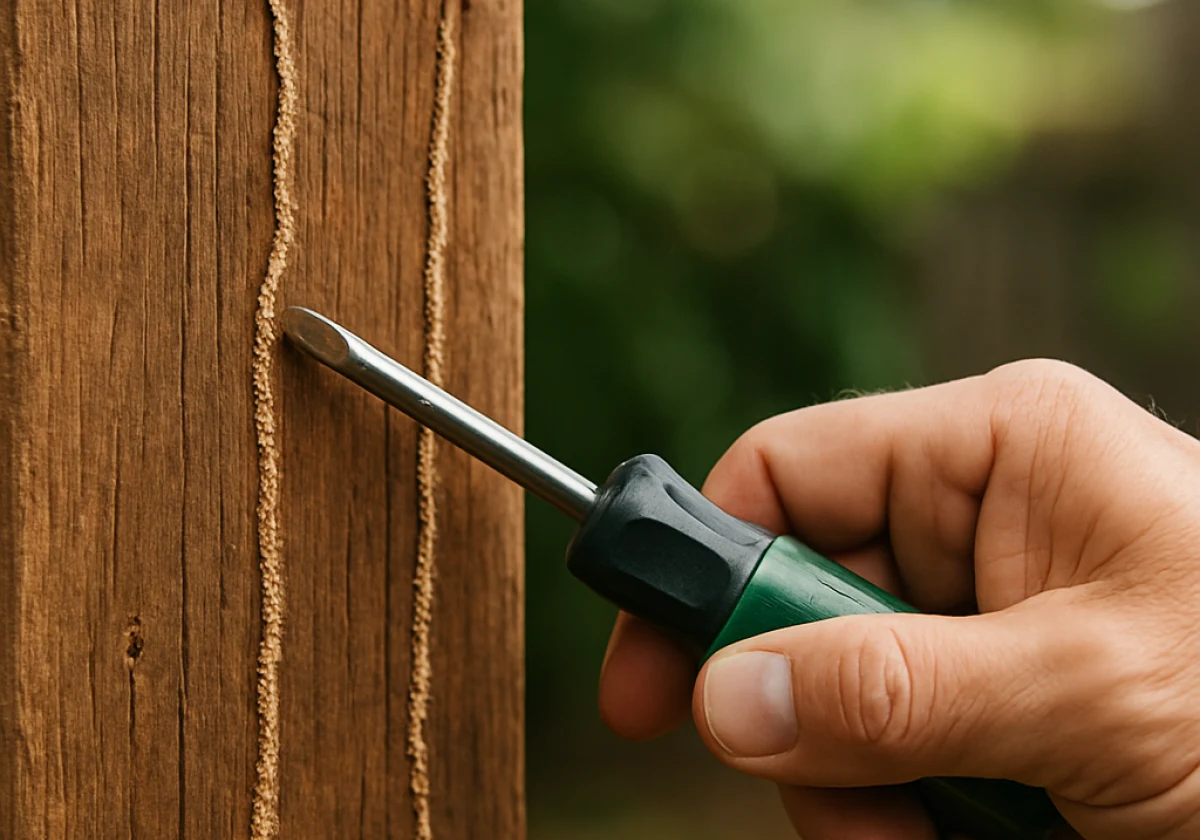
- Mud Tubes on Posts: Pencil-thin lines of mud up a post show workers commuting between the underground nest and your timber.
- Hollow-Sounding Timber: Tap each post with a screwdriver handle and listen for a drum note instead of a solid thud.
- Sagging Roofline or Thatch: When the ridge dips or one side slumps, a frame member has lost its strength.
- Discarded Wings and Frass: Tiny wings on the slab after warm, humid weather point to a nest close to the house.
- Soft Spots Near Water: Where water pools or drips, the timber stays soft, and a thumb press sinks into the surface.
Two signs together usually mean an active colony rather than old damage left by a previous owner. In that case, book a pest inspection that week rather than waiting for the next storm.
Choosing the Right Timber Termite Protection for Your Bali Hut
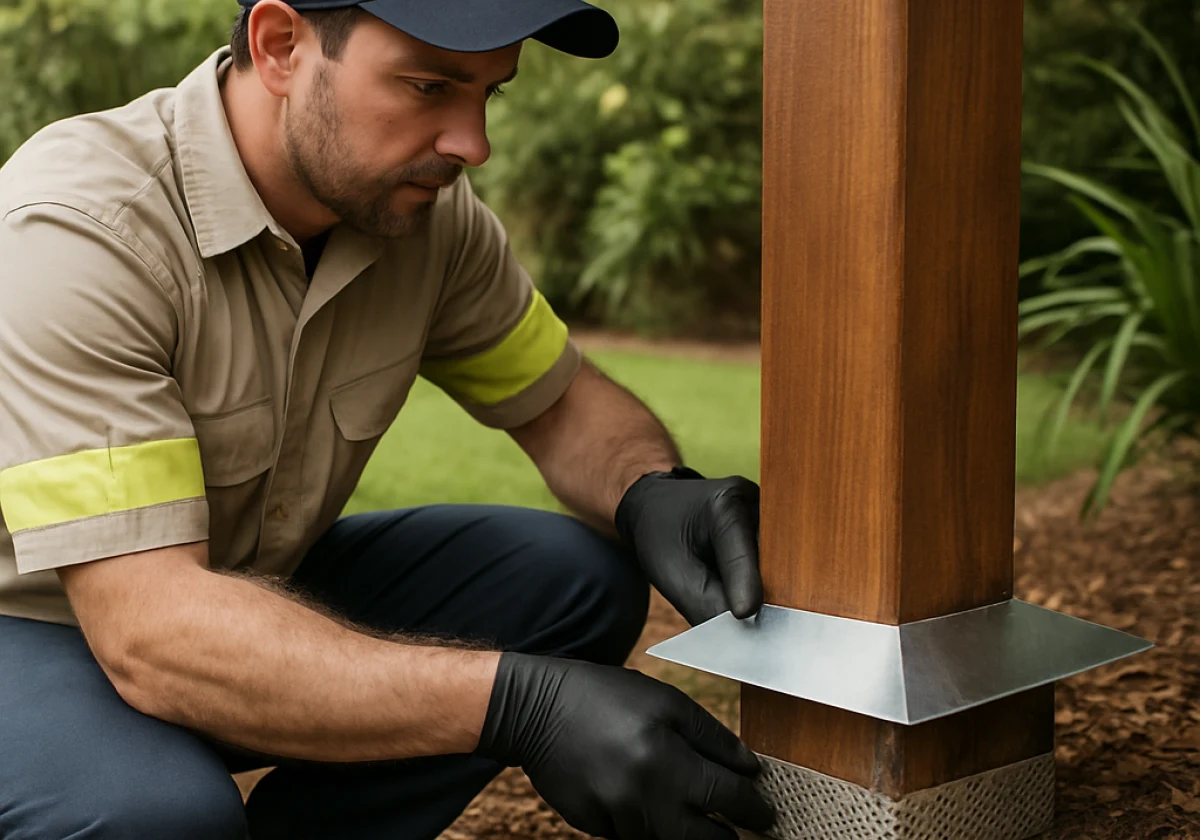
Good timber termite protection adds years to a hut for less than one repair bill. Your best option depends on whether you are building now or defending a hut already in the ground.
| Option | Best For | Typical Cost | Longevity |
|---|---|---|---|
| Physical barriers (stirrups, ant caps, mesh) | New builds and post replacements | $300 to $800 | 20 years plus |
| Chemical soil treatment | Existing huts with ground contact | $600 to $1,500 | 5 to 8 years |
| DIY kits | Small gazebos and low-risk sites | $80 to $250 | 1 to 2 years |
| Professional termite management system | High-risk blocks and large structures | $2,000 to $4,000 | 8 years with annual checks |
Call a licensed pest controller the moment you spot live activity, as a DIY kit cannot reach a nest sitting metres away beneath the lawn. By contrast, the chemical treatments that termite technicians apply around your footings will typically last five to eight years.
Before work begins, ask what the termite treatment covers and whether your build includes a structural warranty. Australian Standards already specify termite management requirements for new homes, and meeting that same standard for your hut adds very little to the build cost.
A DIY Bali hut kit can still be properly protected. The key requirement is that the posts rest on stirrups and never contact the soil directly.
Regular Bali Hut Maintenance Keeps White Ants Away for Good
Simple Bali hut maintenance habits keep termites from coming back season after season. Regular inspections termite specialists run each year cost around $300 and catch activity while it’s still confined to one post or bearer.
It’s the same inspection pest controllers run on a house, only quicker. Book yours in the same month each year so the job never slips off the list.
Between visits, keep soil, mulch and garden beds at least 75 mm clear of every post so the base stays visible. Leaks deserve the same urgency, since a dripping spa fitting or a blocked downpipe keeps timber wet long enough for a colony to settle in. Fix them the week you notice (a $12 washer beats a new post).
After a big blow, check the thatch for lifted sections and thin patches. Plenty of owners leave this until the first drip appears inside, and by then the frame has taken weeks of water.
Huts we installed years ago still have sound posts, and the owners who kept mulch clear of the base are the reason why. Buyers read a sagging roof as a bill waiting for them, so a well-kept hut protects property value too.
Bottom line: An outdoor living space is only worth what the frame under it is worth.
Give Your Bali Hut the Care It Deserves
Bali hut termites never announce themselves, and the ground contact under your posts does the damage quietly over several seasons. Two or three checks each year keep a small problem from becoming a full rebuild.
Walk out this weekend, look hard at the base of every post, and note anything soft, muddy or damp. Then get a qualified set of eyes on whatever worries you (five minutes now beats a rebuild quote later).
Georgia Wiseman builds, re-thatches and maintains Bali huts, gazebos and outdoor timber structures for homes right across Australia. Contact us to book an inspection and enjoy real peace of mind.
