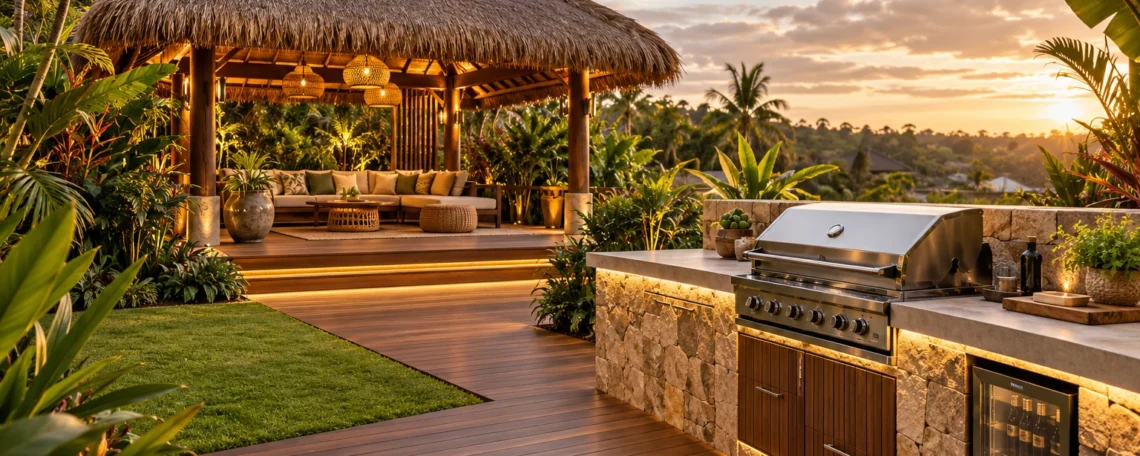
A Bali hut gives your backyard the feel of a tropical outdoor retreat, especially when you pair it with a BBQ. But placing the barbecue too close to the hut can leave you dealing with smoke, radiant heat, and cooking grease where you don’t want them.
So, how do you get the relaxed outdoor-kitchen setup without creating a problem for the hut, the roof, or anyone sitting underneath it? You plan the cooking area around the structure before the first post goes in.
And if you don’t know how, we’ll show you. You’ll learn how to position the BBQ, choose suitable roofing, and plan the space around your Bali hut.
How Far Should a Bali Hut Sit from Your BBQ or Cooking Area?
Start with enough space between the BBQ and the hut, then consider the type of grill you’re using and where its heat and smoke will travel. Let’s break each one down in detail.
Minimum Clearance Between a Bali Hut and Your BBQ
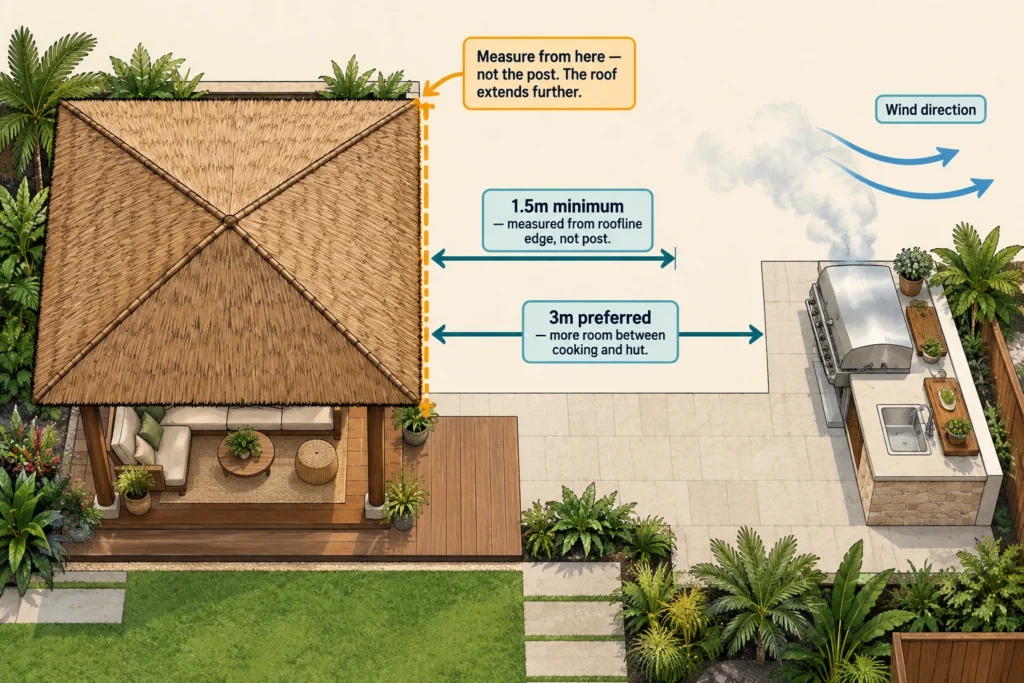
Keep at least 1.5 metres between a built-in barbecue and the nearest post. If you have the space, around three metres gives you more room between the cooking area and the hut.
When measuring the distance, use the edge of the hut’s roof, rather than the supporting post, as your reference point. The roof usually extends beyond the posts, so measuring from the post alone can make the BBQ seem farther away than it actually is.
Also consider what sits above and around the BBQ. A cooking area directly beneath or beside a thatched roof can expose it to heat, smoke, and grease over time.
Gas, Charcoal and Wood-Fired BBQs Need Different Considerations
The type of BBQ affects how you use the space around it. Gas BBQs generally produce less smoke and don’t create loose embers, while charcoal and wood-fired grills can produce sparks, ash, and heavier smoke.
If you’re using a charcoal or wood-fired BBQ, allow more space between the grill and the hut. Keep the grill outside the roofline so sparks and smoke have less chance of reaching the thatched roof. This also gives you more room to manage the grill safely.
Place the BBQ Where Smoke Blows Away from the Hut
Wind direction affects where smoke travels around your yard. Even with enough space between the BBQ and hut, smoke can drift towards the thatched roof or seating area.
So before choosing the final position, watch how the breeze moves through your yard. Where possible, place the BBQ so the usual wind carries smoke away from the hut and other areas where people sit.
And if you can, check the position at different times of day because wind direction changes. This way, you can avoid a setup where smoke regularly blows into the hut while you’re cooking.
Keep the BBQ Outside the Bali Hut’s Roofline
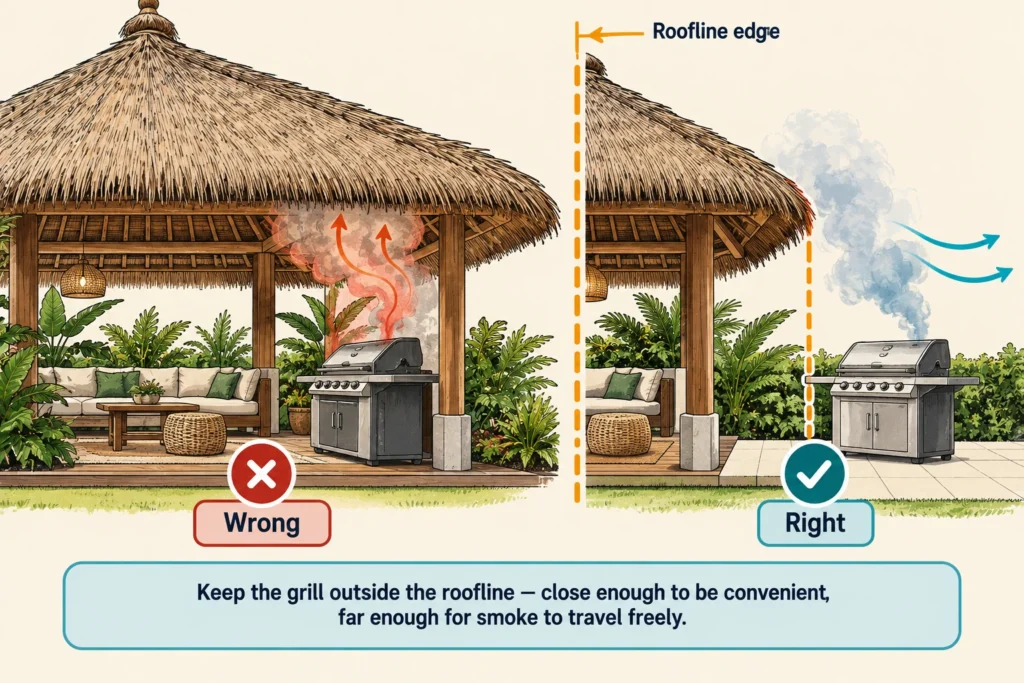
The roof changes what happens to heat and smoke around your BBQ. Put the grill too close, and you could end up with smoke hanging around under the hut instead of drifting away.
So, keep the grill outside the roofline rather than tucking it underneath the thatch. It can still sit close to the hut, keeping the BBQ within easy reach when you’re cooking and everyone else is relaxing.
Building the Bali hut from scratch? Decide where the BBQ will go before you settle on the hut’s size and position. That way, you can give the cooking area enough room without squeezing everything in later.
Check Your Local Council Rules Before You Build
You’ve worked out where the BBQ should sit and how much space to leave around it. Before you start digging holes, there’s one more thing to check: whether your planned setup needs council approval.
The rules can depend on the size and height of the hut, where it sits on your block, and whether you’re adding a fixed cooking area. They also vary between states and councils, so don’t assume a setup that works next door will work on your property.
Small huts may qualify for an exemption, but that doesn’t mean every Bali hut and BBQ setup does. Use the figures below as a starting point, then check the current requirements with your local council before ordering materials.
| Region | Common exemption limit | Usual boundary setback |
|---|---|---|
| Queensland (Gold Coast, Sunshine Coast) | Up to 10 sqm, under 2.4 m high | 900 mm from fences |
| New South Wales | Up to 25 sqm on lots over 300 sqm | 900 mm from boundaries |
| Victoria | Up to 10 sqm, under 3 m high | 1 m from boundaries |
| South Australia | Up to 15 sqm, under 2.5 m high | 900 mm, varies by zone |
Bushfire zones and heritage overlays can add extra requirements, too. So if your property falls into one of these areas, check the exempt development rules on the NSW Planning Portal or your own state equivalent.
Leave Enough Room Around the BBQ
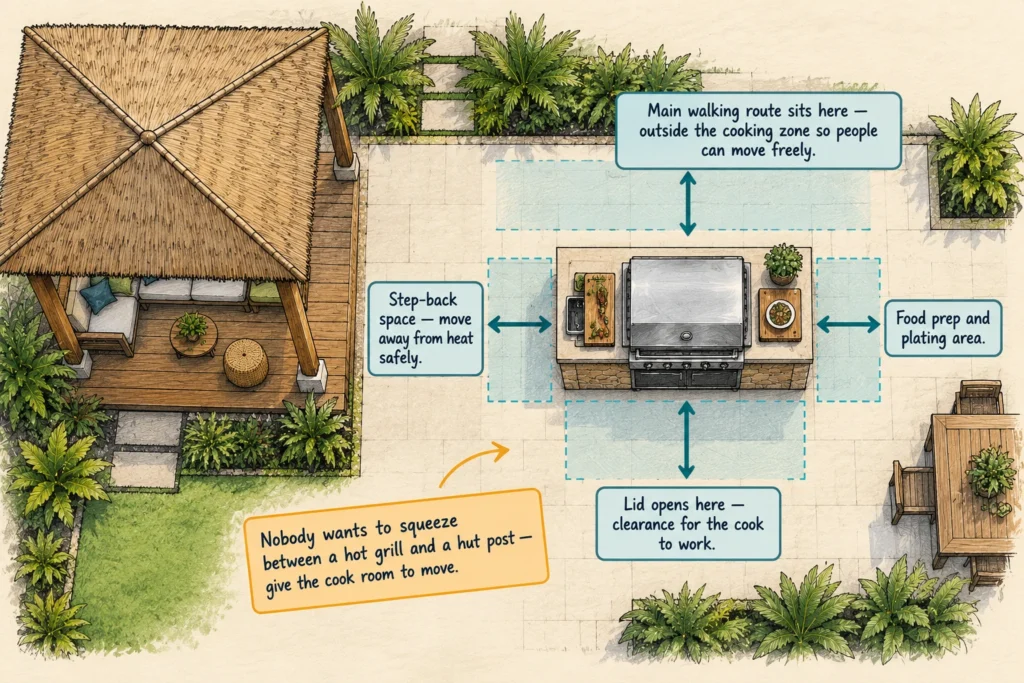
Once you’ve worked out the BBQ’s position, think about what needs to happen around it. The cook needs room to move, guests need somewhere to sit, and nobody wants to squeeze between a hot grill and a Bali hut post.
To avoid that, keep enough space around the BBQ to open the lid, move food, and step away from the heat.
It’s also worth keeping the main walking route outside the cooking zone. That way, people can move between the hut, house, and garden without crossing directly in front of the grill.
And if you’re adding screens or planting around the area, don’t use them to trap the smoke. Give smoke somewhere to move rather than surrounding the BBQ with dense barriers.
The goal isn’t to build a huge outdoor kitchen. You just need enough room for the BBQ to work comfortably while the Bali hut remains an easy place to sit, eat, and relax.
Bringing Your Bali Hut BBQ Area Together
Now you know what to consider when placing a BBQ near your Bali hut. Give the cooking area enough space, keep the grill outside the roofline, and think about where the smoke will travel.
Get those details right before you build, and you can spend your afternoons cooking and relaxing without constantly worrying about heat, smoke, or where the BBQ should sit.
If you’re planning a new Bali hut for your backyard, Georgia Wiseman can help you choose the right setup for your space. Reach out to the team to discuss your plans and find a Bali hut that suits your outdoor area.