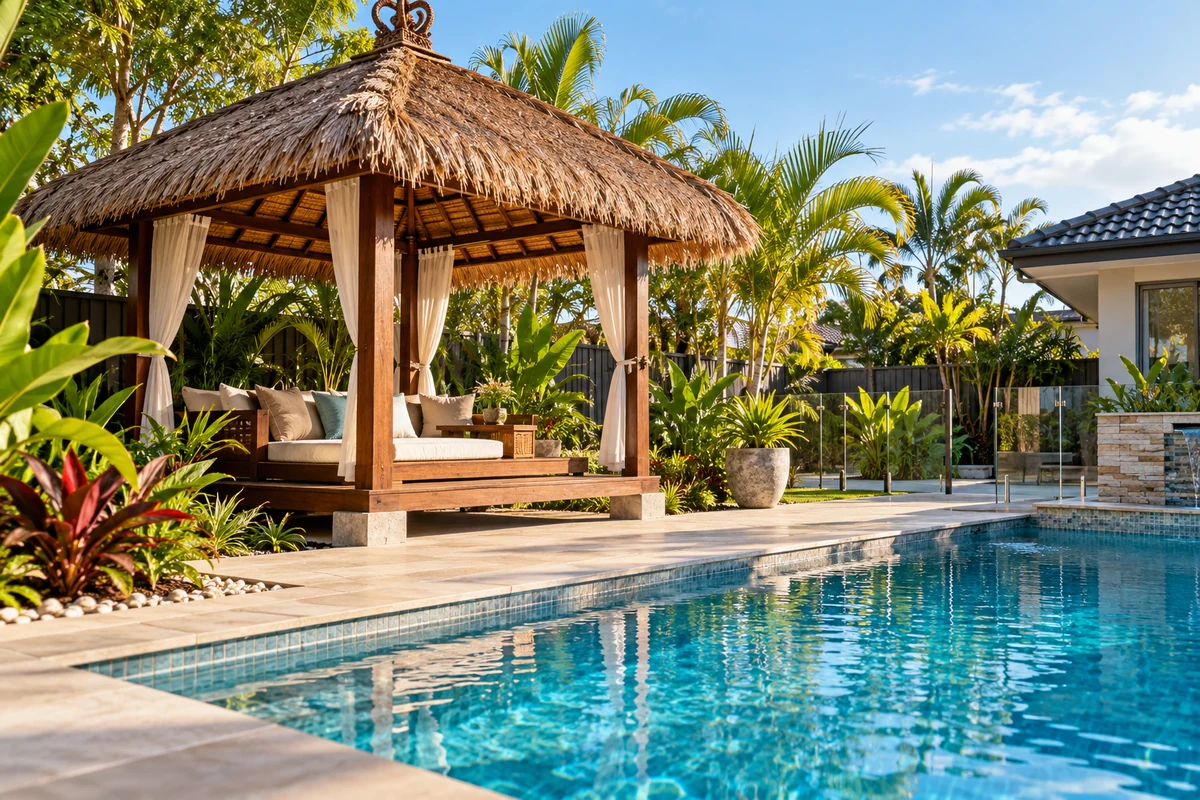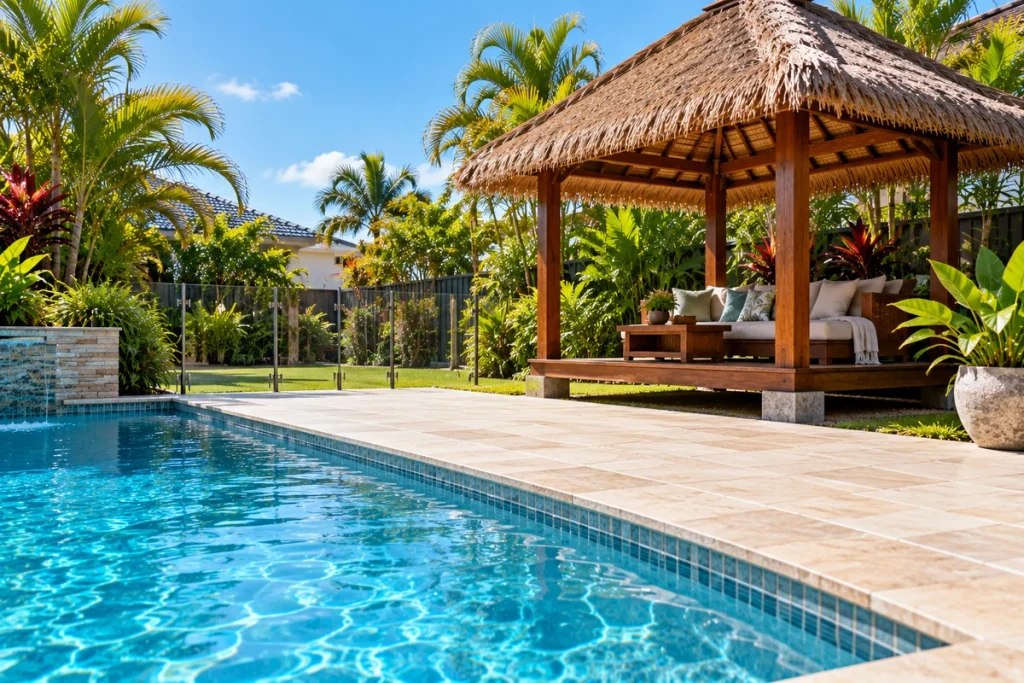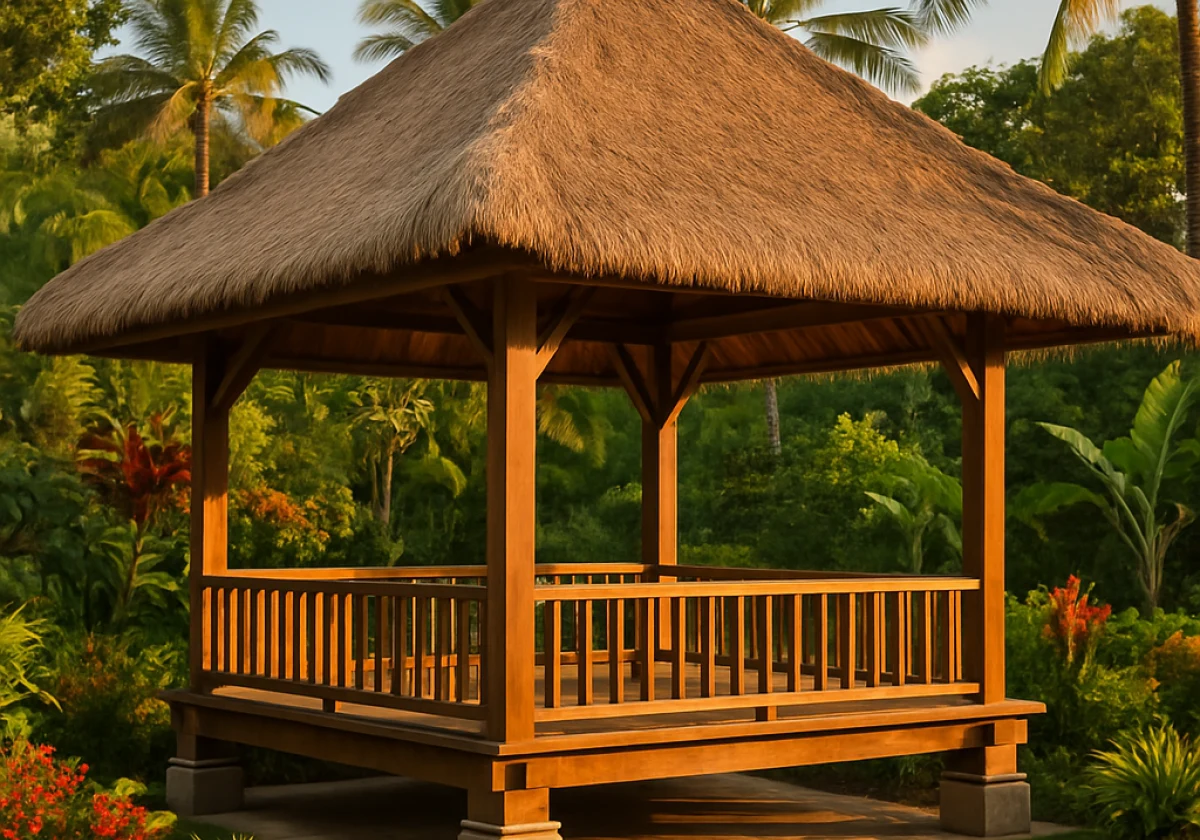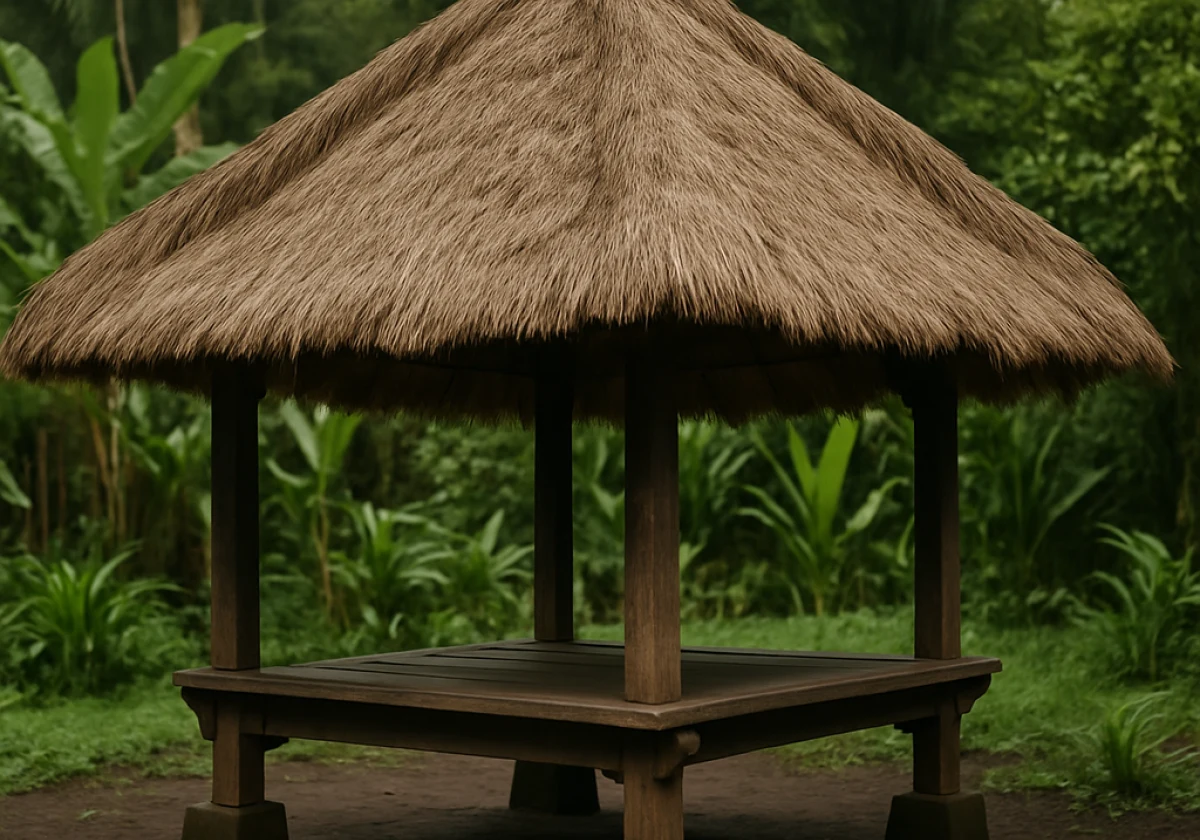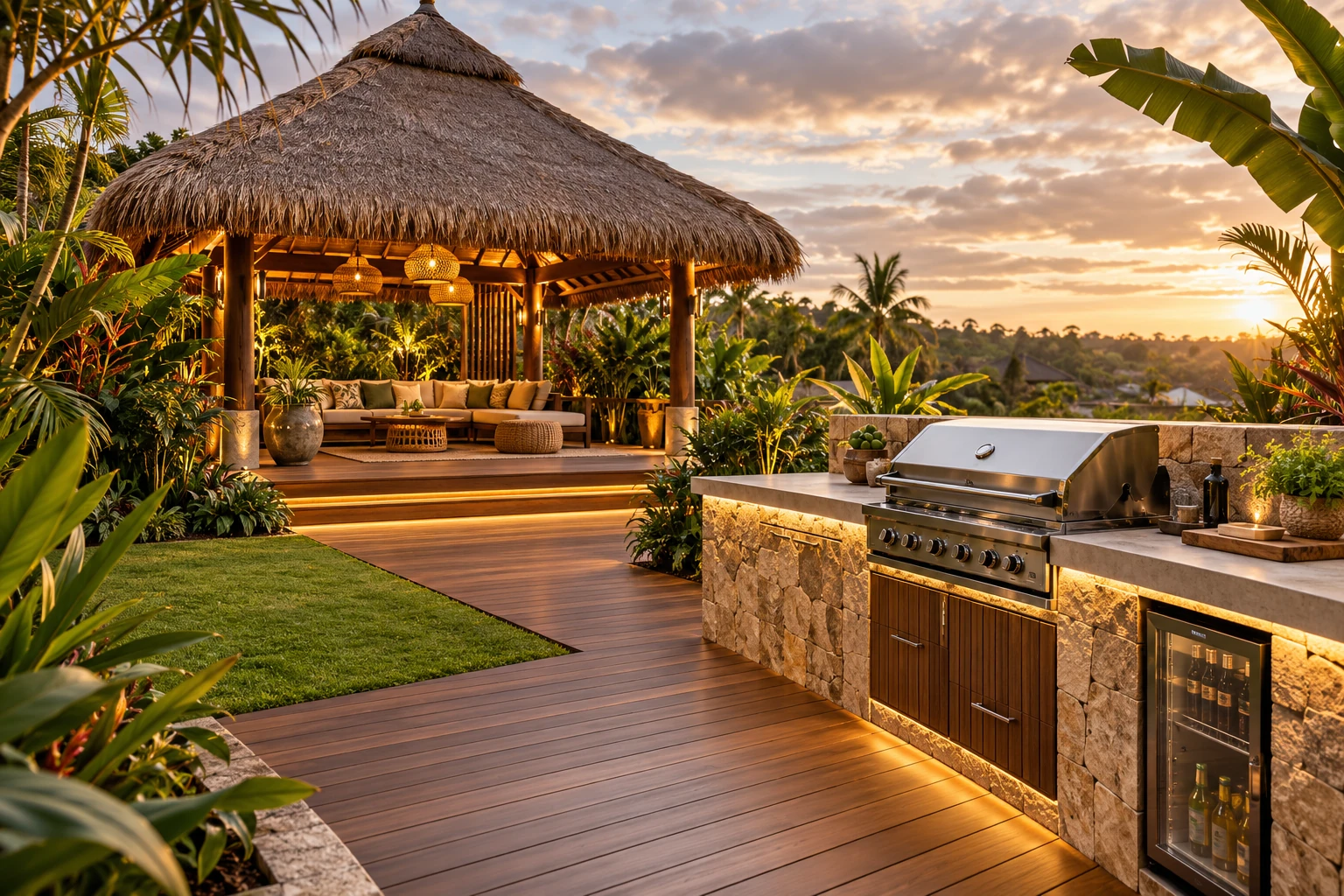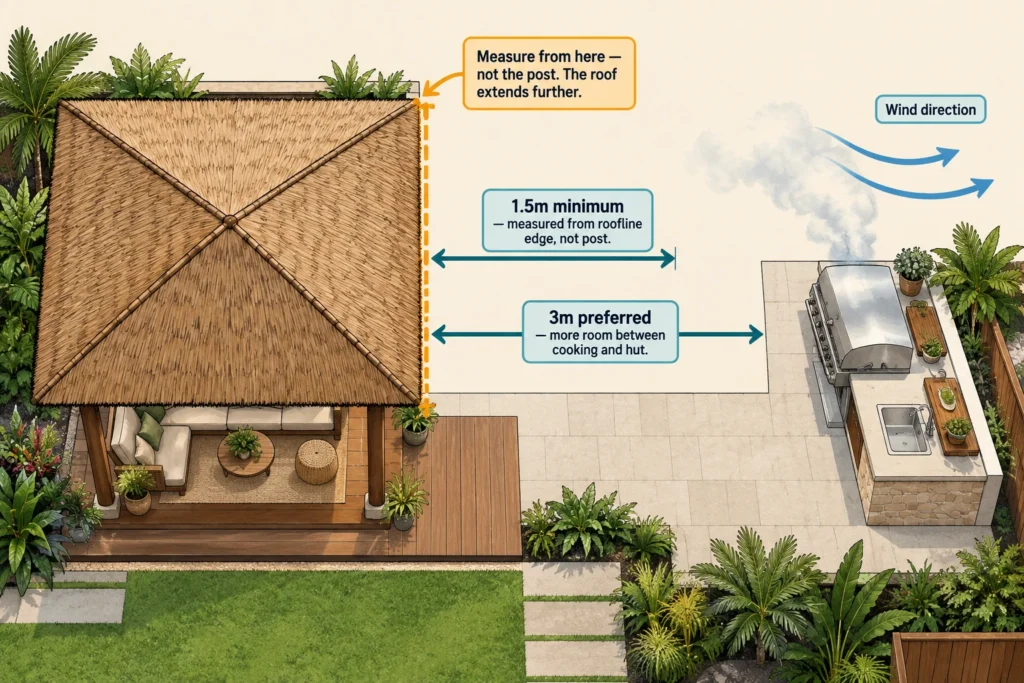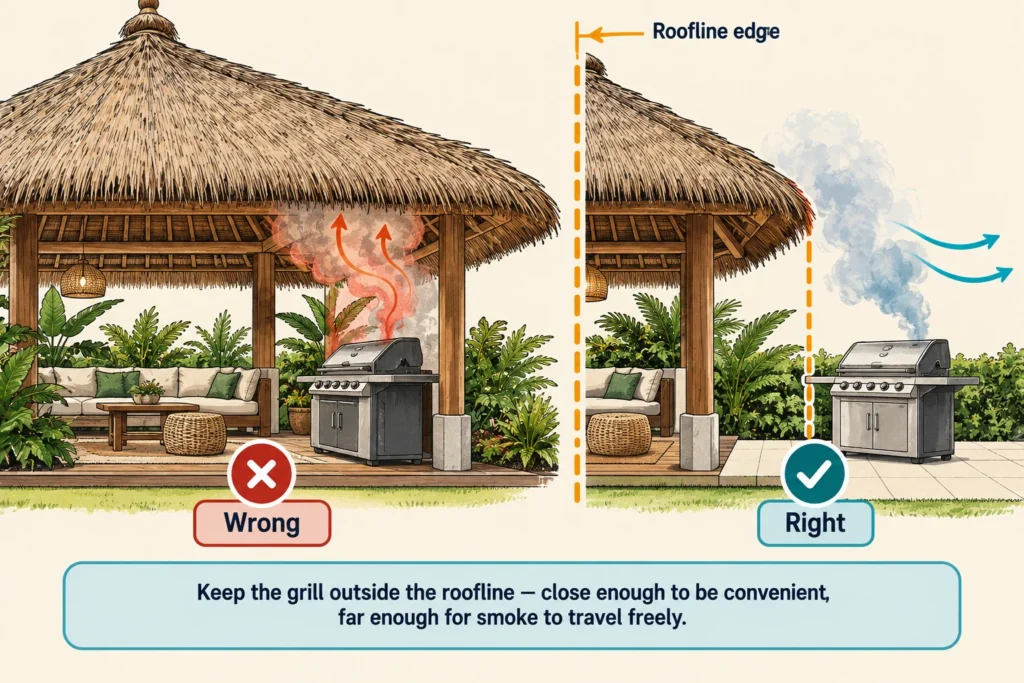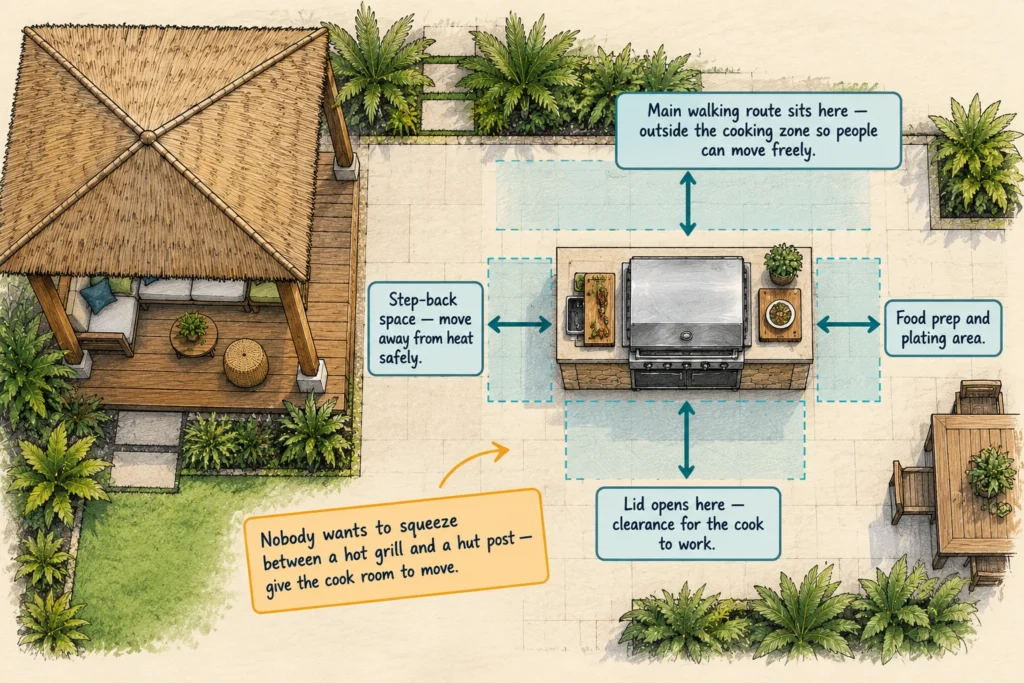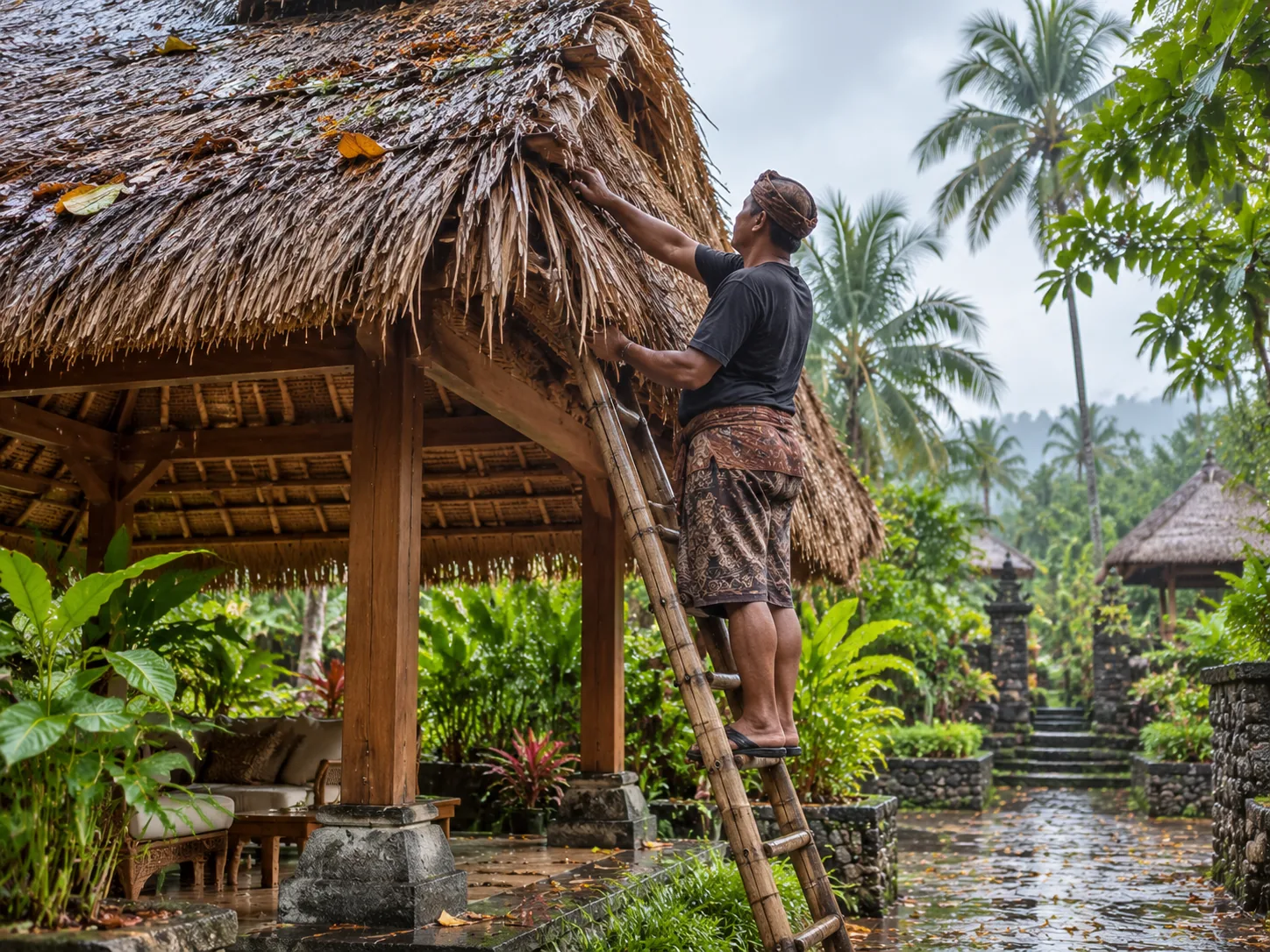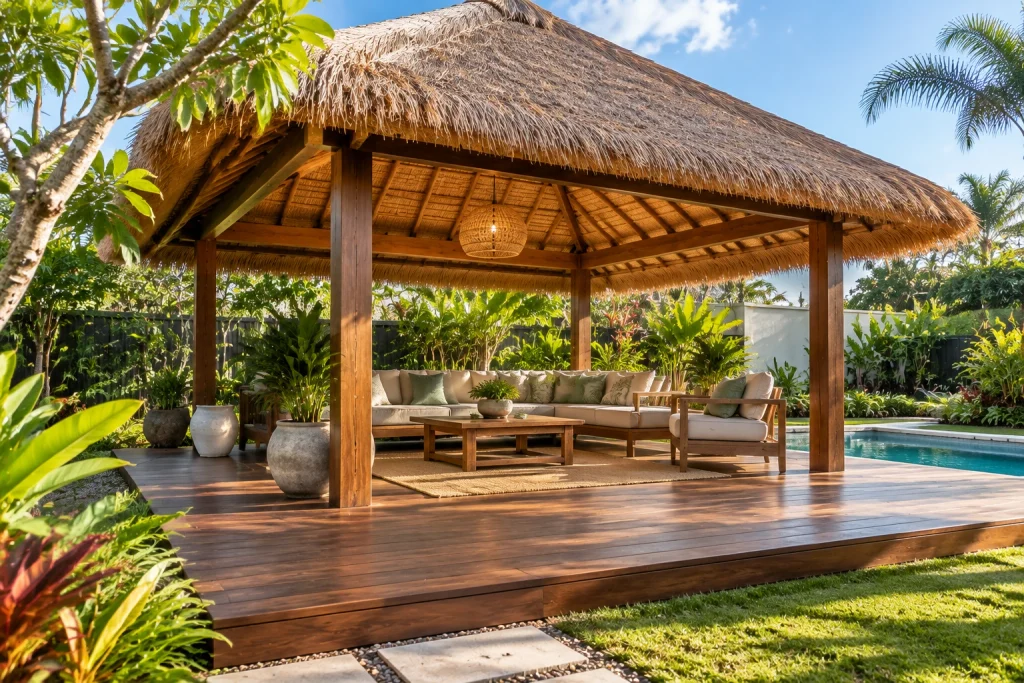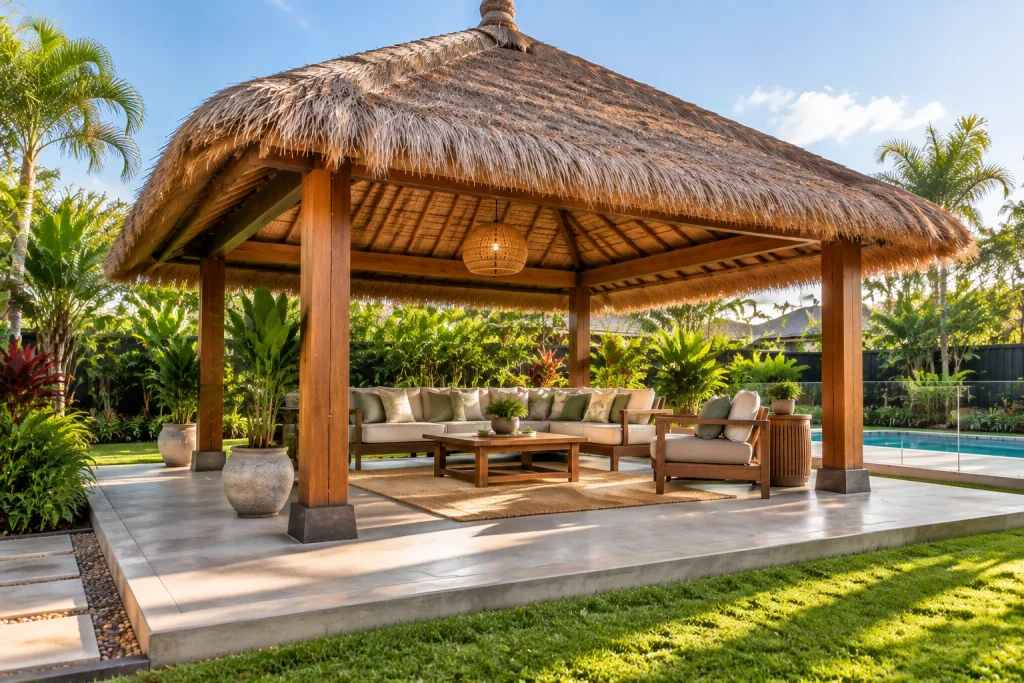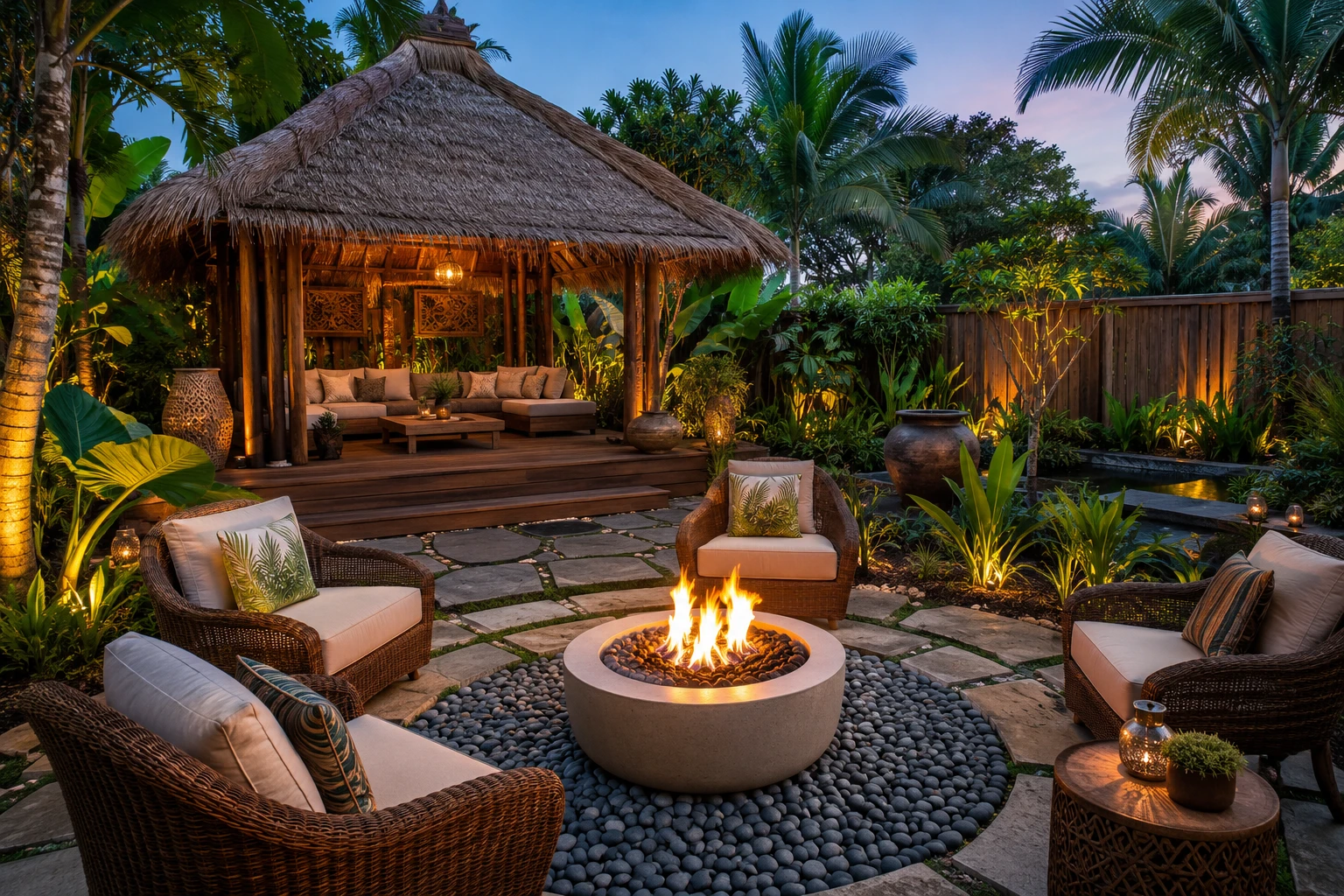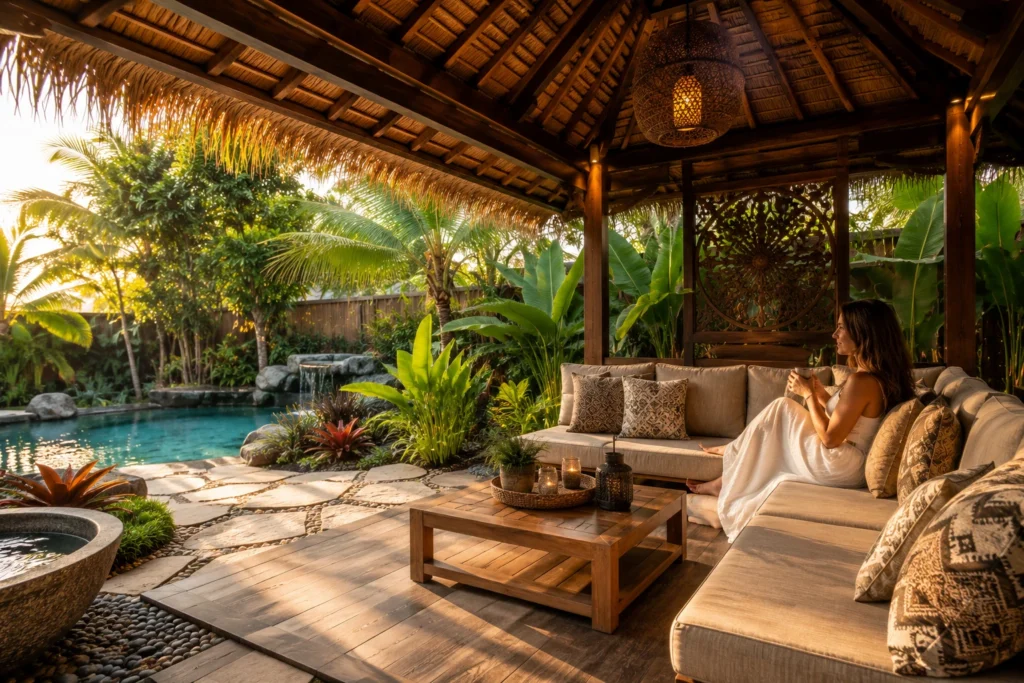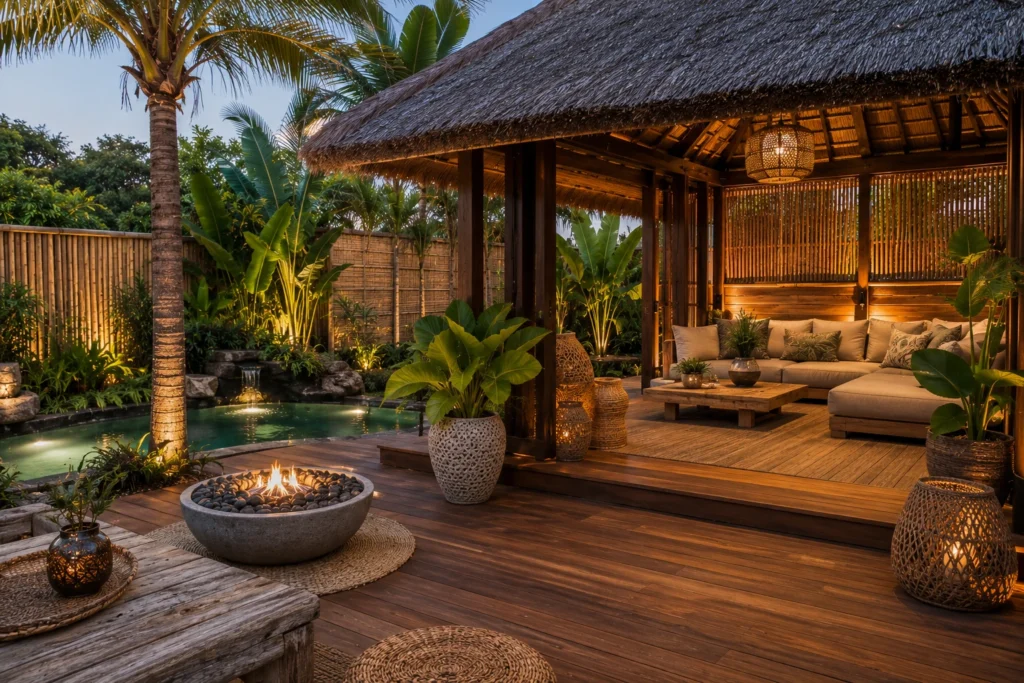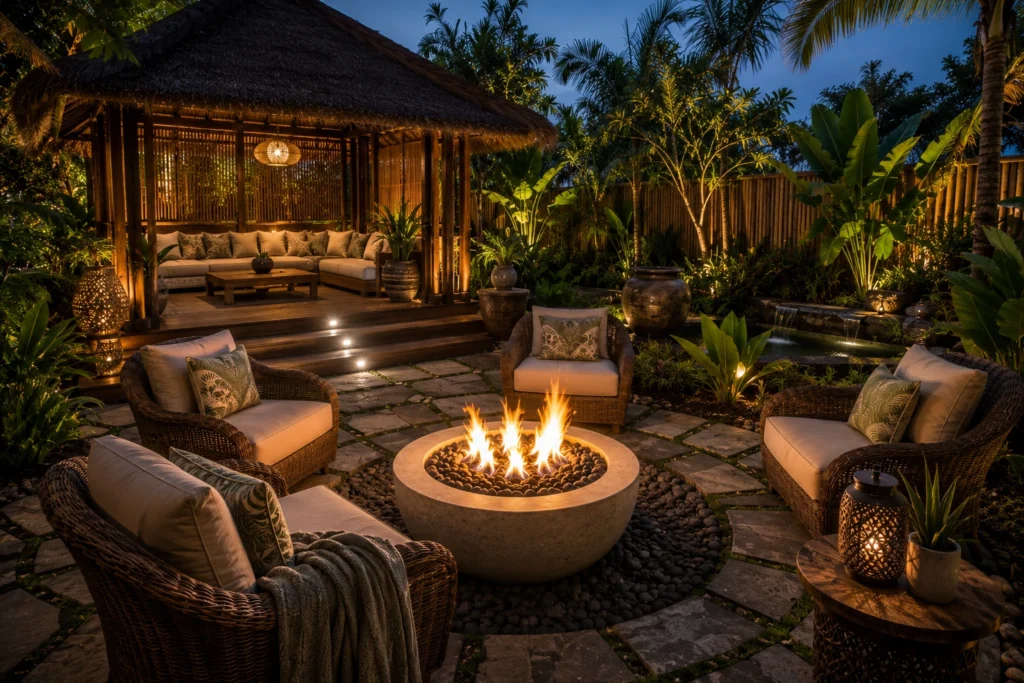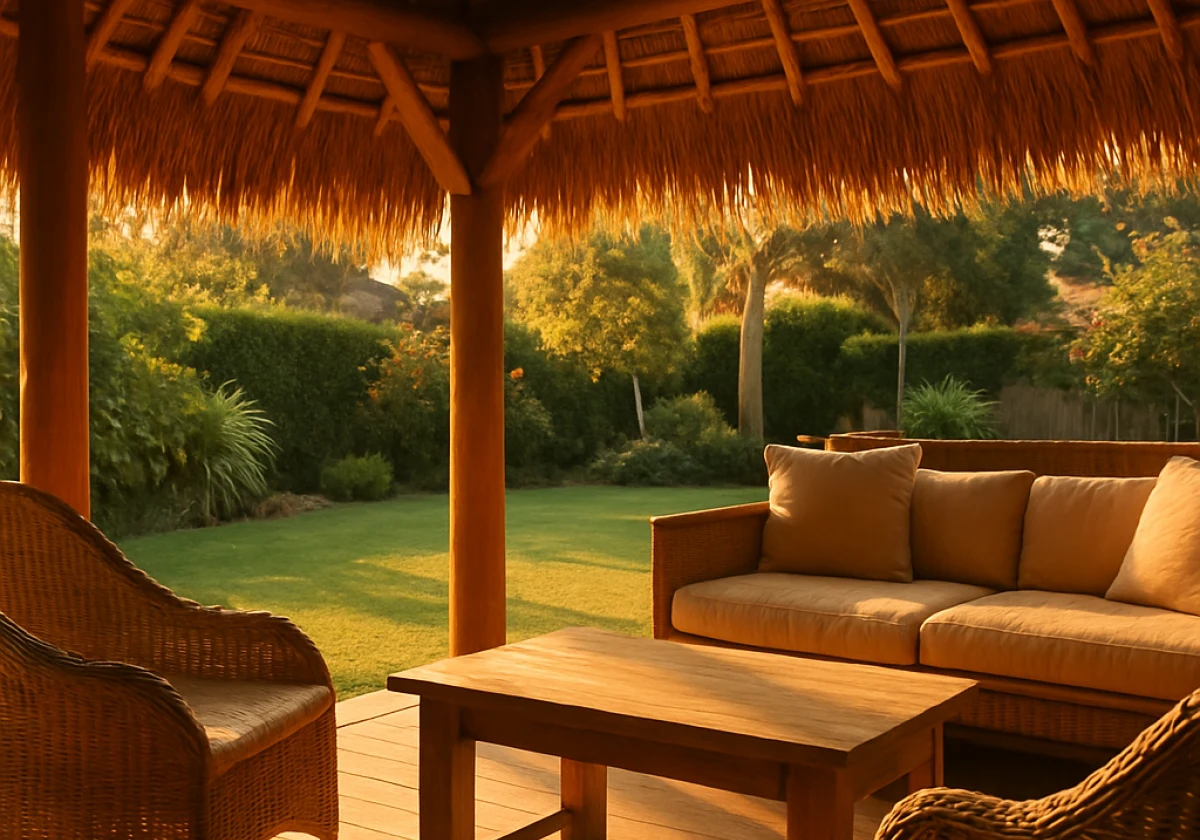
Leave at least one metre of clear space around a Bali hut, and allow extra clearance near pools, fences, and walkways. The space gives the thatch room to shed water while leaving enough access to walk around, clean the area, and check the posts.
Most backyard plans come unstuck when people measure only the roof frame and forget the thatch extends past it. At Georgia Wiseman, we see this mistake leave an otherwise relaxed outdoor space feeling cramped.
With that in mind, this guide covers clearance distances, Bali hut size options, and the access checks that keep installation day moving. Let’s get into it.
How Much Clearance Does a Backyard Bali Hut Need in Australia?
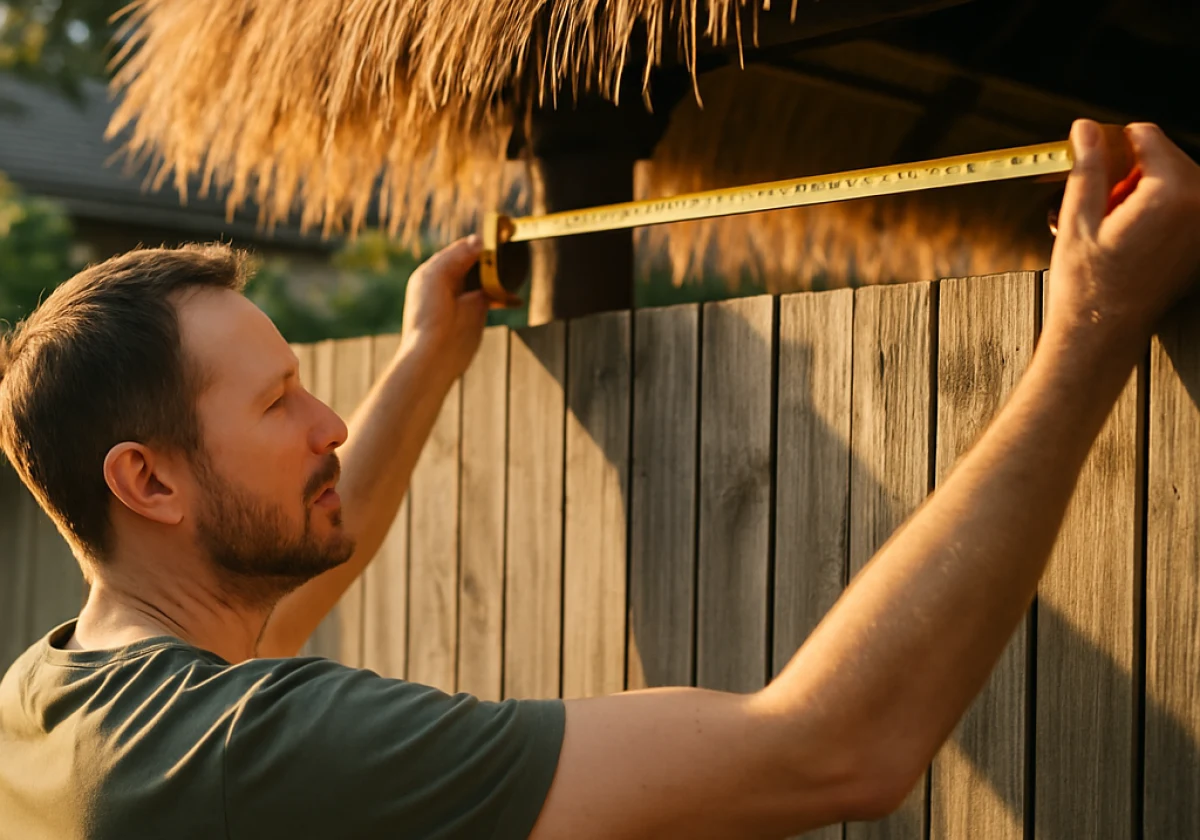
As we mentioned earlier, Bali huts need at least one metre of clearance on every side, with extra room near boundaries and pools. Australian blocks keep getting smaller these days, so that single metre often decides whether your hut feels like a backyard retreat or a roadblock.
For most yards, three measurements determine whether that clearance works: the fence line, the headroom above, and the walking space at ground level.
How Close Can a Bali Hut Sit to the Fence?
Councils generally ask for 900 mm between a structure and the boundary. That’s why we recommend a full metre from the fence to the outer edge of the thatch. That extra width lets you reach every post without crushing the roofing against the palings.
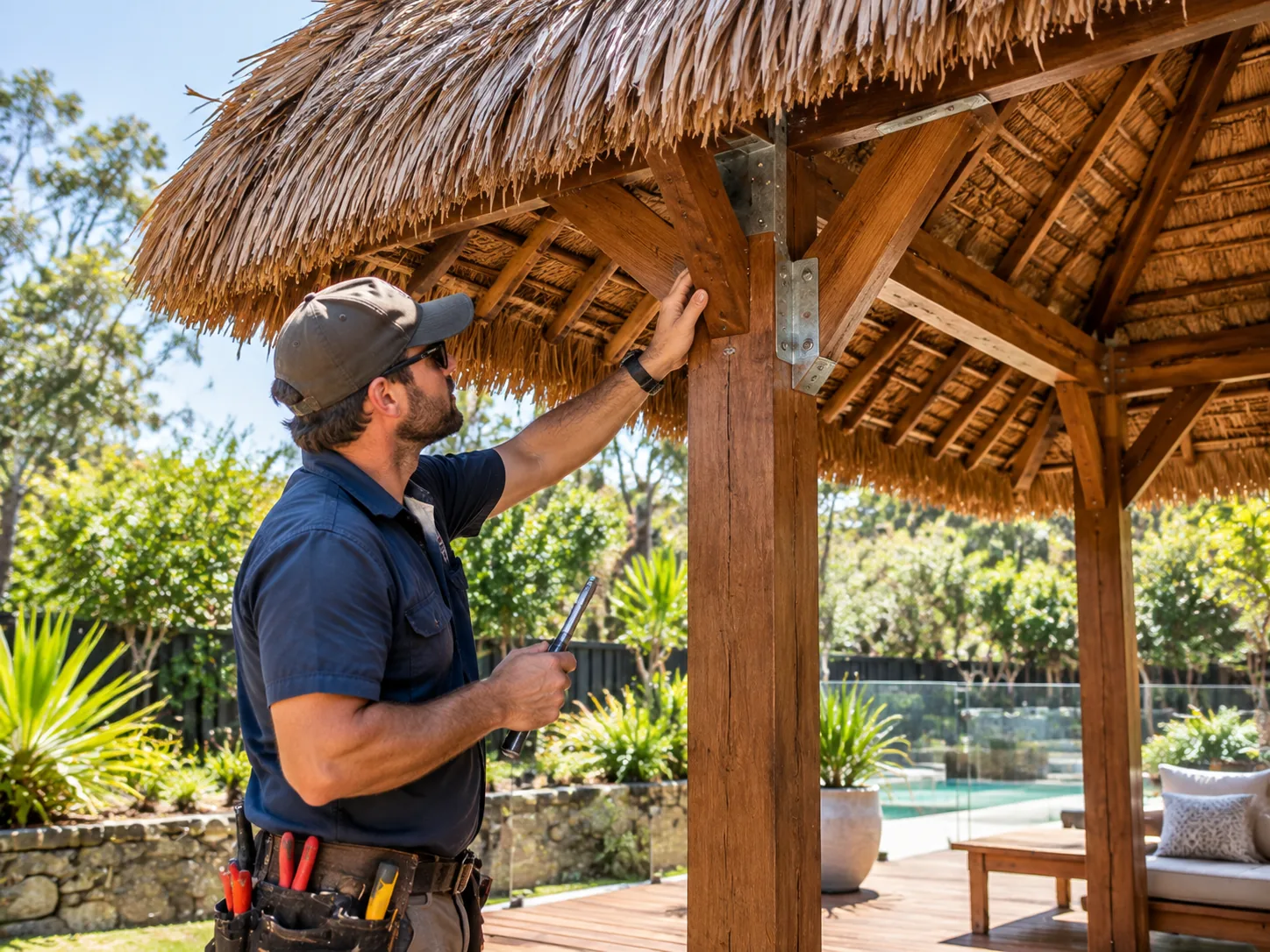
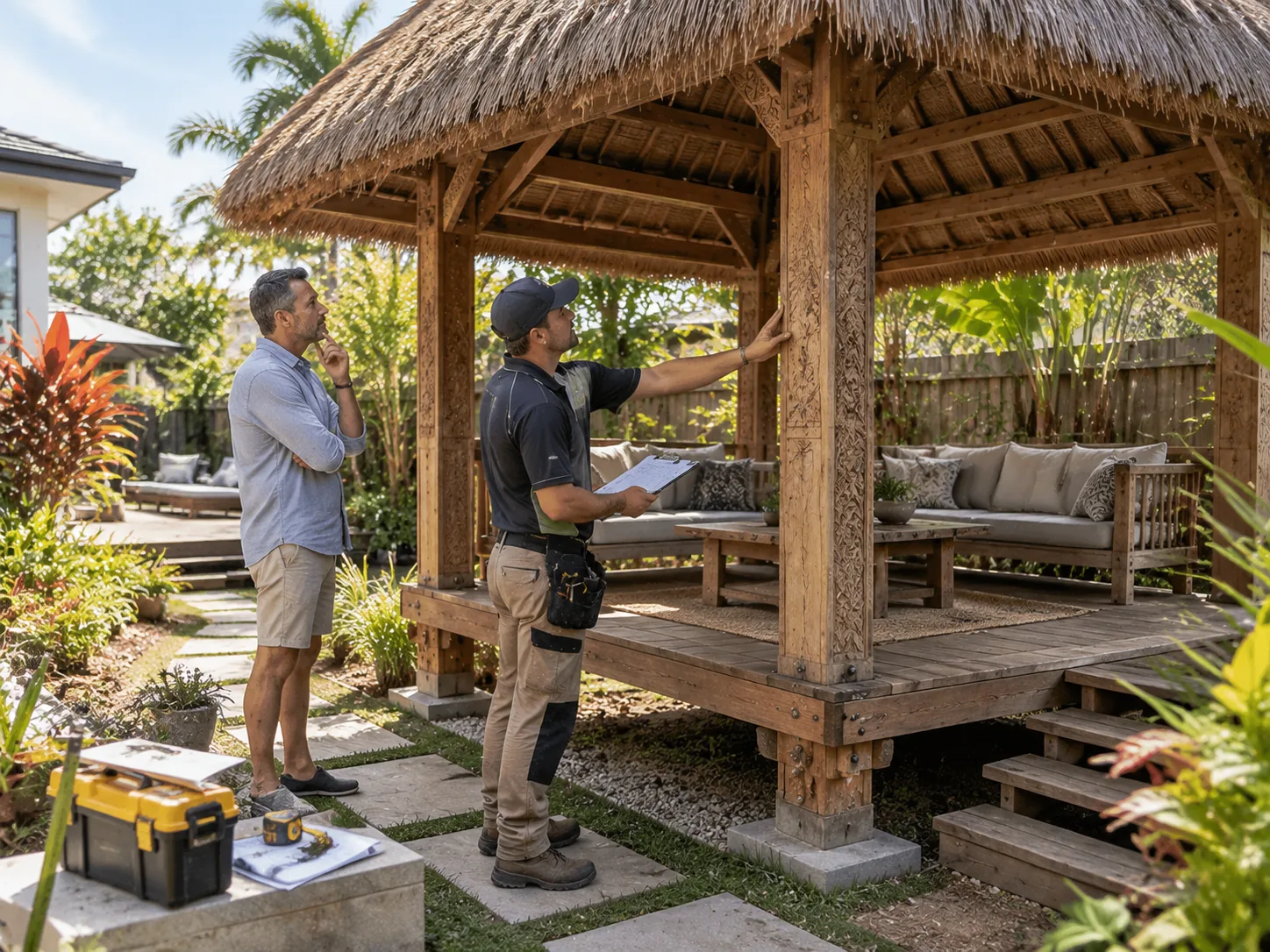
In this case, measure from the thatch edge rather than the post, because African thatch usually overhangs the frame by 400 mm to 500 mm. Rain runs off that edge all season, and soaked palings rot years earlier than dry ones (your neighbour will spot the rot before you ever do).
Many councils also treat structures above ten square metres as outdoor structures needing approval. Check your local rules before you order, because one phone call beats shifting a finished hut by hand. You’re free to ring your council or us for any confirmation.
Overhead Room: What a Thatch Roof Needs Above It
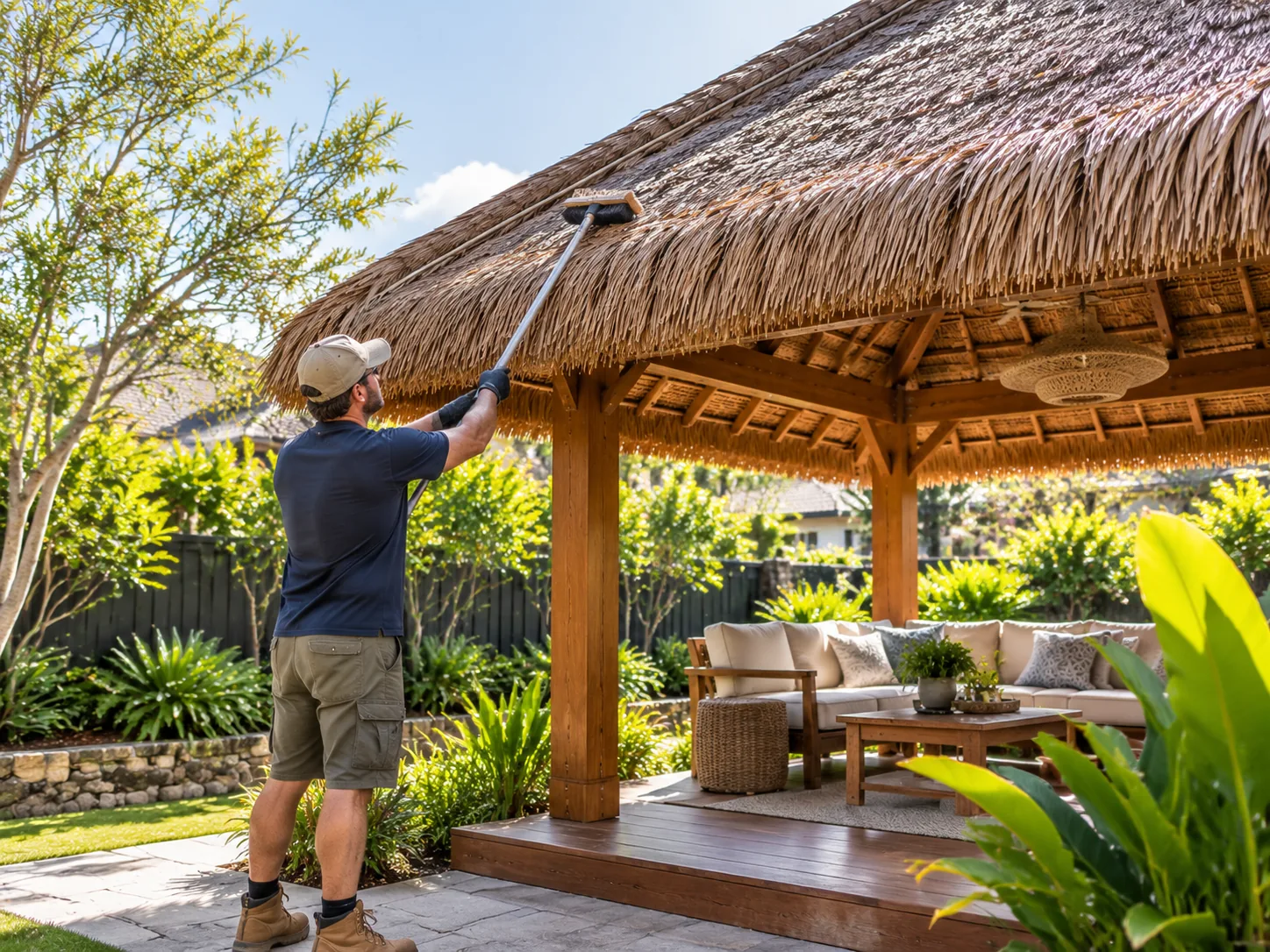
Clear the sky above the roof as carefully as the ground around it. Leaves that collect on a Bali hut’s thatched roof hold moisture and keep the roofing damp for longer, so aim for two metres of open air above the crown.
We’ve often seen that gum trees cause the most trouble in Australian yards. They drop bark and limbs that tear at the thatch all year round. We’ve pulled apart more than one hut where a single branch caused five seasons of slow damage, and synthetic thatch only delays that problem.
Even with good overhead clearance, thatch copes with our high UV rays better than most roofing, but trapped damp still rots it from beneath. Powerlines and eaves need the same check. While aiming for two, keep at least 1.5 metres between the roof crown and anything fixed overhead to protect airflow (hot air has to escape somewhere, and it always does).
Leaving Space for Furniture and Foot Traffic
Furniture eats clearance faster than anything else. It’s a good idea to keep around 800 mm between your outdoor furniture and the posts. Give a timber deck the same gap at its edge, too.
To give you an idea, a six-seat dining setting needs about 1.2 metres of pull-back room behind the chairs. Paths count as well, and a 900 mm footpath running past the hut keeps traffic moving without anyone brushing the bamboo screening.
A simple walk-through helps put those measurements into practice. Picture yourself carrying a tray of drinks from the back door to the seating area. If you can make that trip comfortably with people seated around you, the entertainment area has enough room for everyday use.
Bali Hut Size Guide: Matching Dimensions to Your Outdoor Spaces
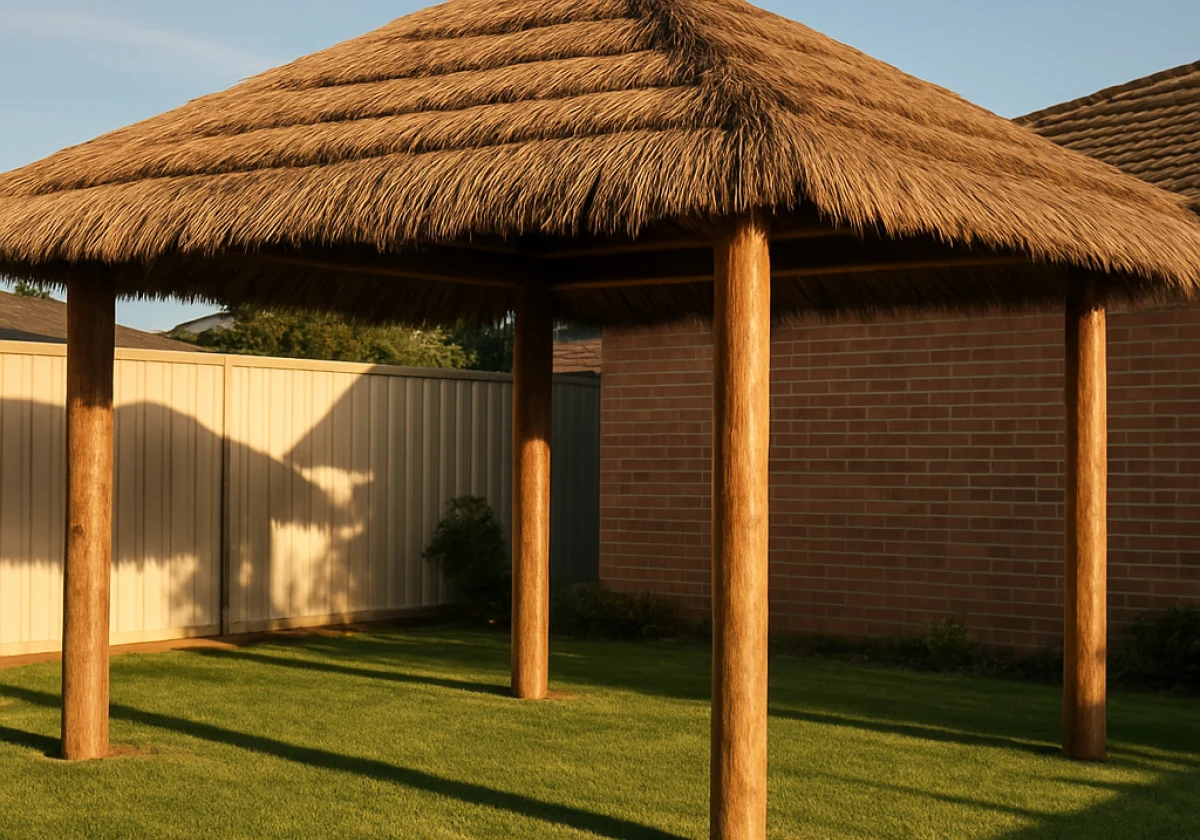
With clearances sorted, size becomes the next decision, and Bali huts come in a variety of sizes built around standard roof dimensions. Buyers often pick a hut by its roof footprint and forget the thatch overhangs the posts by half a metre.
Compare the common Bali Hut dimensions below against the space you actually have.
| Roof size | Footprint with thatch | Seats | Suits |
|---|---|---|---|
| 3×3 m | 4×4 m | 4 | Small courtyards |
| 3×4 m | 4×5 m | 6 | Standard suburban backyard |
| 4×5 m | 5×6 m | 8 | Perfect for poolside lounging |
| 5×6 m | 6×7 m | 12 | Large entertaining decks |
A Bali hut 4×5 suits most family blocks, though we’d measure twice before committing to anything under 300 square metres (a tape measure costs far less than moving a hut). Add your clearance to the footprint column rather than the roof size, because sound Bali hut design starts at the thatch edge.
The same measurement method applies to a Colorbond gazebo, a cedar shingle gazebo, or a double roof Bali hut. In each case, measure the full roof footprint before adding the required clearance.
Bali Hut Design Around Pools and Boundaries Needs Extra Clearance
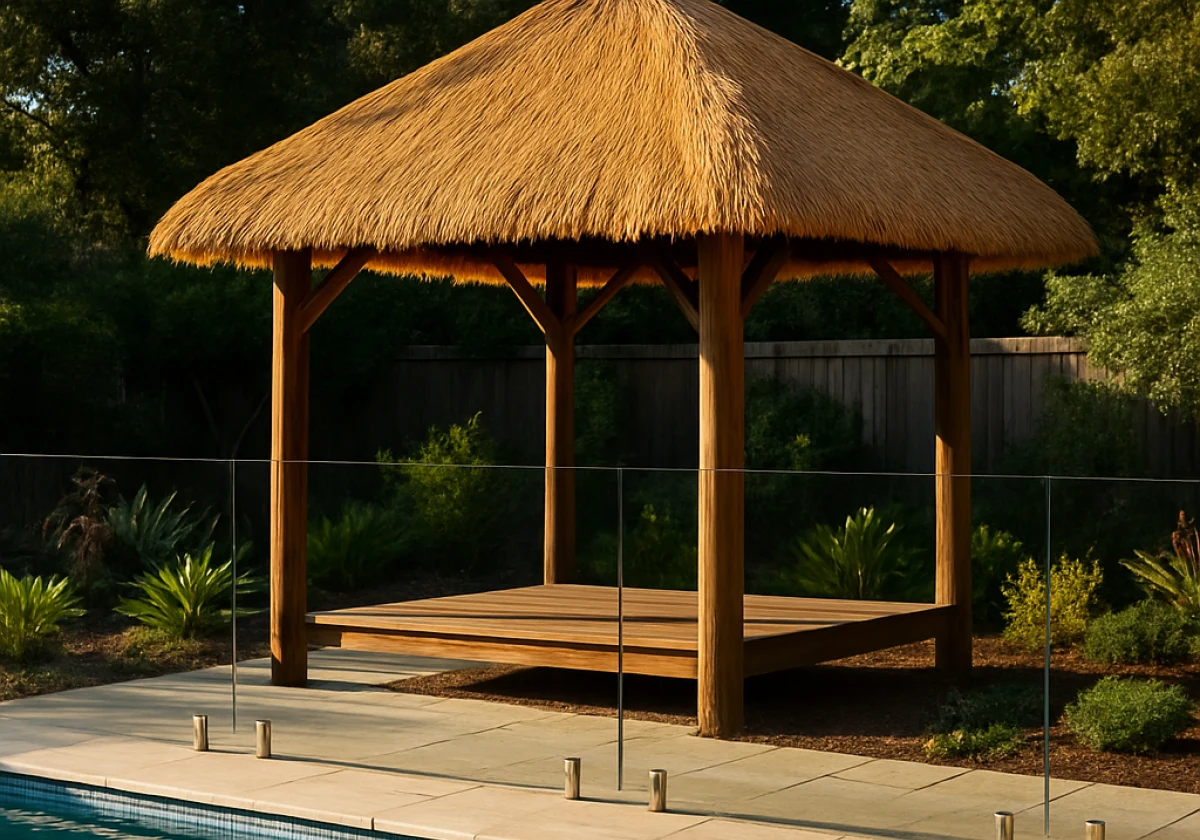
Sorting pool and boundary clearances early saves you from council headaches and a costly shift later. Pool barrier rules apply across Australia, and a Bali hut near a pool must meet the relevant clearance requirements.
Run through these four checks before you lock in a position:
Pool Fence Distance: Climbable structures must sit 900 mm clear of any pool fence. It’s best to keep every post outside that zone. Furniture inside the hut counts too when it sits within reach of the barrier.
Boundary Setbacks: Councils across Australia set their own setbacks for backyard structures such as a gazebo or Bali hut. Check your local council requirements rather than copying the neighbour’s build.
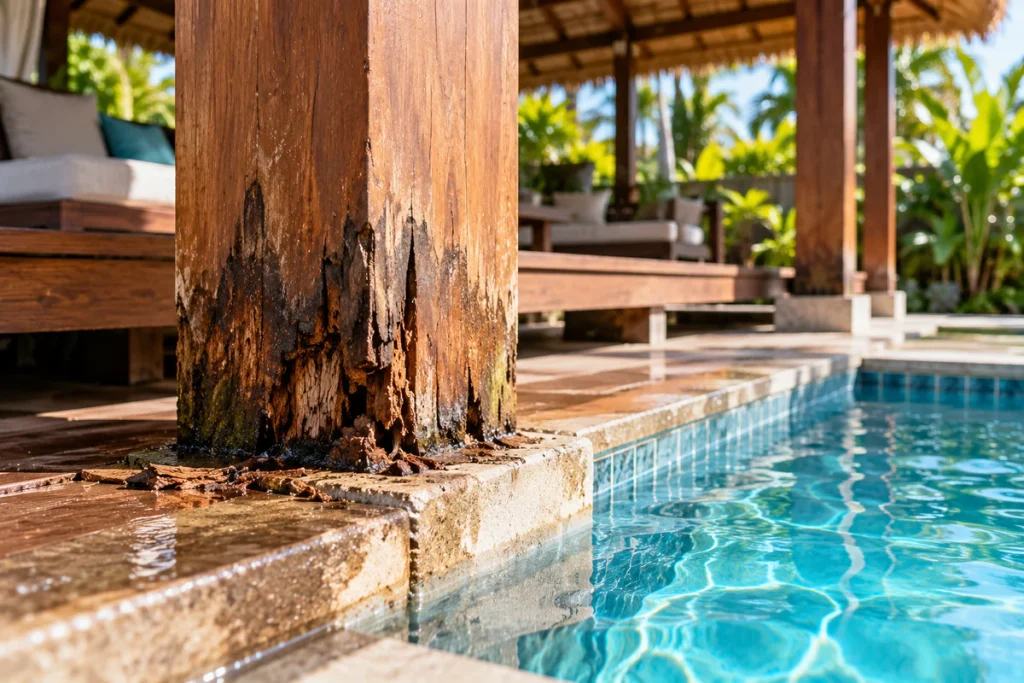
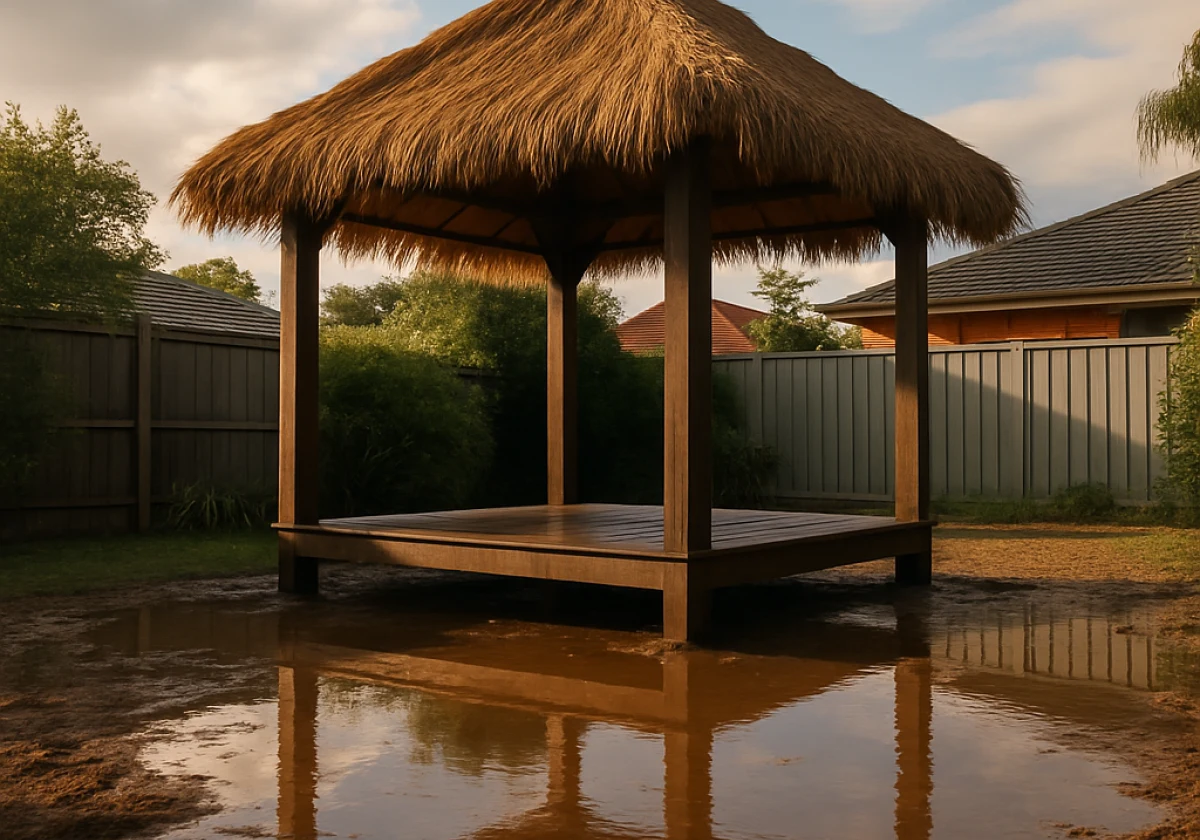
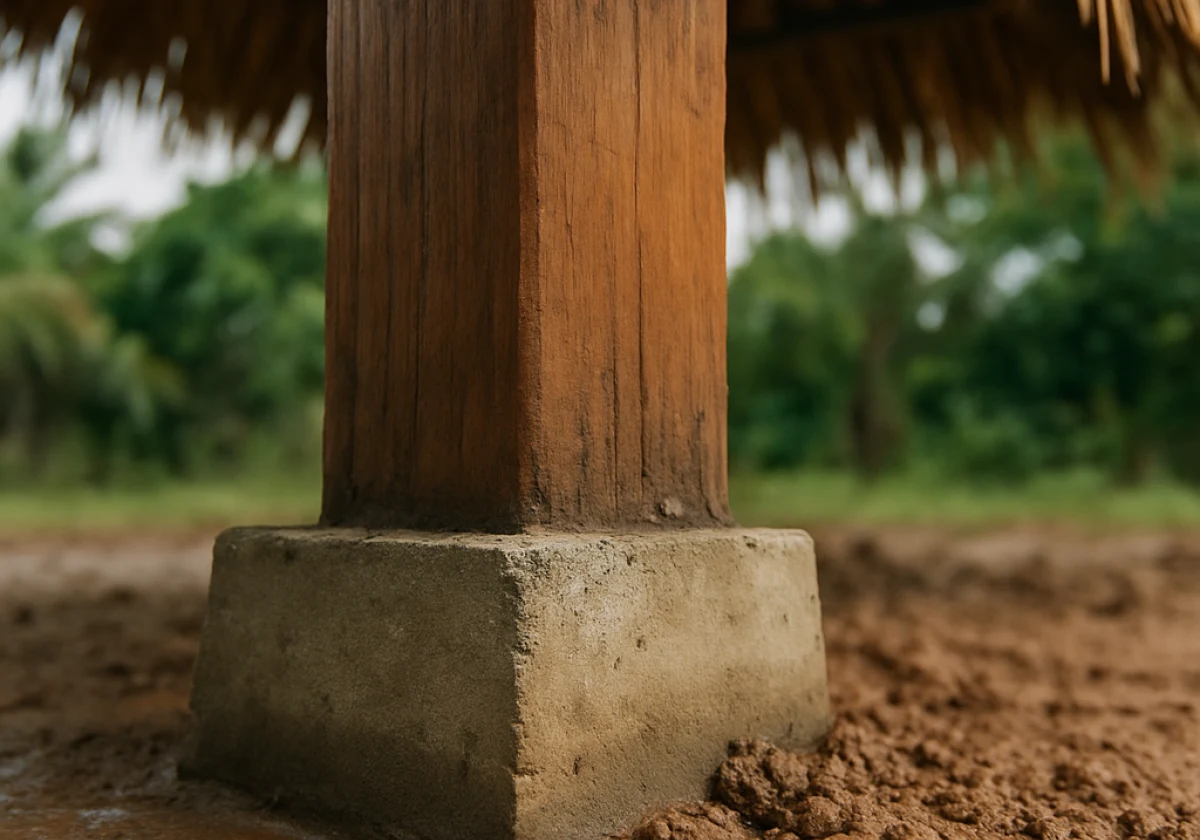
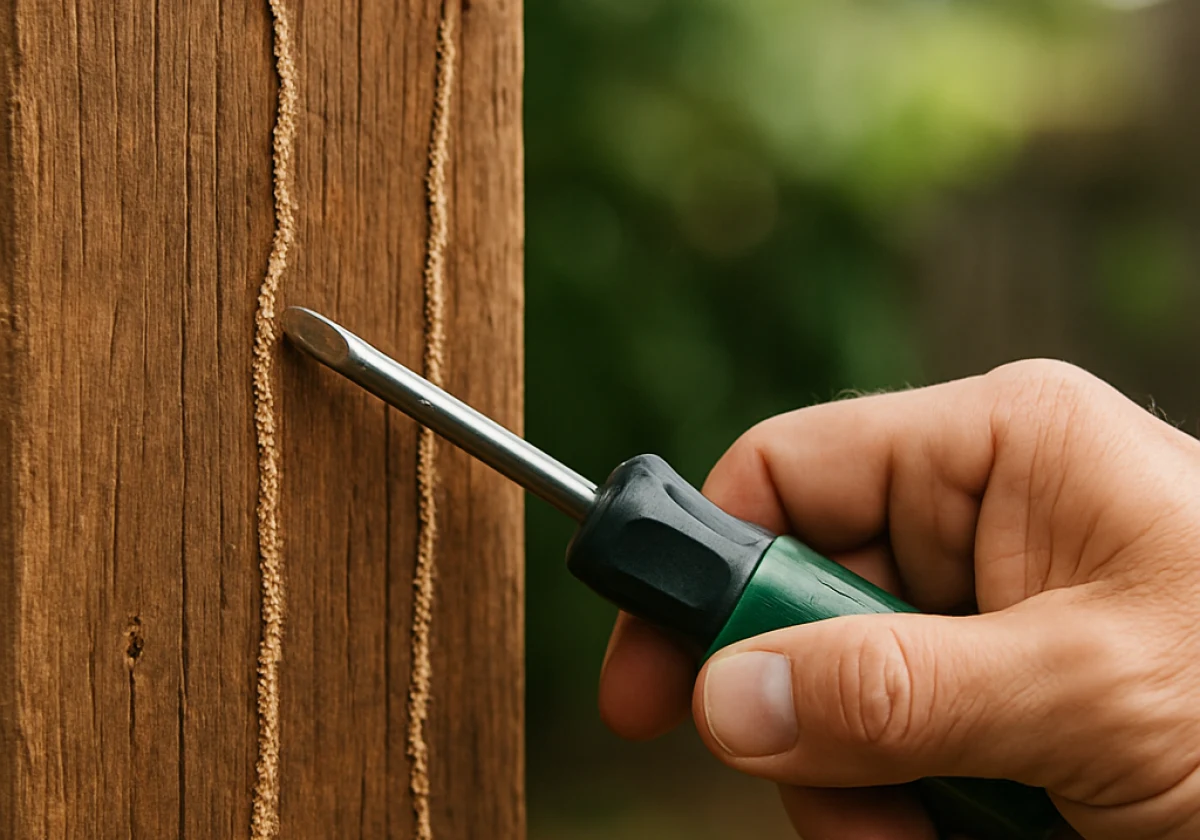
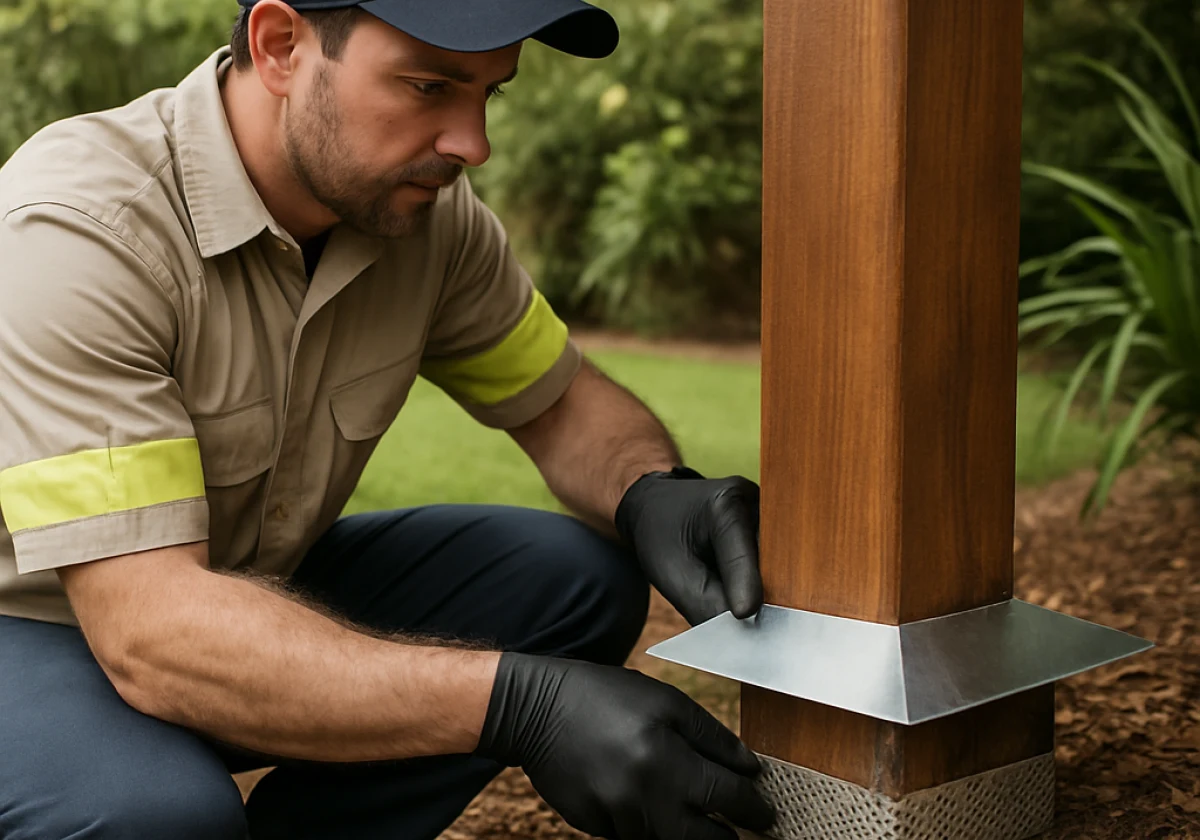
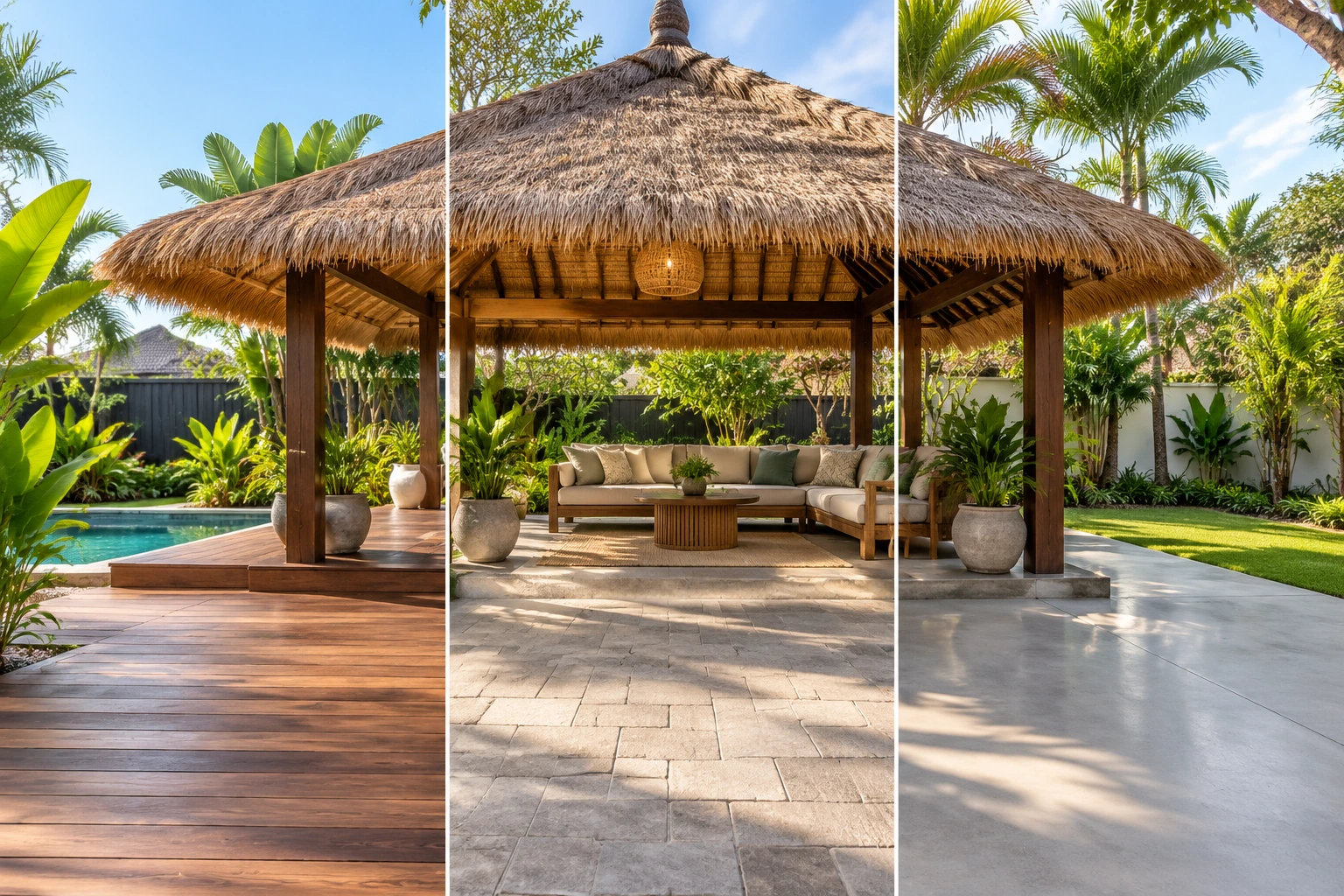
Splash and Drainage: Water pooling under the posts rots base plates within a few seasons. Grade the paving away from the posts, so rain and pool water drain away rather than collecting around the base.
Overhead Services: Make sure no power line or service cable crosses the roof footprint before installation day. Energy providers set minimum distances, and ignoring them stops the job on the spot.
Your council planning page lists the requirements for your property. Check those figures before settling on a position. You can contact us with those measurements once you have them.
Smart Bali Hut Installation Starts Before the First Post Goes In
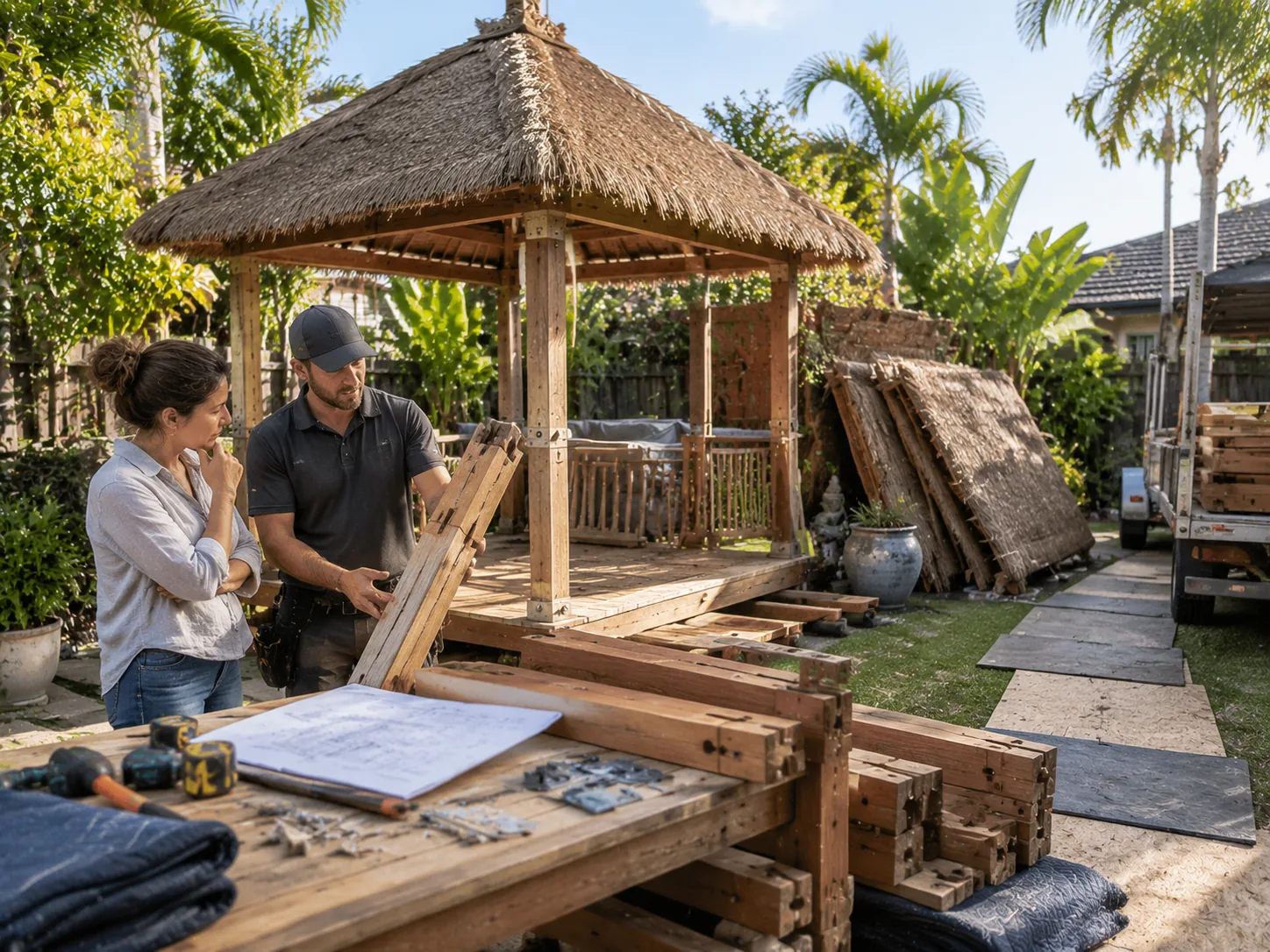
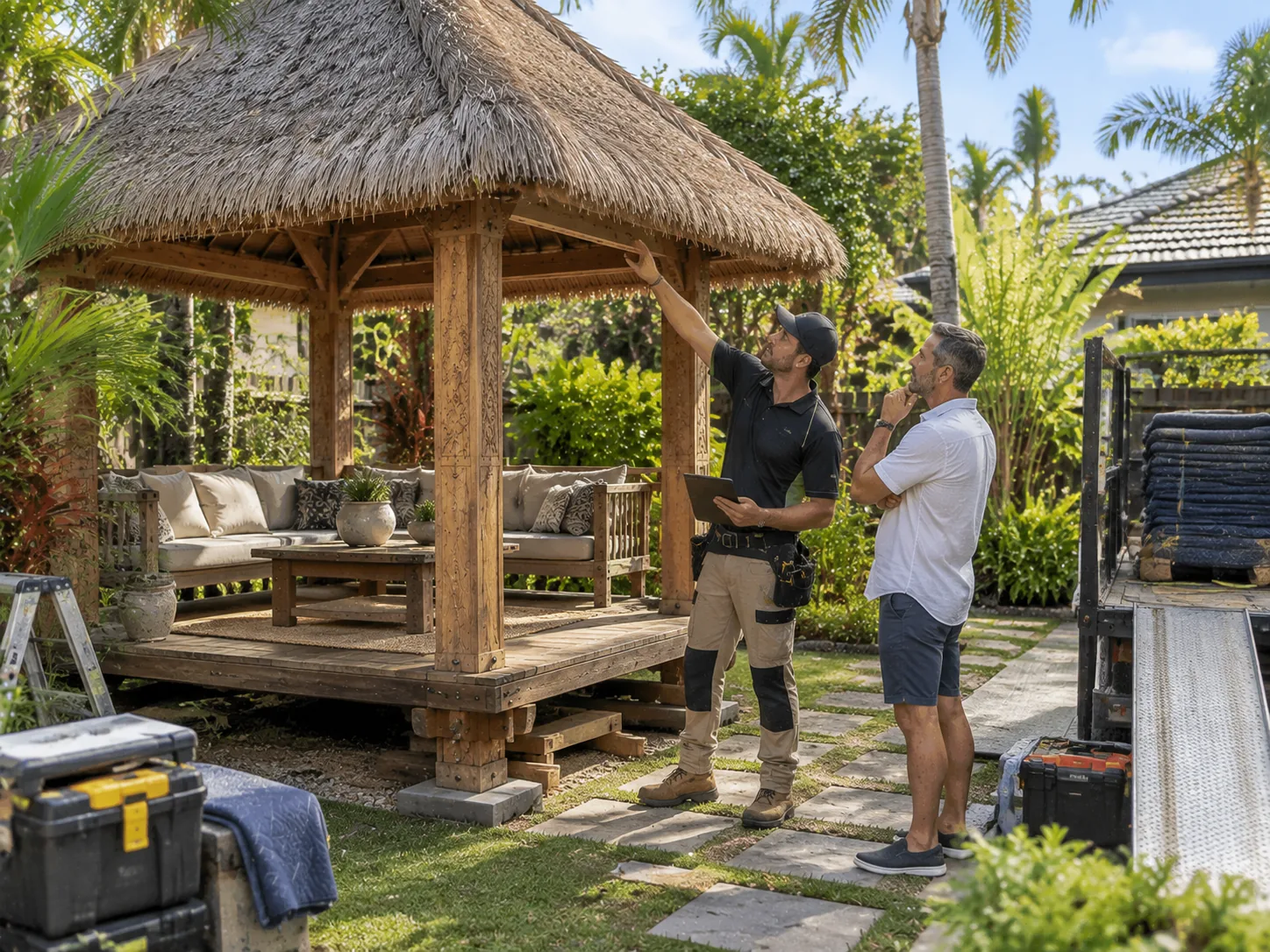
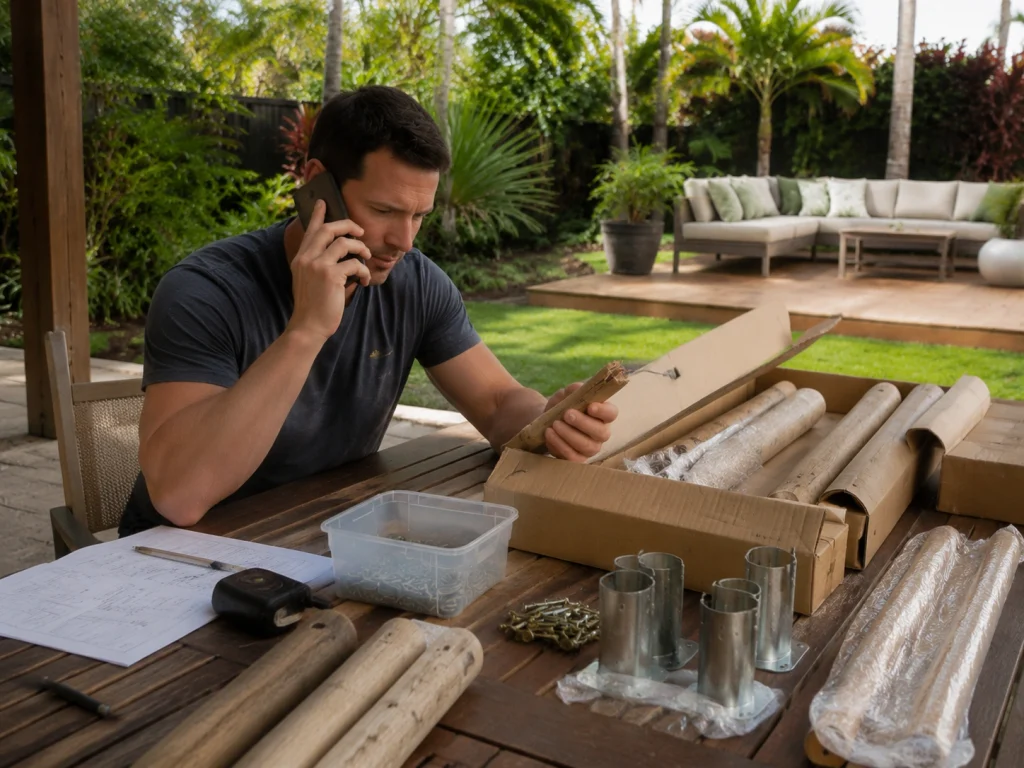
Plenty of Bali hut installations stall on day one because nobody measured access for machinery and materials. Your standard side gate at 900 mm won’t pass a six metre ring beam, and the crew ends up walking timber through your hallway.
So measure your narrowest access point first, then compare it against the longest piece in the kit. Posts usually run between 2.7 and 3 metres and are easier to manoeuvre through a normal side gate. Longer rafters on a timber Bali hut gazebo need more room to turn through narrow access points.
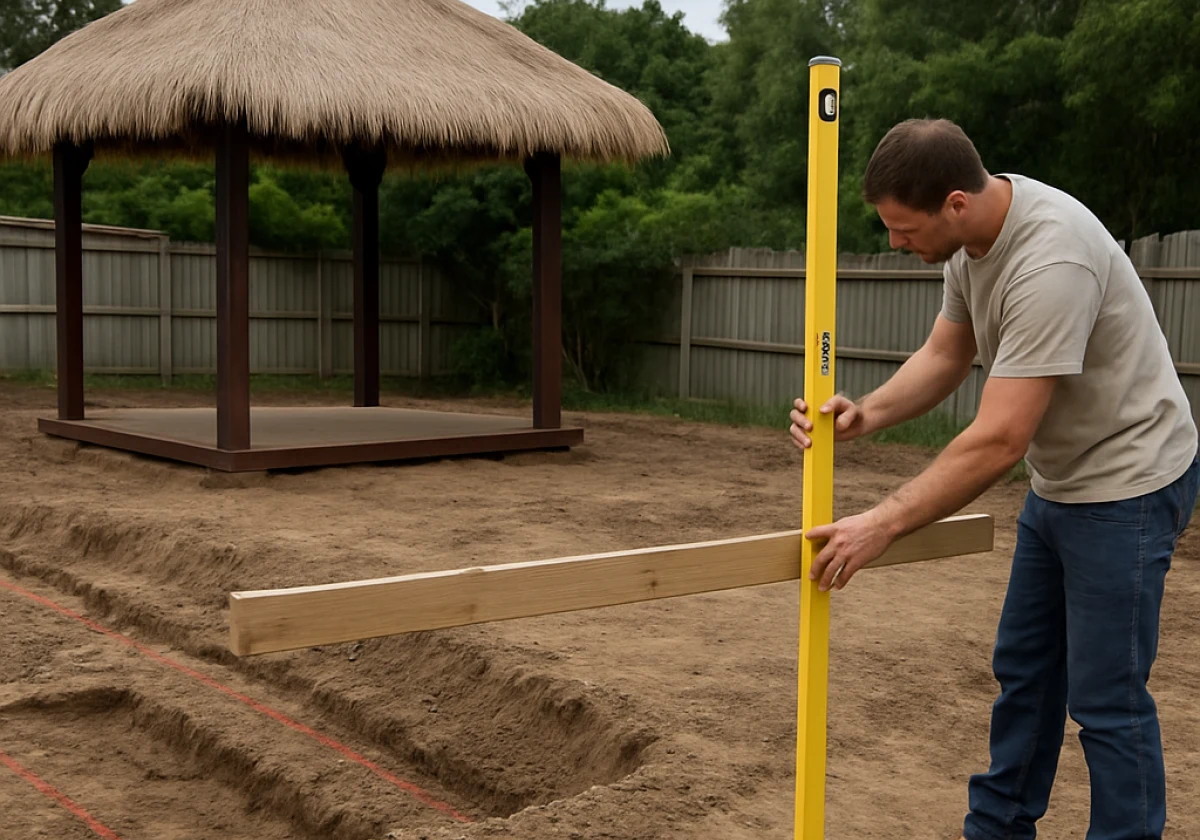
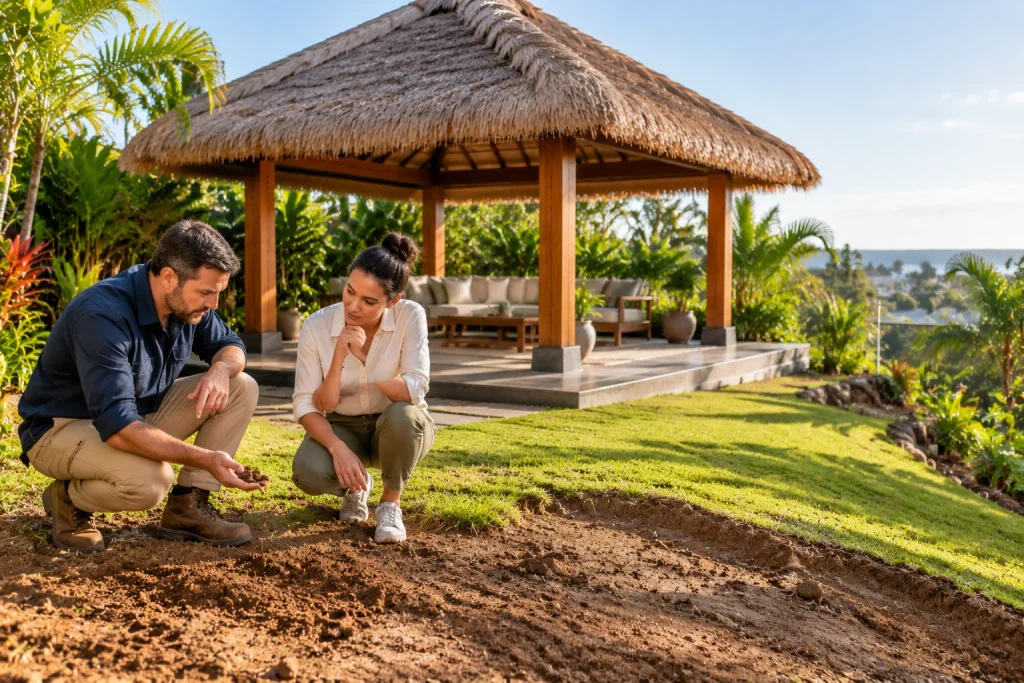
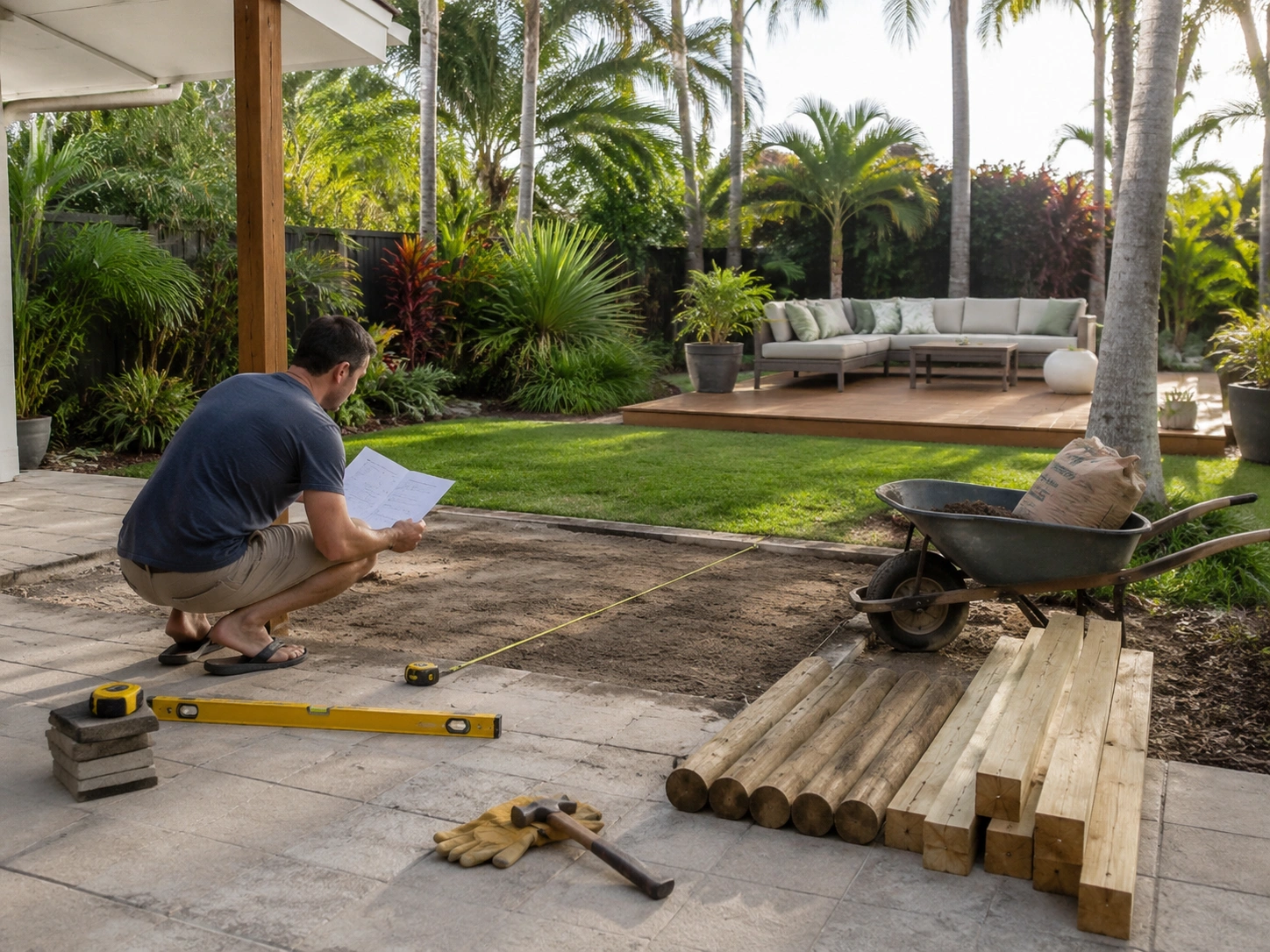
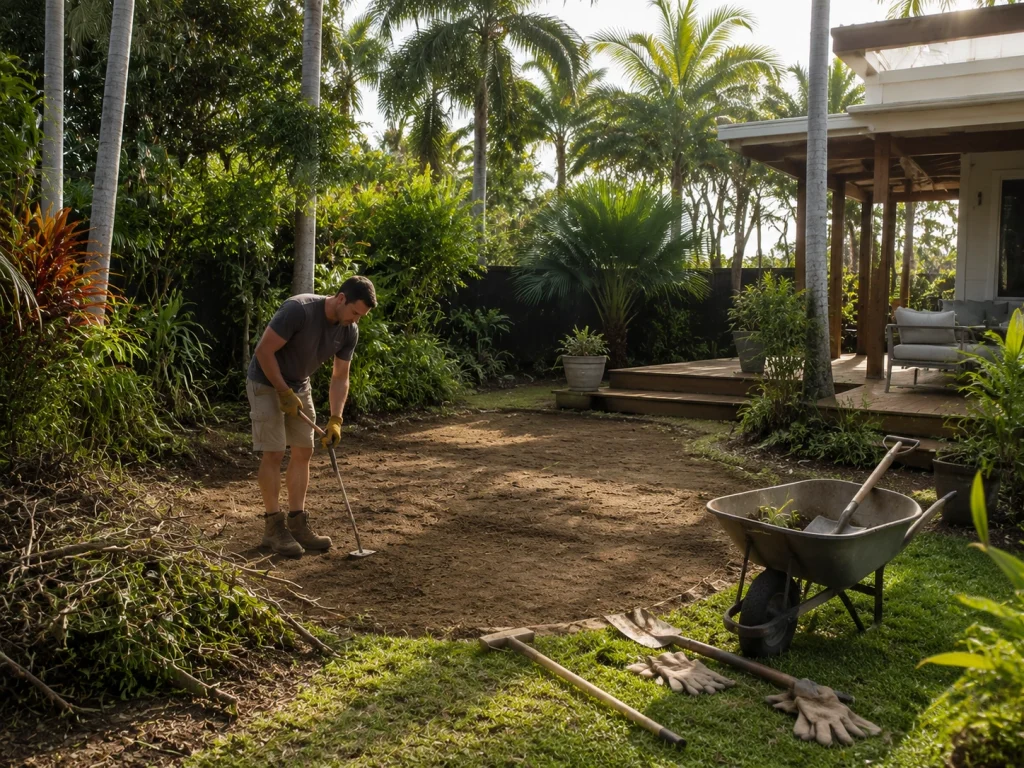
Ground preparation is important too, because the frame needs a level base within 10 mm across the whole slab. We’ve installed on sloping blocks around the Sunshine Coast where the fall needed a retaining step before a single post went in.
You’ll also need about 4 square metres of dry, flat space to store thatch bundles before installation. Wet reed gets heavy and can stain the timber underneath it.
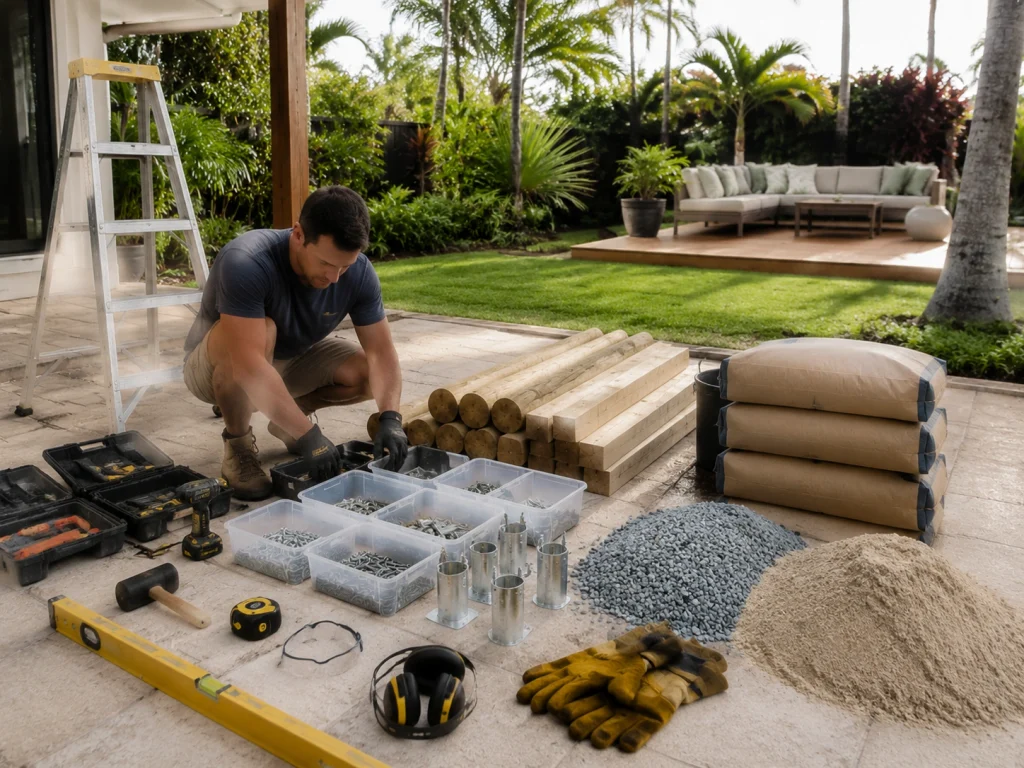
Apart from that, leave enough room around the hut for the crew to work. If we could add one line to every plan, it would be a two-metre working perimeter. Thatching crews work around the outside of the frame, and they need room to carry, position, and secure each section of roofing.
Ready to Plan Your Backyard Bali Hut?
Space around the structure affects how comfortable and practical your Bali hut feels once it’s built. One metre of clearance on every side gives you room to walk around the hut, maintain the posts, and keep the thatch clear of nearby structures.
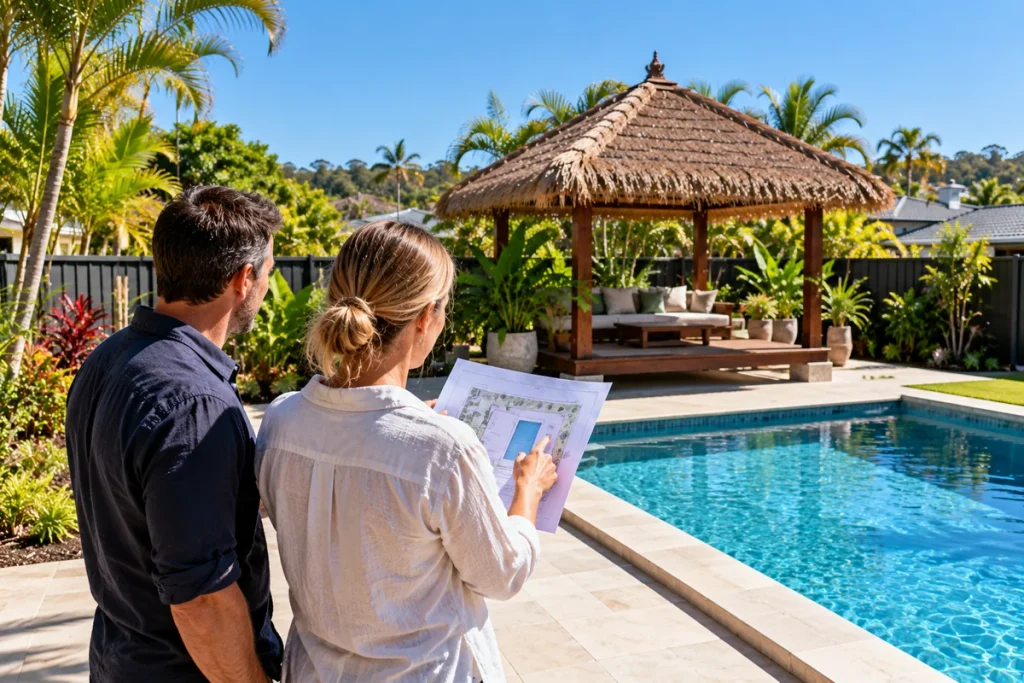
Before you order anything, measure your block and mark the full footprint with string, including the thatch overhang. Then walk around the marked edges to make sure you still have enough room for furniture, paths, fences, and other backyard features.
Georgia Wiseman supplies quality Bali huts and Gazebo kits for Australian homes. Contact us to check your planned clearances and discuss delivery and installation dates.