A ceiling fan, soft lighting, and a fridge for cold drinks can make a Bali hut more comfortable. However, the electrical work needs to happen before the thatch goes on. With the frame still open, electricians can easily plan cable routes, power points, and light fittings.
This early planning also prevents costly work later. Once alang alang or synthetic thatch covers the roof, adding cables becomes much harder. Electricians may need to lift sections of thatch or drill into finished posts. The team at Georgia Wiseman sees how quickly a small retrofit grows into a repair job.
This guide covers cable routes, circuit sizing and where power points sit best. You’ll also see which IP ratings suit weather-exposed fittings and how a thatched roof changes your choice of lights, fans and heaters. Start with the cable route.
Planning Cable Routes for a Bali Hut Before the Thatch Goes On
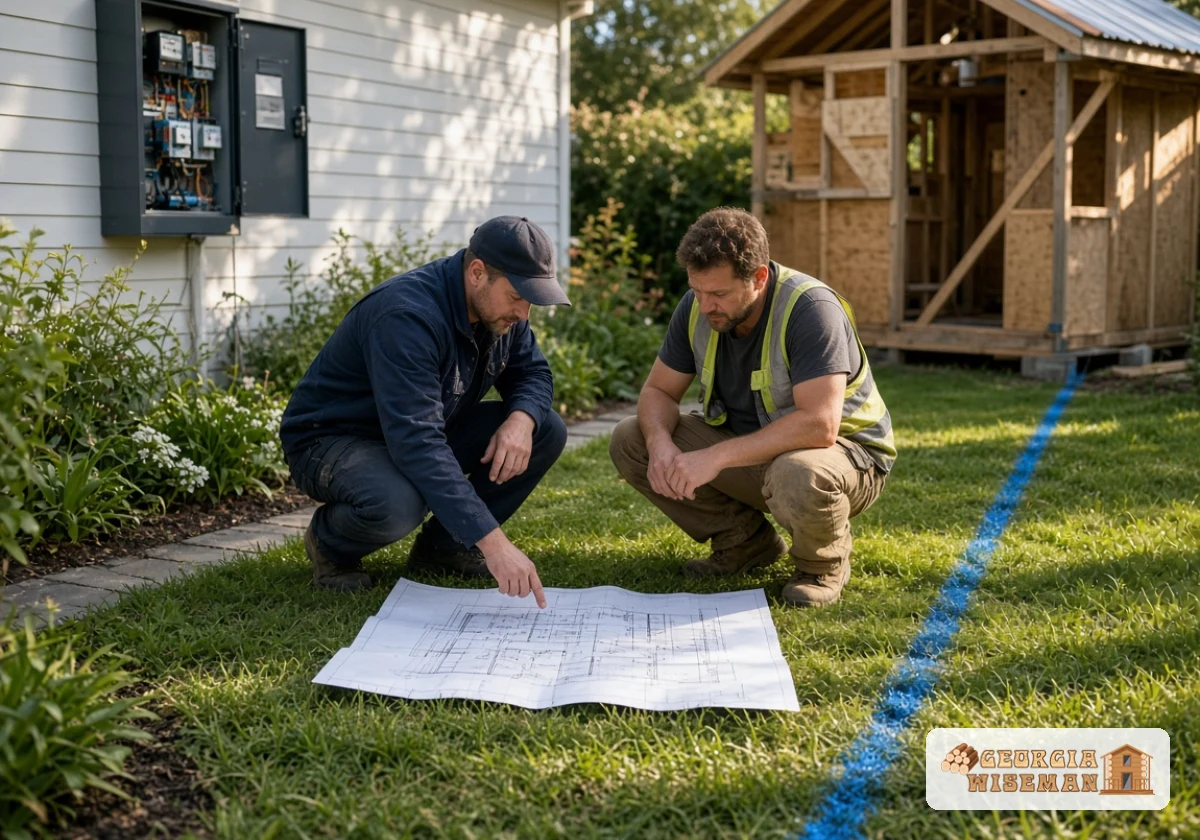
Every cable in a hut travels from your house switchboard, through the ground or air, then up a post and across the roof frame. Mapping that path on paper first lets your electrician and builder agree on holes, conduit and junction boxes (nobody cuts timber until the plan is set).
Once you know where the power starts, four decisions shape the rest of the job.
Underground Conduit or Overhead Feed: Picking the Run Back to the Switchboard
Most backyard Bali huts use an underground power feed protected by heavy-duty conduit. It keeps the cables hidden and protects them from damage caused by ladders, children, or garden tools like whipper snippers.
However, if the hut sits far from the house and trenching would damage existing paving, an overhead feed may be a better option. This setup still needs enough height clearance and strong supports at both ends.
Before deciding on the route, walk around the yard with your electrician and mark the proposed trench line with spray paint. That way you can identify obstacles such as water pipes, tree roots, or pool plumbing before digging begins.
Running Cables Through Posts, Beams and Across Decks
Hardwood or CCA-treated timber posts can hide electrical cables if your builder drills a hollow channel before assembling the frame. The wiring stays protected inside the post and away from direct sunlight.
For cables running across a deck, use conduit secured to the underside of the joists. Keeping the wiring below the deck boards also prevents screws from piercing the cables during installation.
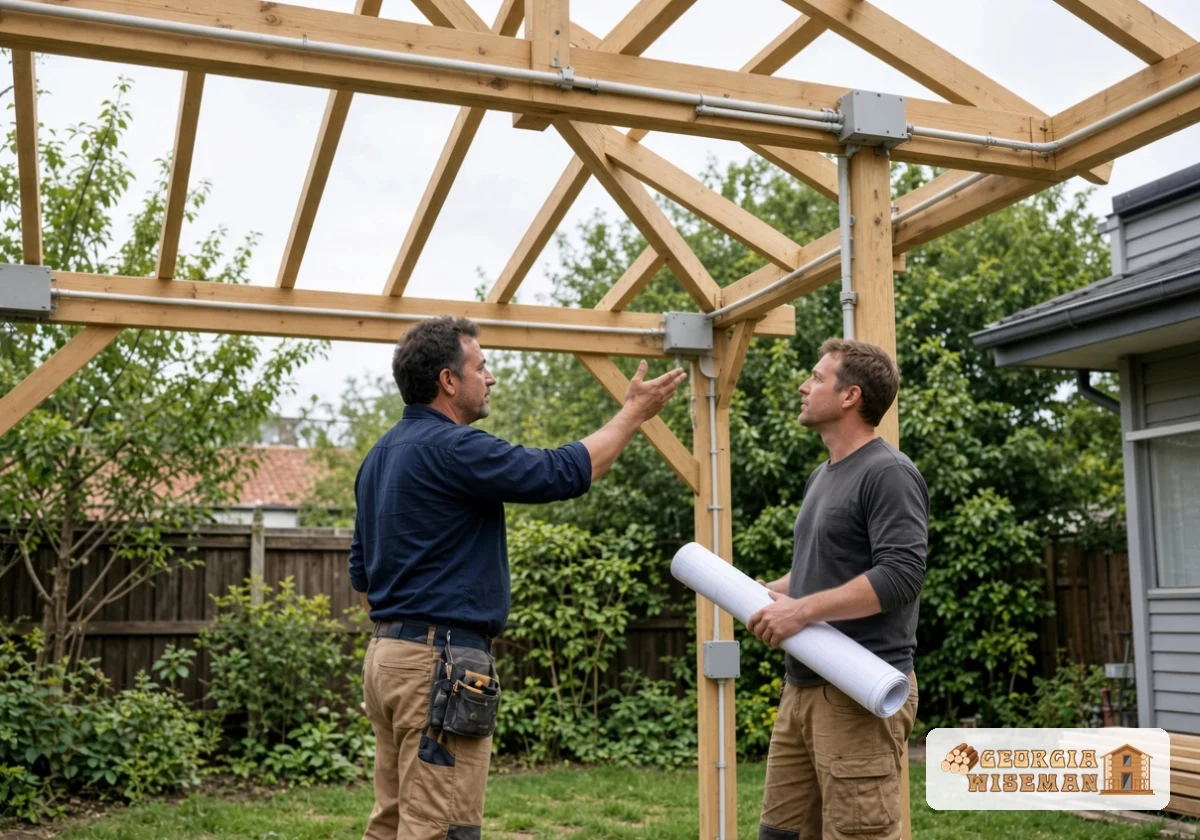
These details are easier to manage while the hut is being built. That’s why we recommend giving your electrician access during frame assembly. If you wait until the decking is finished, they may need to lift boards to run the cables underneath.
Keeping Every Cable Clear of the Thatch Layer
Balinese thatch is dry, packed plant material, and it holds heat close to anything buried inside it. Cables and junction boxes belong on the underside of rafters, in conduit, with a gap between them and the thatch bundles.
Our crews tie thatch onto battens, so we know how deep a fixing wire can reach. Ask for a cable route that sits well below that tie line, so future re-thatching never disturbs the wiring.
Sizing the Circuit for Fans, Lights and a Bar Fridge
A ceiling fan and a few LED lights use very little power, but adding a bar fridge, heater, or pizza oven increases the electrical load. That’s why it’s worth planning for any appliances you might add later. If the electrical supply can’t handle the extra load, upgrading cables after the posts and decking are finished can be expensive.
Safety switches also need to be part of the plan. WA Government guidance from 2026 on RCD safety switch requirements states, “Two is a required minimum, but more than two may be needed.”
Ask your electrician whether the hut circuit needs its own RCD. For more on layout, read our planning points before installing a Bali hut.
Where Should Power Points Go in an Outdoor Hut or Gazebo?
With the circuit sized, outdoor hut power points work best on the posts, at roughly bench or table height, facing away from the prevailing weather. That placement keeps plugs above splash height. It also puts them where you’ll use them, beside the bar or seating.
With that in mind, think about how people move through the space on a Saturday arvo. If a lead has to stretch across the deck to reach the fridge, someone will trip on it (usually the person carrying the tray of cold drinks). A point beside each appliance zone avoids that problem.
Pool and barbecue zones add their own limits. Water and heat both change how close a socket can sit, and you’ll find layout ideas in our guide to a Bali hut barbecue and entertaining area.
Before you lock in the plan, mark these spots on your sketch:
- Bar Fridge Point: Place a double power point beside the fridge or drinks bench to keep blenders and phone chargers within reach.
- Barbecue Point: Keep this outlet to the side of the cooking area, well away from flames, heat, and grease.
- High Point: A wall heater or speaker may need power higher up the post, but keep the outlet safely below the thatch roof.
- Entry Switch: Control the fan and lights from the entrance post, so you can switch them on before stepping inside.
- Garden Spare: Leave room for future additions, such as festoon lights or a pond pump, with an extra outdoor outlet on the garden side.
Marking these locations before construction helps your electrician quote for the complete job. Each of those outlets also needs a weatherproof rating. An IP (ingress protection) rating uses two digits.
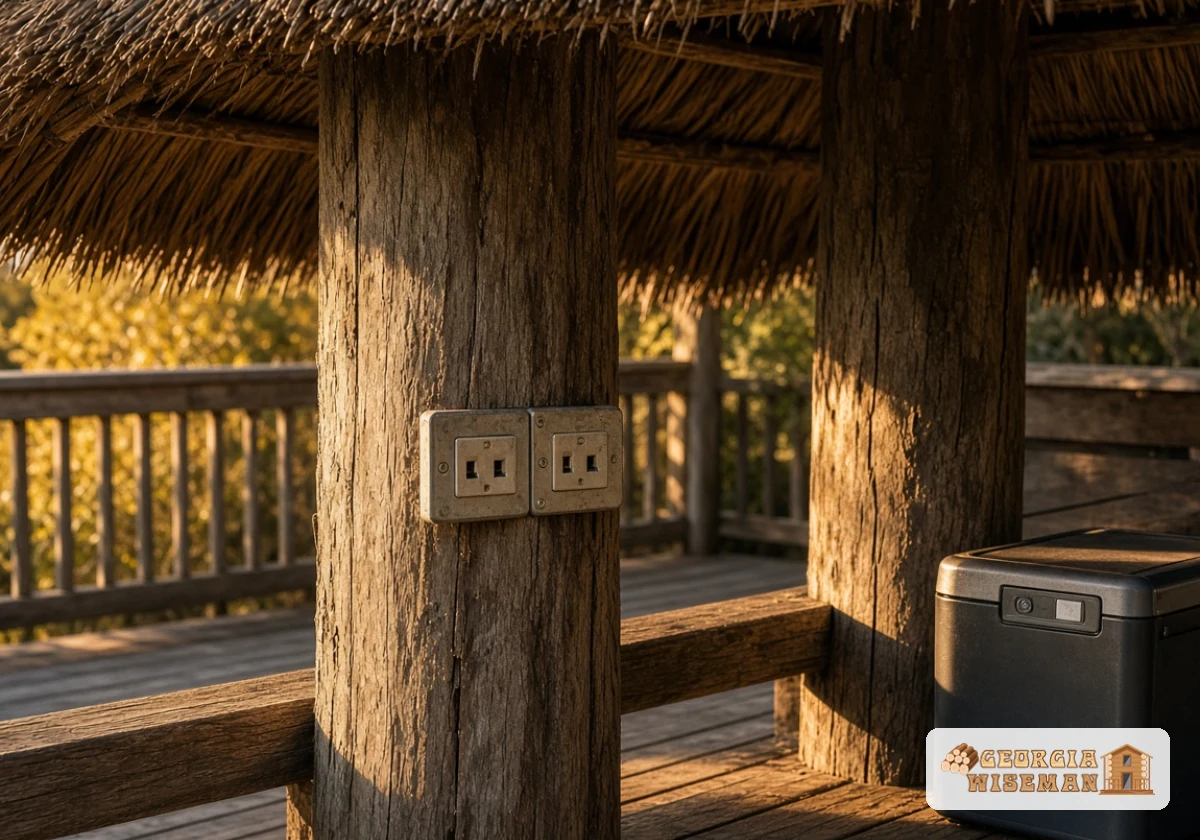
Weatherproof Outdoor Electrical Fittings: IP Ratings and What Australian Wiring Rules Ask For
An IP (ingress protection) rating uses two digits. The first covers dust, and the second covers water. AS/NZS 3000, known as the Wiring Rules, sets the standard for gazebo electrical wiring in Australia and expects every outdoor fitting to suit the moisture it faces.
To decide what each spot needs, compare the rows below.
| Location in the hut | Typical IP rating | What it means for you |
|---|---|---|
| Under the roof, sheltered | IP23 to IP44 | Handles light splashes, fine for inner posts |
| Open side facing weather | IP56 | Survives driving rain and hosing down |
| Near pool or garden sprinklers | IP56 or higher | Pick lidded outlets that seal with a plug-in |
The open-side row is the one to watch, because summer storms push rain sideways under the eaves.
Thatched Roofs Change the Rules for Lights, Fans and Heat
A thatch roof traps warmth and catches stray sparks, so every fitting under it needs to run cool and stay enclosed. Thatched homes are common in the UK, and Gloucestershire Fire and Rescue Service’s fire service advice for thatched roofs says, “Use a bulkhead type light fitting in the loft space.” A bulkhead fitting seals the globe inside a solid cover, so heat and broken glass can’t touch the reeds.
LED globes run far cooler than halogen or incandescent ones, which makes them the safest pick near alang-alang or African Cape Reed. If a downlight must sit close to the roof, ask for a fire-rated cover above it.
Ceiling fans need a different check. Mount the fan to a solid beam with a drop rod long enough to keep the blades clear of loose thatch strands (a light trim every few years keeps strands tidy). Fan motors stay cool, but wobble from a weak mount can loosen wiring over time.
Heaters raise the biggest risk in any Bali hut electrical installation. Skip gas patio heaters and open flame under any thatch, and choose a wall-mounted electric strip heater fixed well below the roof line.
Get Your Bali Hut Wired Right the First Time
Cable routes, power points and weatherproof fittings all cost less when you plan them before the thatch goes on. A licensed electrician working from a clear sketch can finish the job in one visit.
So sketch your layout, mark the loads you expect, and book your electrician early. Then share that plan with your builder before the frame goes up.
Georgia Wiseman builds and re-thatches Bali huts for homeowners who want their outdoor space done properly. Contact Georgia Wiseman to plan your hut and coordinate the wiring stage with your build.
