
Rainwater around your Bali hut base should drain into a gravel trench, a garden bed, or your stormwater system. If water cannot drain away from the base, it can collect around the posts, soak into the timber and leave the surrounding soil wet.
This drainage problem often becomes obvious during heavy rain, when water starts pooling around the hut base. At Georgia Wiseman, we hear from owners every wet season after they notice water collecting around their huts.
This guide covers why water gathers, which options suit a backyard, and when to address them during installation, so your hut stays well-drained and protected. Let’s get into details.
Why Does Water Pool Around Bali Huts After Heavy Rain?
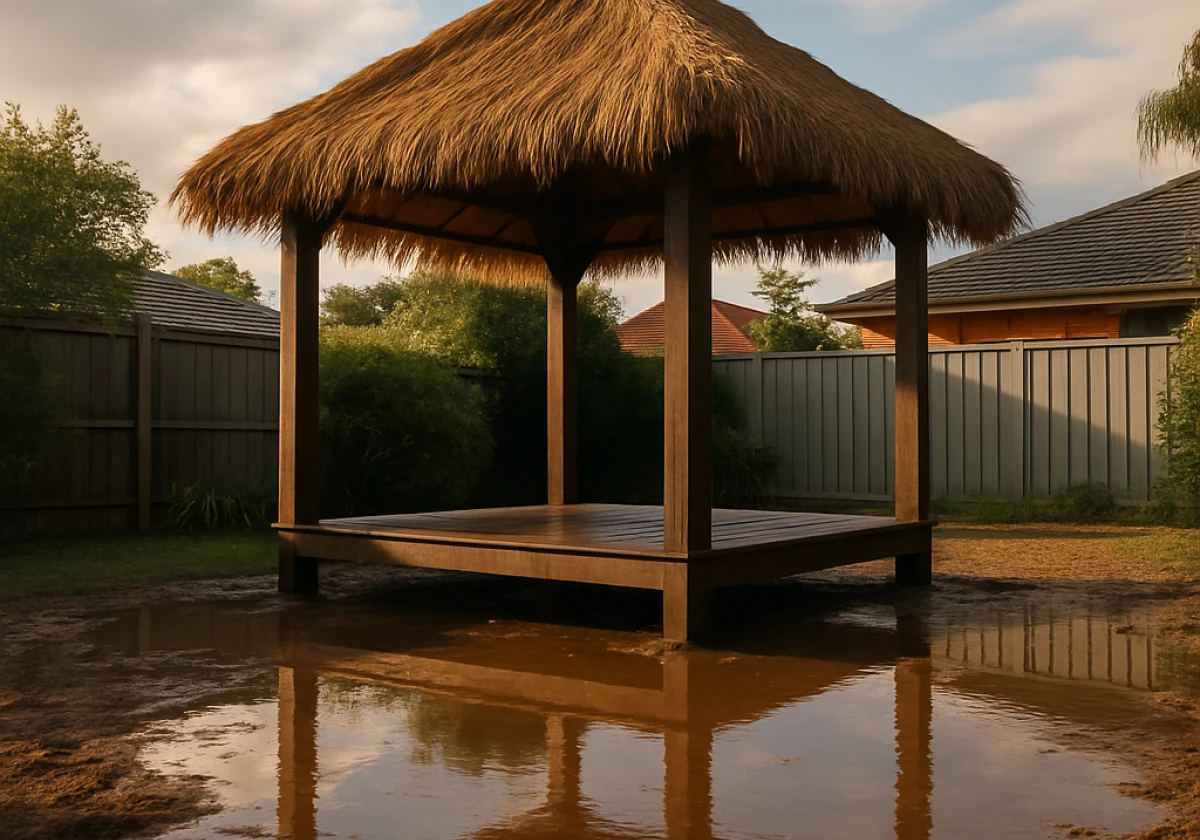
Water pools around Bali huts when the ground slopes toward the base or the soil drains too slowly. Generally, clay soil holds water instead of letting it soak through, and much of the eastern seaboard sits on some version of it. So the rain running off your thatched roof reaches the ground and simply stays where it lands.
Roof size makes water pooling significantly worse. A 4m by 3m Bali hut, for instance, covers around 12 square metres of roof area and can shed roughly 240 litres of water along its edges during a 20 mm downpour. Sydney alone averages around 1,200 mm of rain a year according to the Sydney Weather, and every millimetre of that rainfall has to go somewhere.
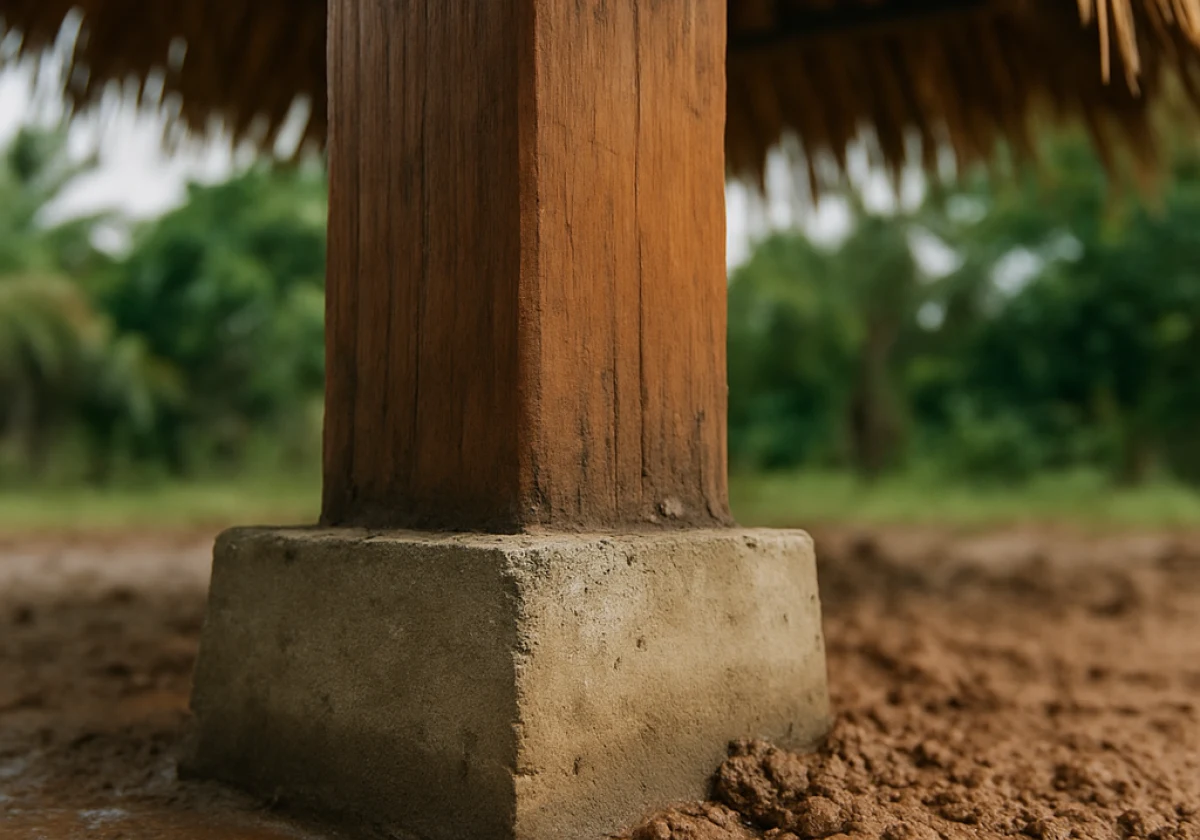
Another factor is how nearby garden features affect drainage. Many backyards place Bali huts near water features, bird baths and garden beds, with bamboo fencing separating different areas. And bamboo fencing across the natural drainage path can slow water moving away from the hut. If you leave it without fixing, that trapped water softens the footings and works into the timber from below (mud stains on the posts give it away).
Giving that water a clear route away from the hut helps prevent it from collecting around the posts. Owners who skip this step often end up dealing with the same puddle every winter.
Gravel Trenches, Garden Beds and Stormwater Pits: Outdoor Structure Drainage Options
Most owners only pick a drainage option after the puddles appear rather than before the first storm hits. Moving to the fix itself, each option suits a different soil type and a different budget.
Weigh up these three options that cover nearly every backyard.
| Option | Best for | What it involves |
|---|---|---|
| Gravel trench | Roof runoff at the drip line | 300 mm strip of 20 mm gravel, simple DIY |
| Garden bed | Light runoff, sandy soil | Mulched planting, suits a Bali garden with vase pots |
| Stormwater pit | Heavy runoff, clay soil | Pipework into existing drains, a plumber’s job |
Simply put, the gravel trench handles most backyard huts on free-draining soil, while clay blocks need the pit to shift the volume. So run both together when your yard sits at the bottom of the slope.
Bottom Line: Outdoor structure drainage is about capacity first and looks second.
Planning Drainage During Your Bali Hut Installation
Sorting drainage during Bali hut installation saves you digging up pavers and garden beds later on. With the site already open, the trencher is there, and the posts aren’t sitting in concrete yet.
Most DIY kits ship with installation instructions for the frame and the roof, though few of them say a word about where the water ends up.
In this case, three jobs deserve your attention while the ground stays exposed.
Grading the Site So Water Runs Away from the Posts
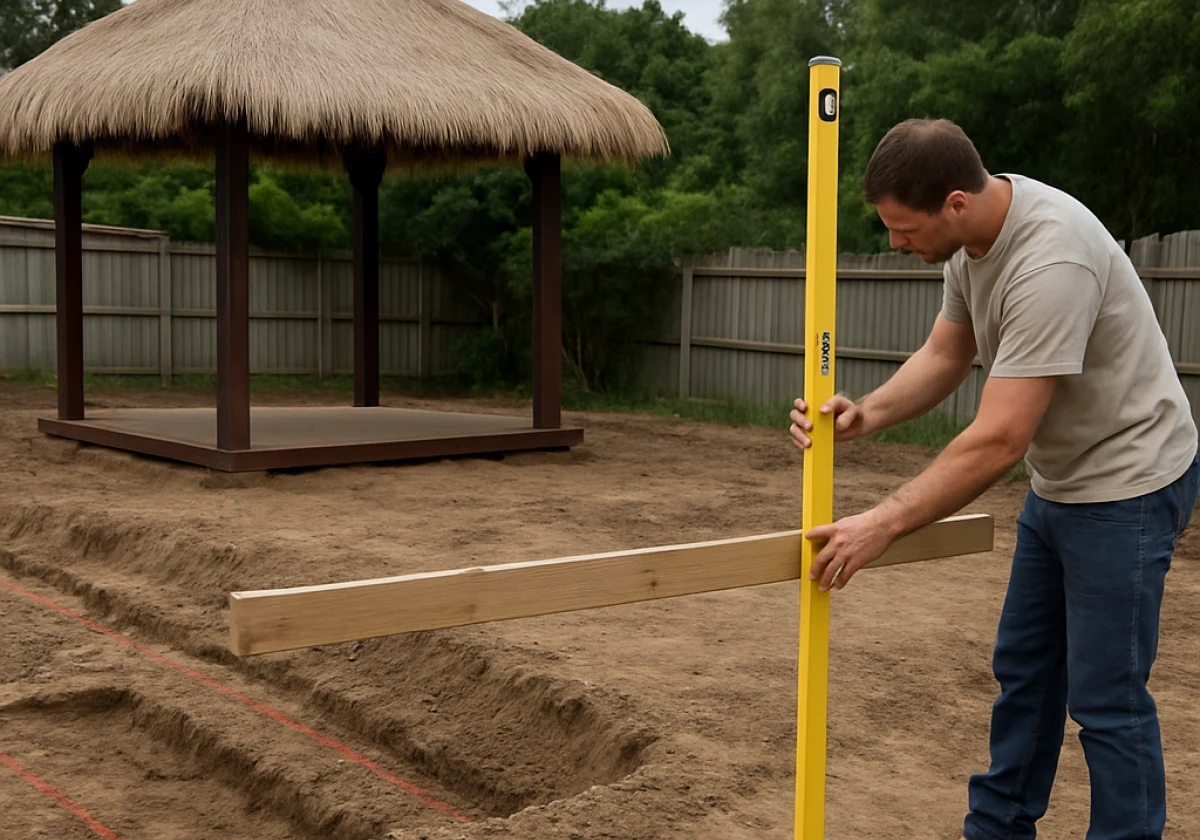
Grade the ground away from the hut at roughly 25 mm of fall per metre for the first two metres. That slope stays comfortable underfoot and still carries water off the base.
You can even check it with a spirit level on a straight length of timber rather than trusting your eye, because a shallow back fall stays invisible from standing height.
Once you get that fall wrong, every storm sends the runoff straight back at the posts (we re-graded one Gold Coast site twice).
Adding a Gravel Drip Trench Under the Cape Reed Roof Edge
A 300 mm-wide trench directly under the roof’s drip line gives runoff somewhere to drain. You need to fill it with 20 mm gravel to just below the surface. Gravel catches the sheet of water coming off the thatch and lets it soak down, instead of splashing mud back onto the posts and screens.
Honestly, this is the first change we’d make on any existing hut, since a weekend with a mattock beats replacing hardwood later.
When to Check with Your Local Council About Stormwater Rules
Check with your local council before directing Bali hut runoff into the stormwater system, altering drainage near an easement, or carrying out work that could affect neighbouring properties. Council requirements vary between areas, so confirm the local rules before you start.
Councils generally treat a roofed structure over a set floor area as work that needs approval. And the drainage plan forms part of that application, especially where the hut sits close to a boundary.
More importantly, a call to your council’s planning team can clarify which approvals apply before you start. Ask about boundary setbacks at the same time, especially when the hut sits close to a property line.
Good Backyard Drainage Protects Your Thatch, Timber and Decking
Now that we’ve covered the groundwork, here’s how backyard drainage keeps the hut itself in good form. You’d be surprised how much of our repair work traces back to one wet corner of a yard.
Four parts of the build feel the difference first.
- Posts and Footings: Standing water rots the base of hardwood posts even where installers set them in concrete, because moisture collects in the joint. Meanwhile, dry footings hold the stability and durability the frame was designed around.
- Thatch and Roof Edges: Splashback drives grit into the lowest layers of bali thatch, and damp cape reed breaks down years ahead of schedule. In this case, keeping the ground under the eaves dry reduces that moisture exposure and helps protect the thatching grass and tie wire.
- Bamboo Panels and Screens: These stay fixed near the ground and can wick moisture from wet soil. Over time, that moisture can soften the base and affect their appearance.
- Decking and Pavers: Wet ground under a deck lets bearers settle unevenly, so boards cup and pavers rock underfoot within one season.
Quick Tip: Walk the perimeter the morning after the next storm and mark every patch still holding water. Those marks show you exactly where to dig, and ensure you check them again after the following downpour.
Get Your Bali Hut Drainage Sorted Before the Next Downpour
Rainwater around a Bali hut only causes trouble when it has nowhere to go. But when you give it a route, the posts, thatch and decking all last the way they should.
Walk your yard before the next downpour and decide where that water should end up. A trench dug on a free Saturday costs far less than replacing roof structures later, and drainage handled at the start never needs doing twice.
If you’re planning a Bali hut, think about drainage before installation rather than after the first heavy rain. Georgia Wiseman can help you consider the hut position and surrounding area as part of the setup. Get in touch with our team if you need guidance before installation.