You can move a Bali hut if the frame and thatch roof are still strong enough to be taken apart and rebuilt. Their condition will affect the work involved and the total cost.
However, most owners only consider moving a Bali hut after a renovation, pool project, or house sale makes the decision necessary. By then, the hut may have spent years exposed to Australian weather, which can affect whether it’s suitable for relocation.
The truth is, relocation is nothing but a second Bali hut installation, just with used parts. So in this guide, we’ll cover the checks worth doing first, the real cost of each path, and the point where a new build wins.
What Should You Check Before You Move a Bali Hut?
Before you move a Bali hut in Australia, check the frame, thatch roof, pole spacing, and your council rules. Any one of these can stop the move, so check them all before you start.
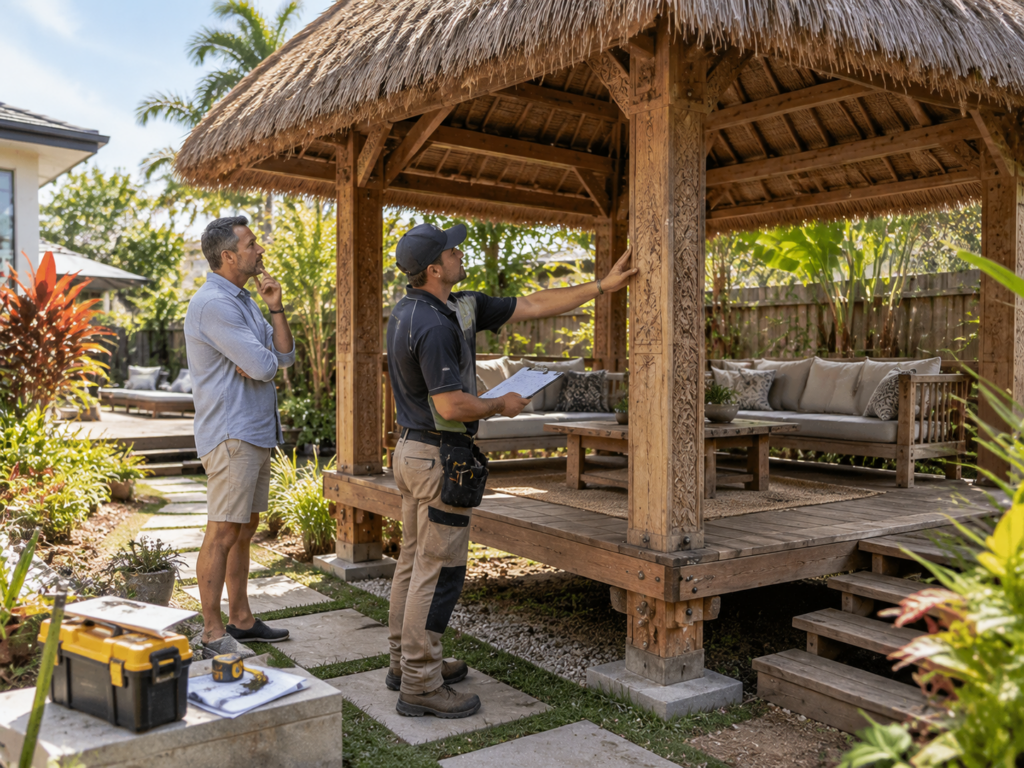
While you’re at it, run these checks before you book a truck or pull a pin from the roof:
- Frame and Pole Condition: Check the posts for cracks, rot, or termite damage before planning the move. Damaged posts may not hold up during a second build. So tap each pole and inspect the base where it meets the ground. Also, measure the distance between the poles because the new footings need to match the existing layout.
- Thatch Roof Wear: Natural thatch older than eight to ten years often needs replacing. These older, dry reeds can break apart when you remove them from the battens, which makes them unsuitable for reuse.
- Council Permits: Many councils treat a moved hut as a new structure and ask for fresh approval, especially near boundaries, pools, or an easement.
- New Site Preparation: Level the new ground before installing the hut. Then check that water can drain away and that there’s enough space around the poles and wide eaves. You might also want to consider how much wind the site gets, as an exposed area puts more pressure on the hut than a sheltered space.
Now, permits aren’t always required, but the rules depend on the hut’s size, location, and the type of development approval that applies.
In NSW, the State Environmental Planning Policy (Exempt and Complying Development Codes) 2008 sets the rules for exempt development. It allows some gazebos up to 20 square metres in rural and large lot residential zones to qualify. The limit is 15 square metres in most other zones, provided the structure meets the other requirements.
Larger structures may need approval, and each state has its own rules.
Frame and Pole Condition Decide Whether a Bali Hut Relocation Will Work
Relocating a Bali hut frame without checking its condition can lead to extra repair costs. Timber and thatch also age differently, so each material needs a separate inspection.
That’s why when you search “Bali hut Australia”, you’ll find plenty of builders who’ll sell you a new one. Far fewer will move an old one (and that tells you something).
So work through the three checks below before you lock in a date with anyone.
Testing the Poles and Joints for Rot or Cracking
Start at the base of each pole, where ground moisture can cause the most damage. Push a screwdriver about 20 mm into the timber above the footing. If the blade sinks in with light pressure, the timber has become soft and may not survive removal.
This kind of damage can be difficult to see because the outside of the pole may still look solid. We’ve stripped down huts where three of six poles crumbled at the base (not that you could tell from the back deck).
The rest of the frame needs the same attention. Check the top joints for rusted bolts and brackets, as these connections can weaken before the timber itself shows major damage.
Are DIY Kit Bali Huts Easier to Relocate?
Yes. DIY Bali hut kits are usually easier to take apart because they’re designed to bolt together during installation. Many kits even have numbered poles and pre-drilled beams. This makes each part easier to identify when it’s time to rebuild the hut.
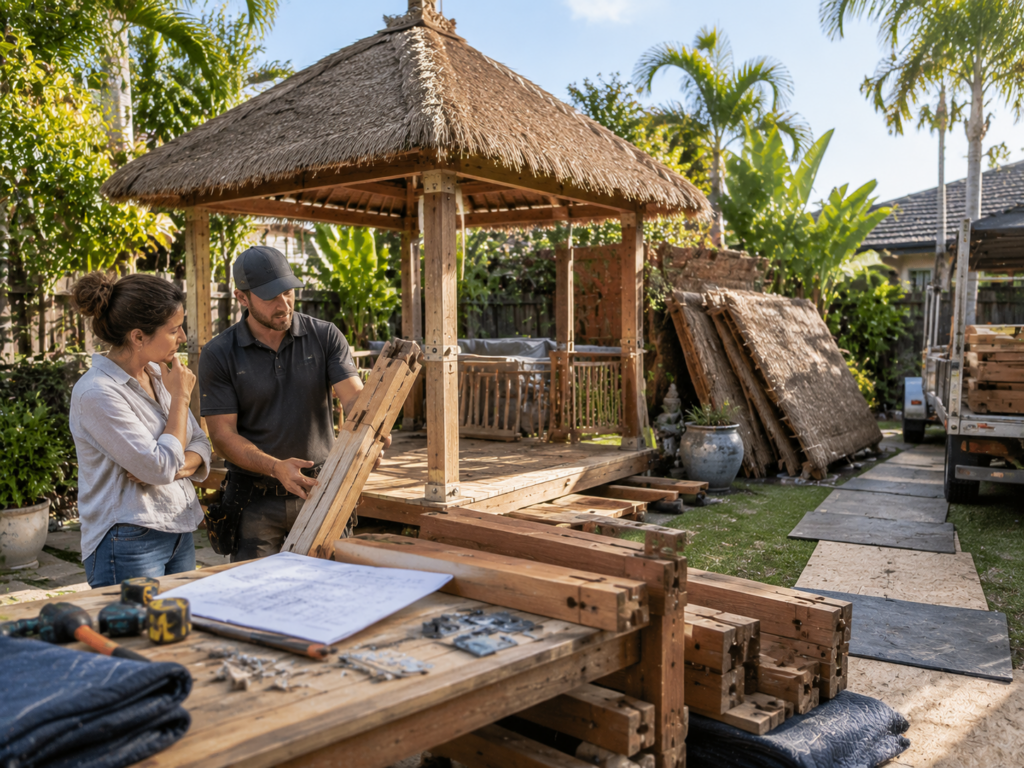
That design also makes the process similar across different kit sizes. For instance, you can dismantle a 3m, 4m, or 5m Bali hut using the same basic method. Plenty of people manage it over a long weekend with two mates and a ladder (ask anyone who has tried it in February). Custom-made frames rarely give you that.
Remember that the fixings still need a careful check before you start. Bolts can rust or seize over time, especially if a DIY Bali hut has been left unsealed. And if the bolts are damaged, removing them can take longer, and some may need replacing before the frame goes back up.
Thatching Damage Often Means the Thatched Roof Cannot Be Reused
Thatch can be difficult to move without damaging it. As reed gets older, it dries out and becomes less flexible.
Alang alang (the grass used for thatching) can have the same problem, while synthetic thatch usually handles removal and transport better. This makes the roof’s age and material important when you’re deciding if it can be reused.
Now, there’s a good reason to spend on the roof rather than skip it. A thick thatched roof provides insulation and can keep the shaded area cooler than the surrounding lawn on a hot afternoon. If the existing thatch can’t survive the move, replacing it can help restore that comfort.
Supplier catalogues do not help either. You may see terms such as African thatch, Cape reed, Bali thatch, and DIY Bali thatch. Here, you need to compare the material, quality, and roof size instead of relying on the product name. Budget for a fresh roof on any hut older than eight years and treat a reusable one as a bonus.
The frame can create similar confusion when you’re looking for replacement parts. One catalogue might list a Balinese Gazebo, the next files Balinese gazebos under gazebos bali, and a third sells an African gazebo beside its African huts.
Ignore the spelling (even on the site that labels its page “Balinese gazebos”) and check whether the African hut in the photo is the same frame you already own.
Relocation Costs for Bali Huts: Comparing DIY Removal, Professional Help, and a New Build
Once you’ve checked the hut’s condition, the next question is cost. Compare your options early, because relocating an old hut can cost more than buying a new one. The final price depends on labour, machinery hire, and whether the existing thatch needs replacing.
The table below sets the three realistic paths side by side.
| Option | Typical Cost | Time Needed | Risk of Damage |
|---|---|---|---|
| DIY removal | Lowest, tools and a trailer hire | 1 to 2 weekends | High if the frame or thatch is brittle |
| Professional relocation | Mid-range, crew labour and machinery | 2 to 4 days | Low, handled by a trained crew |
| Buying new | Highest, full new structure | 1 to 2 weeks lead time | None, fresh materials throughout |
Truth is, any backyard structure relocation follows the same maths. A new build hands you a fresh living space with no hidden rot in it, and that certainty is part of what you are paying for.
Our rule of thumb: once a quote passes roughly 70% of a new build, the new hut wins. A tight budget with a solid frame still favours doing the removal yourself.
Choosing a Professional Installer for a Safe Bali Hut Move
Once you know the costs, the next step is finding an installer with the right experience. Ask how many Bali huts they’ve relocated, rather than how many they’ve built. A new installation and a relocation require different skills, especially when older poles and other materials may be weaker.
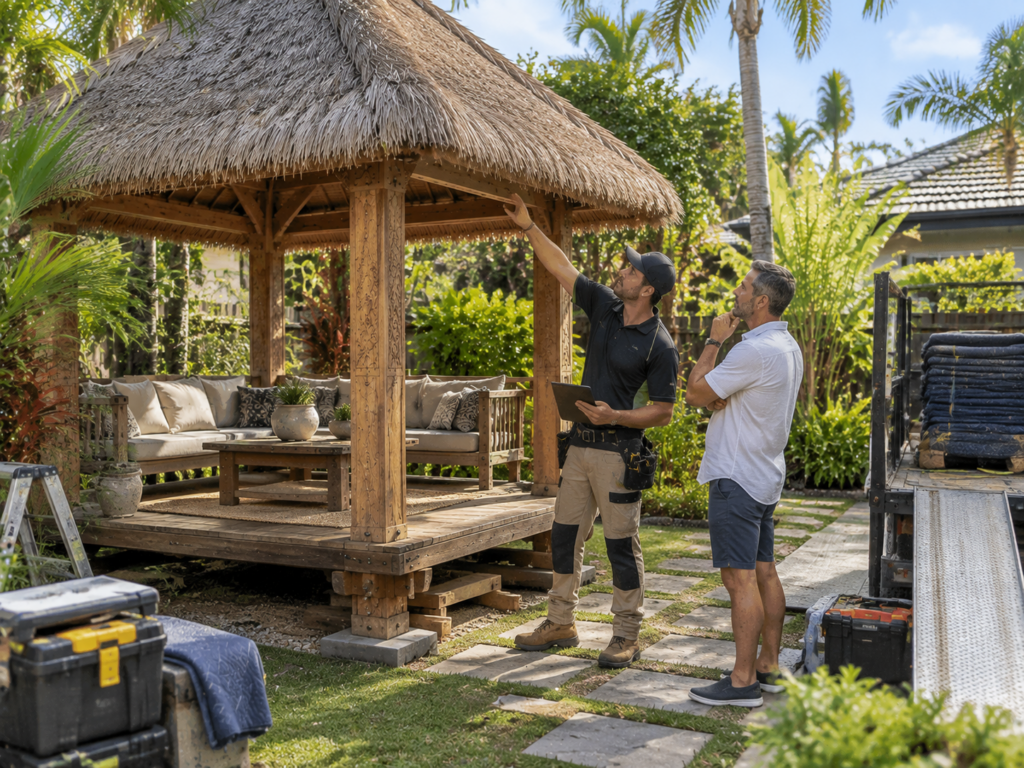
That experience is important during both parts of the job. So look for one team that can dismantle the hut, transport it, and rebuild it on the new pad. Having one crew handle the full job will give you one point of contact if something gets damaged. They may also be able to install features such as thatch gazebos, bamboo panels, screens, and water features while they’re working on the yard.
More importantly, before booking the crew, check that they have suitable insurance. Ask to see a certificate of currency rather than accepting a verbal promise. A hut coming down beside a pool fence or a neighbour’s roof is a genuine risk (one dropped beam costs more than the whole move). That’s why you should ask to see the installer’s insurance certificate before booking the job.
Honestly, the quote itself tells you most of what you need. It should separate the costs for dismantling, transport, new footings, and any replacement thatch. A single lump sum with no breakdown is the clearest red flag in this trade.
Get Expert Help to Relocate Your Bali Hut
A relocated hut can carry your outdoor living area to a new address, but only when the frame and the roof both pass inspection. Every other decision in the job follows that one result. Bali huts (or Balinese huts) are no harder to move than any other timber structure once you know what you are working with.
So book the inspection before you book the truck. A week of checking can save you a fortnight of rebuilding.
Georgia Wiseman builds, relocates, and re-thatches Bali huts for homeowners right across Australia. Contact us to arrange a free quote and get a straight answer on whether your hut is worth moving.
